
What Happens If Someone Refuses to Sign Divorce Papers? (2026 Legal Guide)
Introduction
If someone refuses to sign divorce papers, the legal process shifts from an uncontested divorce to a contested divorce. However, under modern family law, no spouse has the power to permanently block a divorce through non-cooperation. Courts do not usually require both spouses to agree in order to end a marriage. While the process may take longer and involve additional legal steps, one person can continue the case independently. This guide explains how the process works, expected timelines, and possible outcomes in a clear and simple way.
Quick Answer
If someone refuses to sign divorce papers, the divorce can still proceed. Courts can finalize the divorce without both signatures, although the process may become a contested divorce and take longer due to court involvement.
Key Takeaways
- You do not need your spouse’s signature to get a divorce
- The case will usually become a contested divorce
- Courts can finalize the divorce without mutual agreement
- If a spouse ignores the papers, a default judgment may be granted
- Refusal may delay the process, but it does not stop the divorce proceedings
Can a Divorce Proceed Without Both Signatures If One Spouse Refuses?
Yes, a divorce can usually move forward even if only one spouse is willing to sign the papers. In most legal systems, marriage is a legal status that the court can end—meaning one person’s refusal does not permanently block the process.
Contested vs. Uncontested Divorce
| Feature | Uncontested Divorce | Contested Divorce (Refusal to Sign) |
| Agreement Level | Both spouses agree on all major terms | One spouse disagrees or refuses to sign |
| Timeline | Faster (a few weeks to a few months) | Slower (several months to over a year) |
| Cost | Lower legal costs | Higher costs due to court involvement |
| Court Involvement | Minimal; judge reviews and approves | High; includes hearings and legal decisions |
| Final Outcome | Mutual agreement between both spouses | Judge’s final decree (may include default judgment) |
If someone refuses to sign divorce papers, the case typically becomes a contested divorce.
One Spouse Can File Independently
You do not need your spouse’s permission to start a divorce. One spouse can:
- File a divorce petition
- Serve legal papers to the other spouse
- Continue the process without cooperation
Court Authority to Finalize the Divorce
Courts can finalize a divorce without both signatures. A judge may:
- Decide unresolved issues
- Issue orders on property, custody, and support
- Grant a default judgment if no response is filed
Refusal may delay the process, but it does not stop it.
Why Would Someone Refuse to Sign Divorce Papers?

Refusing to sign divorce papers is usually not about stopping the divorce completely—it is often driven by emotional, financial, or strategic reasons. In many cases, the refusal reflects lawunresolved conflicts or concerns about the outcome of the divorce.
Is emotional resistance a legal reason to stop divorce?
Some spouses struggle to accept the end of the marriage, which can lead to refusal to sign divorce documents. They may still hope for reconciliation or feel emotionally unprepared for the separation. Fear of loneliness, major life changes, or uncertainty about the future can also cause hesitation and delay the process.
Can a spouse refuse to sign to protect assets?
Financial disagreements are one of the most common reasons a spouse refuses to sign divorce papers. A person may believe the proposed property division, asset distribution, or debt allocation is unfair. In some cases, a spouse may delay signing to avoid paying spousal support (alimony), hide assets, protect business interests, or negotiate a better financial settlement through the court process.
Can custody disagreements lead to refusal to sign divorce papers?
When children are involved, refusal is often linked to disputes over child custody arrangements and parenting responsibilities. A spouse may disagree with proposed custody terms, visitation schedules, or decision-making rights. Concerns about losing time with children or not having equal parental involvement can lead to resistance and a more contested legal process.
Can refusing to sign be used to delay the divorce process?
In some situations, refusing to sign is a strategic move to delay the divorce. A spouse may want more time to prepare financially, gather legal support, or postpone obligations such as child support or alimony payments. Delays can also be used to pressure the other party into changing terms or agreeing to a more favorable settlement.
How to Serve an Uncooperative Spouse
Serving divorce papers is a required legal step, but sometimes a spouse may try to avoid being served. This does not stop the divorce process. Courts provide alternative methods to ensure the case can still move forward.
What If a Spouse Avoids Being Served?
If a spouse deliberately avoids a process server or refuses to accept the papers, the court does not allow the case to remain stuck. Instead, you must show that you made reasonable efforts to serve them through standard methods.
Once the court is satisfied that the spouse is being uncooperative, it may approve alternative service options.
Expert Tip: Affidavit of Diligent Search
Before a court allows service by publication, you are often required to file an Affidavit of Diligent Search.
This document proves that you made genuine efforts to locate your spouse, such as:
- Checking their last known address
- Contacting relatives or friends
- Searching social media profiles
- Attempting to locate their workplace
Courts rely on this step to ensure fairness. Without it, a judge may deny your request for alternative service.
Alternative Service Methods
Service by Publication
- A notice of the divorce is published in a local newspaper
- Used when the spouse cannot be located or is avoiding service
- Must run for a legally required period
- After completion, the court considers the spouse officially notified
Substituted Service
- Papers may be left with a responsible adult at the spouse’s home or workplace
- The person must meet legal requirements (such as age and connection)
- Used when direct delivery is not possible
Why This Matters
Alternative service ensures that one spouse cannot delay or block the divorce simply by avoiding legal notice. Once proper service—standard or alternative—is completed, the case can proceed through the court system.
Legal Process When a Spouse Does Not Cooperate
When a spouse refuses to sign or completely ignores divorce papers, the court follows a structured legal process to ensure the case can still move forward. This often leads to what is known as a default judgment.
Step-by-Step Legal Process
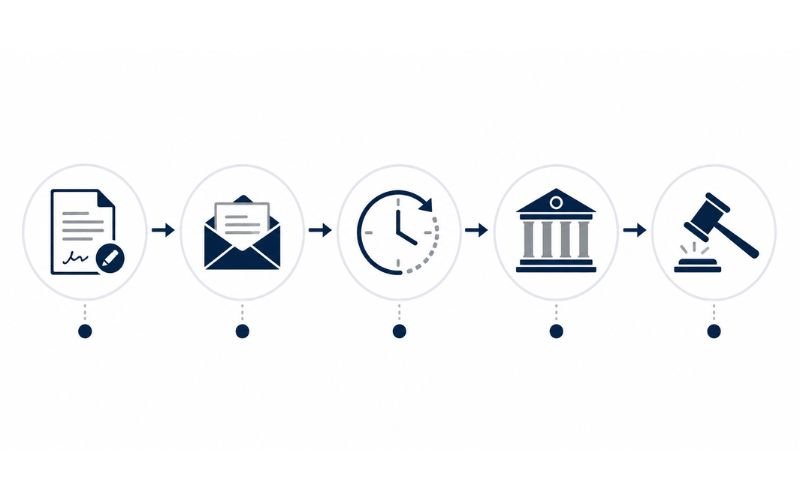
- Filing the Divorce Petition
The process begins when one spouse files a divorce petition with the court. This document includes:
- Marriage details
- Grounds for divorce (depending on jurisdiction)
- Requests for property division, child custody, and support
Only one spouse is required to initiate the case.
- Serving Divorce Papers (Return of Service)
After filing, the other spouse must be legally notified. This is known as service of process.
- Papers are delivered through an authorized method (process server, sheriff, etc.)
- Proof of delivery, called a Return of Service, is submitted to the court
- This step confirms the spouse was properly informed
- Response Deadline (Statutory Waiting Period)
Once served, the receiving spouse is given a statutory waiting period (typically 21–30 days depending on the jurisdiction) to file an official response, known as an “Answer.”
- If they respond → the case becomes contested
- If they do not respond → the case moves toward default
- Requesting a Default Judgment Hearing
If the spouse fails to respond, the filing spouse can request a default judgment (sometimes referred to as a “default divorce”).
- A hearing may be scheduled
- The judge reviews the original requests
- If the terms are reasonable and legally valid, the court may approve them
What If the Other Spouse Ignores the Divorce Papers?
When a spouse ignores divorce papers completely, the court does not stop the process. Instead, it proceeds using a default judgment procedure.
Default Divorce Judgment Explained

A default judgment allows the court to finalize the divorce without input from the non-responding spouse.
- The court assumes no opposition
- The filing spouse’s requests are reviewed for fairness
- The judge can grant the divorce based on submitted information
Court Proceeds Without Participation
Even without the other spouse:
- The court can finalize the divorce
- Decisions are made on:
- Property division
- Child custody and visitation
- Financial support (child support or alimony)
Timeline Impact
- Default cases can sometimes be faster than contested divorces
- However, they still follow required legal waiting periods
- Delays may occur if service was not properly completed
Key Takeaway
If a spouse refuses to sign or ignores divorce papers, the case does not stop—it moves toward a default judgment, where the court has full authority to finalize the divorce.
How Long Does a Divorce Take If One Person Refuses?
A contested divorce typically takes longer than an uncontested one.
Factors That Affect Timeline
- Court backlog: Scheduling delays
- Complex disputes: Property or custody issues
- Cooperation level: Delays or non-response
General estimate: Several months to over a year
Does Refusing to Sign Divorce Papers Stop the Divorce?
No, refusing to sign divorce papers does not stop the divorce. Courts can proceed and finalize the case even if only one spouse participates. While refusal may cause delays and turn the case into a contested divorce, it does not prevent the legal process from reaching a final outcome.
In situations where one spouse does not respond at all, the court may issue a default judgment, allowing the case to move forward without their input. However, there is an important risk to understand.
Important: While a default judgment may grant the filing spouse what they requested, the other spouse may later file a motion to set aside the default. This can happen if they can prove they were not properly served or had a valid emergency. If approved, the court may reopen the case and reconsider decisions.
Possible Outcomes in a Contested Divorce
When spouses cannot reach an agreement, the court steps in to make legally binding decisions based on fairness and applicable laws.
Property Division
- Division of marital assets and debts
- Based on legal standards such as equitable distribution or community property
- May include homes, savings, investments, and liabilities
Child Custody
- Determined based on the child’s best interests
- May result in joint custody or sole custody arrangements
- Includes decisions about parenting time and responsibilities
Spousal Support (Alimony)
- Financial support awarded based on need and financial circumstances
- Factors may include income, length of marriage, and standard of living
Final Court Judgment
- A legally binding divorce decree issued by the court
- Covers property division, custody, and financial support
- Must be followed by both parties once finalized
Tips for Handling a Divorce When One Spouse Refuses
Stay Legally Compliant
- Follow all court rules and deadlines
- Ensure proper filing and service
Keep Documentation
- Maintain records of finances and communication
- Save legal documents and evidence
Consider Mediation
- Helps resolve disputes without trial
- Can reduce time and costs
Seek Legal Guidance
- Understand your rights
- Avoid mistakes in complex cases
Do Divorce Laws Vary by State or Country?
Yes, divorce laws vary depending on location.
- Some areas have mandatory waiting periods
- Rules for property division and custody differ
- Default judgment procedures may vary
Always review local laws or consult a legal professional for accurate guidance.
FAQs
Can a judge finalize a divorce without both signatures?
Yes, a judge can finalize a divorce even if only one spouse signs or participates in the process. Courts generally do not require mutual consent to end a marriage. As long as the filing spouse follows proper legal steps, the judge can issue a final divorce order.
What happens if a spouse avoids being served?
If a spouse tries to avoid being served divorce papers, the court allows alternative methods of service. After reasonable attempts, the court may permit service by publication, mail, or other approved options. Once proper effort is proven, the divorce process can continue without direct delivery.
How long can a spouse stall a divorce by not signing?
A spouse cannot stall a divorce indefinitely by refusing to sign. While they may delay the process for weeks or months, courts can set deadlines, move the case forward, and even issue a default judgment if there is no response. The exact delay depends on court schedules and the complexity of the case.
What are the legal consequences of refusing to sign divorce papers?
Refusing to sign divorce papers is not illegal, but it can lead to legal consequences within the divorce process. The case may become contested, giving the court authority to make decisions on property, custody, and support. If a spouse refuses to respond entirely, the court may issue a default judgment, which can result in decisions being made without their input.
Can you get divorced without your spouse knowing?
In most cases, you cannot get divorced without your spouse knowing because legal notice is required. However, if a spouse cannot be located after reasonable efforts, courts may allow alternative service methods. This ensures the process can continue while still meeting legal notification requirements.
Conclusion
Refusing to sign divorce papers does not usually stop the divorce process. Courts can still move forward, review the case, and issue a final decision—even if one spouse does not cooperate. While refusal may make the process longer and more complex, it does not give one person the power to block the outcome indefinitely.
Understanding your legal rights and the overall process is essential. Knowing what to expect—such as filing, serving papers, and court decisions—can help reduce confusion and stress. Staying informed, reviewing official court resources (such as state court or government websites), and seeking proper legal guidance can make the process smoother and help protect your interests.
Disclaimer
This article is for informational purposes only and does not constitute legal advice. Laws vary by jurisdiction. For advice specific to your situation, consult a qualified legal professional.