
What Is an Amicus Brief? A Guide to How Law Firms Like Perkins Coie Shape Legal Precedent
In recent years, the amicus brief law firms perkins coie has moved from a quiet legal tool to front-page news. In May 2026, the amicus brief is at the heart of the legal profession’s defense in the U.S. Court of Appeals for the D.C. Circuit, where a historic coalition is challenging executive actions that target the independence of the bar. This moment highlights how influential these filings can be in shaping major legal debates.
For example, during the high-profile 2025–2026 legal battles involving major law firms, including the landmark Perkins Coie v. DOJ case, hundreds of law firms and organizations filed amicus briefs to defend the legal profession itself. Understanding how these documents work is crucial to understanding how modern law is shaped.
When people think about court cases, they usually imagine two sides arguing against each other—the plaintiff and the defendant. But in many important legal cases, there is often a third voice that plays a valuable role. This voice comes through something called an amicus brief.
An amicus brief allows individuals or organizations that are not directly involved in a case to share their expertise or perspective with the court. These briefs can influence how judges understand complex issues, especially in high-stakes or precedent-setting cases.
Large and experienced law firms, such as Perkins Coie, often prepare and submit amicus briefs on behalf of clients or public interest groups. In this article, you’ll learn what an amicus brief is, why it matters, and how law firms use it in real-world legal practice.
What Is an Amicus Brief Law Firms Perkins Coie?
Simple Definition
An amicus brief (short for amicus curiae, a Latin term meaning “friend of the court”) is a legal document submitted to a court by someone who is not a party to the case.

Purpose
The main goal of an amicus brief is to:
- Provide additional information or expertise
- Offer a broader perspective on the issue
- Help the court make a more informed decision
Key Characteristics
- Not filed by the main parties (plaintiff or defendant)
- Submitted with the court’s permission (in many cases)
- Focused on legal arguments, policy implications, or technical insights
Why Are Amicus Briefs Important?
Amicus briefs are especially important in cases that:
- Involve constitutional or public policy issues
- Could set legal precedents
- Affect large groups of people or industries
How They Help Courts
Judges rely on amicus briefs to:
- Understand complex topics (e.g., technology, healthcare, finance)
- See how a decision may impact society
- Consider viewpoints beyond the immediate dispute
Example
Imagine a case about online privacy. A technology company, a digital rights group, or an academic institution might submit an amicus brief explaining:
- How data systems work
- The risks of certain legal interpretations
- The broader impact on users and businesses
Who Can File an Amicus Brief?
Many types of individuals and organizations can submit amicus briefs, including:
- Law firms (on behalf of clients)
- Nonprofit organizations
- Trade associations
- Academic experts
- Government agencies
Common Participants
- Civil rights organizations
- Industry groups (e.g., tech, healthcare)
- Legal advocacy groups
- Universities or research institutions
How Law Firms Use Amicus Briefs

Law firms play a key role in drafting and submitting amicus briefs. Their legal expertise ensures that arguments are clear, persuasive, and aligned with court standards.
1. Pro Bono Advocacy and Client Representation
Law firms often prepare amicus briefs as part of both paid and pro bono (free legal service) work. They may file on behalf of:
- Corporate clients
- Nonprofit organizations
- Public interest and advocacy groups
This approach allows clients and communities to participate in important legal issues, even if they are not directly involved in the case. Pro bono amicus work is especially common in matters involving civil rights, public policy, and social justice.
2. Influencing Appellate and Supreme Court Precedent
Amicus briefs are frequently used in higher courts, where decisions can set legal precedent. Law firms use them to:
- Present broader legal arguments beyond the main parties
- Offer policy insights and industry perspectives
- Help courts understand long-term implications of a ruling
In appellate courts and the Supreme Court, a well-crafted amicus brief can shape how judges interpret the law and apply it in future cases.
3. Building Legal Reputation
Submitting high-quality amicus briefs also strengthens a law firm’s professional standing. It helps firms:
- Demonstrate expertise in specialized legal areas
- Gain visibility in high-profile or landmark cases
- Build credibility with judges, clients, and the legal community
Over time, consistent involvement in impactful cases enhances a firm’s reputation as a trusted authority in its field.
How Firms Like Perkins Coie Contribute

Large law firms such as Perkins Coie are known for their involvement in complex and high-profile legal matters, including amicus brief filings. Beyond representing their own clients in disputes, they also play an important role as active contributors to the broader legal system through frequent amicus participation.
Beyond their own defense, Perkins Coie remains a leader in filing amicus briefs for others. They are particularly active in appellate litigation involving technology, having recently filed impactful briefs in cases concerning AI regulation and data privacy standards in the Ninth Circuit.
Their Approach
They typically:
- Work with subject-matter experts
- Conduct in-depth legal research
- Draft well-structured and persuasive arguments
Areas of Involvement
Firms like Perkins Coie often file amicus briefs in cases involving:
- Constitutional law
- Technology and privacy
- Intellectual property
- Election law
This broader involvement highlights how major law firms are not just participants in legal disputes, but also influential voices shaping how laws are interpreted and applied.
Real-World Impact: The 2025–2026 Perkins Coie v. DOJ Case

Law firms do not just write amicus briefs—they sometimes rely on them during critical legal challenges.
A major example occurred between 2025 and 2026, when actions by the U.S. Department of Justice raised concerns affecting Perkins Coie and other large law firms due to their legal advocacy work.
In response, the legal community came together in an unprecedented and highly coordinated effort:
- 842 Law Firms: A record-breaking coalition filed a unified amicus brief led by Eimer Stahl LLP
- 239 Former Judges: Including both Republican and Democratic appointees, highlighting the non-partisan nature of the issue
- 595 Law Professors & 1,224 Law Students: Showing the broader impact on legal education and future professionals
- 21-State Coalition: Led by state Attorneys General to defend constitutional separation of powers
In addition, respected organizations such as the American Bar Association and the American Civil Liberties Union also contributed supporting amicus briefs.
Key Legal Concerns Raised
These filings argued that penalizing law firms for representing certain clients raised serious constitutional concerns, including:
- Protection under the First Amendment
- The principle of separation of powers
- The independence of the legal profession
Because of the strong, diverse, and well-supported arguments presented through these amicus briefs, the court granted summary judgment protecting the law firms.
Why This Matters
This case clearly demonstrates how powerful amicus briefs can be. When a wide range of experts and institutions present unified legal reasoning, it can significantly influence court decisions—especially in high-stakes cases that shape the legal system itself.
Structure of an Amicus Brief
An amicus brief follows a formal structure. While it may vary slightly depending on the court, most briefs include:
1. Introduction
- Explains who is filing the brief
- States their interest in the case
2. Summary of Argument
- Provides a quick overview of the main points
3. Legal Argument
- Detailed explanation supported by laws, cases, and evidence
4. Conclusion
- Summarizes the position and suggests what the court should consider
When Are Amicus Briefs Used?
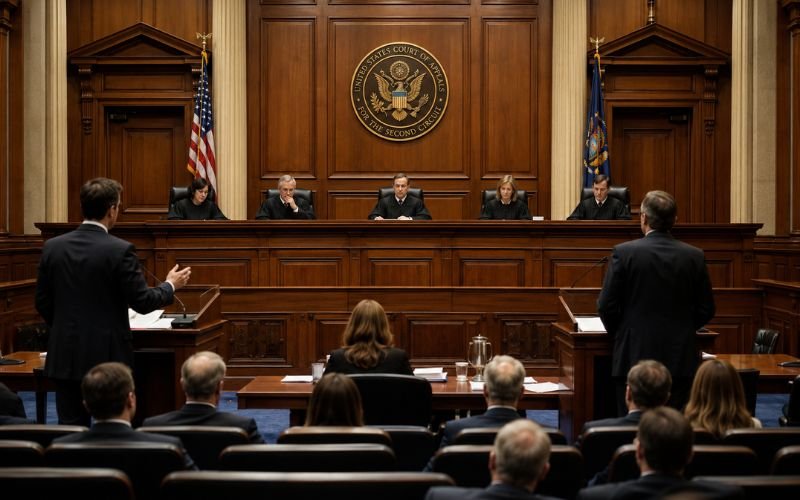
Amicus briefs are most commonly used in:
Appellate Courts
- Courts that review decisions made by lower courts
Supreme Courts
- Especially in cases with national importance
Key Situations
- Landmark legal cases
- Policy-driven disputes
- Industry-wide issues
Benefits of Amicus Briefs
For the Court
- Access to expert opinions
- Better understanding of complex issues
For Organizations
- Ability to influence important decisions
- Opportunity to present their perspective
For Law Firms
- Showcase legal expertise
- Participate in high-impact cases
Challenges and Limitations
While amicus briefs are valuable, they also come with certain challenges:
1. Court Approval
- Some courts require permission before filing
2. Limited Influence
- Judges are not required to follow the arguments
3. High Standards
- Briefs must be well-researched and professionally written
Real-World Example (Simplified)
Let’s say there is a case about environmental regulations.
- A company challenges a new law
- Environmental groups are not part of the case but want to support the law
- They hire a law firm to submit an amicus brief
The brief may:
- Provide scientific data
- Explain environmental impacts
- Argue why the law is necessary
This helps the court consider the broader consequences before making a decision.
Best Practices for Writing an Amicus Brief
Law firms follow certain best practices to make their briefs effective:
Clarity
- Use simple and precise language
- Avoid unnecessary legal jargon so judges can easily understand the argument
Relevance
- Focus only on useful and case-related information
- Avoid repeating arguments already made by the main parties
Credibility
- Support arguments with reliable and authoritative sources
- Ensure all filings follow official court standards, such as the guidelines provided in the Supreme Court Rules on Amicus Curiae
Structure
- Organize content logically with clear headings and flow
- Present arguments in a way that is easy to follow and professionally formatted
Conclusion
Amicus briefs play an important role in modern legal systems by allowing additional voices to be heard in court. They help judges understand complex issues, consider wider impacts, and make more informed decisions.
Law firms like Perkins Coie contribute significantly to this process by preparing well-researched and persuasive briefs. Whether representing businesses, nonprofits, or public interest groups, these firms help shape legal outcomes beyond the immediate parties involved.
For beginners, understanding amicus briefs is a great way to see how the legal system remains flexible, inclusive, and informed by diverse perspectives.
FAQs
1. What does “amicus brief” mean in simple terms?
It means a “friend of the court” document submitted by someone not directly involved in a case to provide helpful information or expertise.
2. Who can file an amicus brief?
Individuals, organizations, law firms, and government agencies can file amicus briefs, usually with the court’s permission.
3. Are amicus briefs legally binding?
No, amicus briefs are not legally binding. Judges may consider them, but they are not required to follow the arguments presented.
4. Why do law firms write amicus briefs?
Law firms write amicus briefs to represent client interests, provide expert legal analysis, and help influence important legal decisions.
5. Do all court cases include amicus briefs?
No, amicus briefs are typically used in complex or high-impact cases, especially in appellate or supreme courts.
6. How long is an amicus brief?
The length varies depending on court rules, but it must follow strict formatting and word limits set by the court.
7. How much does it cost to file an amicus brief?
Filing an amicus brief can cost tens of thousands of dollars in attorney fees. However, many law firms take on these cases pro bono (free of charge), especially in matters involving civil rights or public interest.
8. Why did so many law firms file amicus briefs for Perkins Coie?
Many law firms filed amicus briefs to defend the legal profession’s First Amendment rights and to ensure that lawyers can represent clients without fear of government retaliation.
9. What was the outcome of the Perkins Coie v. DOJ amicus filings?
The overwhelming support from the legal community via amicus briefs helped lead to a permanent injunction by Judge Beryl Howell in 2025, a ruling currently under review by the D.C. Circuit in 2026. These briefs argued that the Executive Orders violated the First and Sixth Amendments by targeting law firms for their advocacy.