

Is Lane Splitting Legal in Florida? (2026 Law Guide)
Lane splitting is illegal in Florida. Under Florida Statutes Section 316.209, motorcycles must stay within a single lane and cannot ride between vehicles.
While some states allow the practice, Florida enforces strict rules focused on safety, liability, and predictable traffic flow. With recent legal updates, the risks of lane splitting now go beyond fines and can significantly impact accident claims.
What Is Lane Splitting?
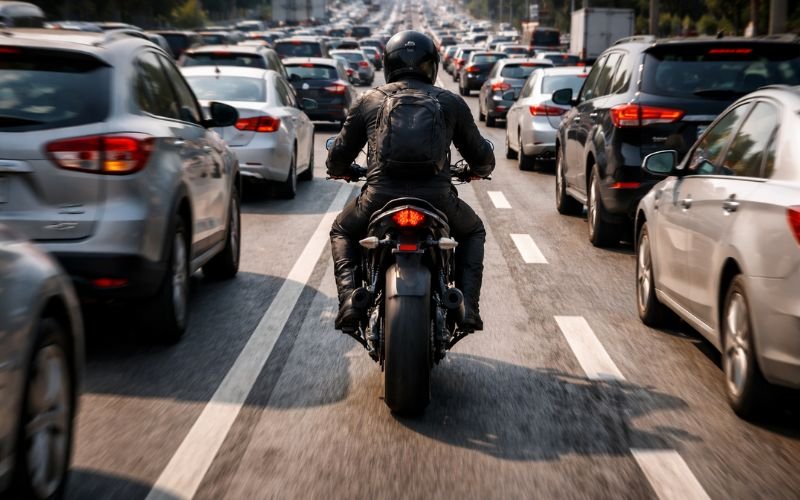
Lane splitting refers to riding a motorcycle between lanes of moving or stopped traffic to bypass congestion.
It is often confused with:
- Lane filtering: Moving between vehicles at low speeds (e.g., at red lights)
- Lane sharing: Two motorcycles riding side-by-side in one lane
Each has different legal implications in Florida.
Is Lane Splitting Legal in Florida? (Quick Answer)
No. Lane splitting is illegal under Florida Statutes Section 316.209. Motorcycles must occupy a full lane and cannot pass within the same lane.
What Does Florida Law Say About Lane Usage?
Florida law clearly defines motorcycle lane rules. Under Florida Statutes Section 316.209:
- Motorcycles have full use of a lane
- Passing within the same lane is prohibited
- Riding between lanes is not allowed
Clarifying Lane Sharing (Important)

Florida law does allow lane sharing, but only under specific conditions:
- Two motorcycles can ride side-by-side (“two abreast”) in a single lane
- This must be done safely
- Riders cannot position themselves in a way that interferes with a car’s space
So:
- Lane sharing (motorcycle + motorcycle) = Legal
- Lane splitting or filtering = Illegal
These rules are enforced by the Florida Department of Highway Safety and Motor Vehicles.
Penalties for Lane Splitting in Florida (2026)
Lane splitting is a non-criminal traffic infraction, but penalties are still significant:
- Fine: Typically $160+ (varies by county)
- License Points: 3 points added
- Insurance Impact: Higher premiums likely
- Additional Risk: May escalate to reckless driving in severe cases
These concrete penalties make lane splitting both a legal and financial risk.
The 51% Rule: Modified Comparative Negligence Explained
Florida now follows a Modified Comparative Negligence system under Florida Statutes Section 768.81.
How It Works
- If you are 50% or less at fault, you can recover damages (reduced by your fault %)
- If you are 51% or more at fault, you recover nothing
Why This Matters for Lane Splitting
If you are in an accident while lane splitting:
- You are already violating traffic law
- Insurance companies may assign higher fault to you
- If found 51% or more at fault, you may lose all compensation
This makes lane splitting a major financial liability, not just a traffic violation.
Lane Splitting vs Lane Filtering vs Lane Sharing (2026 Table)
| Practice | Description | 2026 Legal Status |
| Lane Splitting | Riding between moving cars | Illegal (3 Points + Fine) |
| Lane Filtering | Moving to the front at red lights | Illegal (3 Points + Fine) |
| Lane Sharing | Two bikes side-by-side in one lane | Legal (Allowed by law) |
| HOV Access | Riding in carpool lanes | Legal (No passenger required) |
Did You Know? HOV Lane Advantage
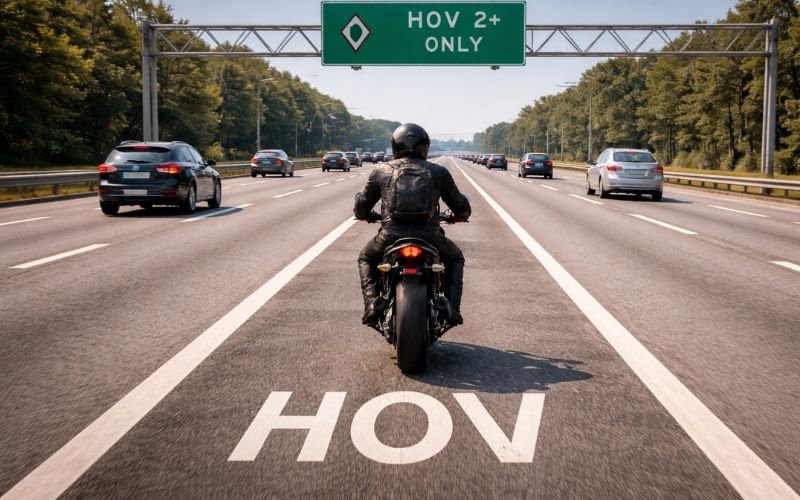
Motorcyclists in Florida have a legal advantage:
- Motorcycles are allowed to use HOV (High Occupancy Vehicle) lanes
- This applies even with a single rider
- It is one of the fastest legal ways to bypass traffic
This makes HOV lanes a safe and legal alternative to lane splitting.
Electric Motorcycles and the 750-Watt Rule (2026 Update)
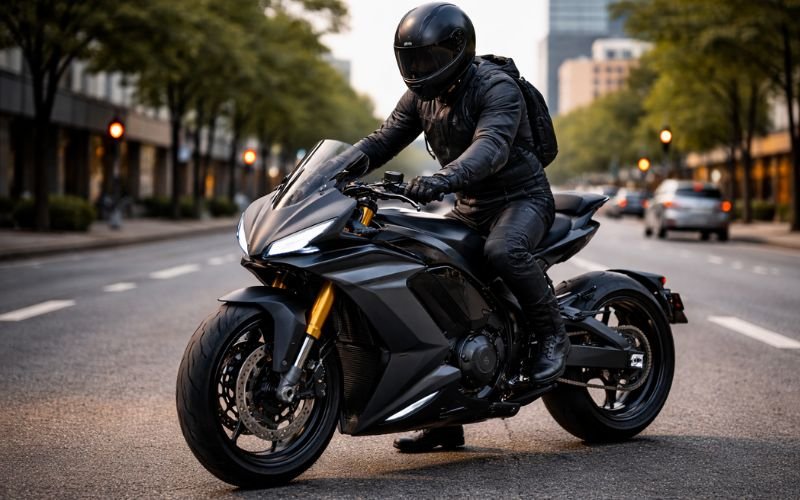
With the rise of electric bikes, many riders assume they are treated differently. However, Florida SB 382 provides clarity.
Key Update:
- An electric motorcycle is defined as:
- 750 watts or more
- Capable of speeds over 28 mph
What This Means:
- These vehicles are legally classified as motorcycles
- They must follow all motorcycle laws
- Lane splitting restrictions apply fully
So whether you ride a gas bike or a high-powered e-moto, the law treats them the same.
States Where Lane Splitting Is Legal
Lane splitting laws vary by state.
For example, California allows lane splitting when done safely.
Key Differences:
- California: Legal with safety guidelines
- Florida: Completely illegal
Florida has not adopted any form of legalization as of 2026.
Why Riders Want Lane Splitting Legalized
Many motorcyclists support lane splitting for practical reasons:
- Reduces traffic congestion
- Lowers risk of rear-end collisions
- Improves travel time
- Prevents engine overheating
Groups like ABATE of Florida have advocated for changes.
However, the law remains unchanged.
Why Lane Splitting Is Illegal in Florida
Florida continues to ban lane splitting due to:
- Safety concerns
- Unpredictable driver behavior
- Higher accident risks
- Enforcement challenges
The state prioritizes consistency and road safety.
Safety Tips for Florida Motorcyclists
To stay safe and compliant:
- Always ride within your lane
- Avoid weaving through traffic
- Maintain safe distances
- Stay visible to drivers
- Follow all traffic laws
What Should You Do If You Get a Ticket?
If you are cited:
- Review the violation carefully
- Understand your penalties
- Decide whether to pay or contest
- Seek legal advice if needed
FAQs
Is lane splitting illegal in Florida in 2026?
Yes, under Florida Statutes Section 316.209.
What is the penalty for lane splitting?
Around $160+ fine and 3 license points.
What is the 51% rule in Florida?
Under Florida Statutes Section 768.81, if you are more than 50% at fault, you cannot recover damages.
Can motorcycles share lanes?
Yes, two motorcycles can ride side-by-side safely.
Are electric motorcycles allowed to lane split?
No, they are treated the same as traditional motorcycles.
Can motorcycles use HOV lanes in Florida?
Yes, even with a single rider.
Conclusion
Lane splitting is strictly illegal in Florida under Florida Statutes Section 316.209, and recent legal updates have made the consequences more serious than ever.
With the introduction of Modified Comparative Negligence, riders who lane split risk losing all compensation in an accident. Additionally, electric motorcycles are now clearly regulated under the same rules.
While states like California allow lane splitting, Florida continues to prioritize safety and legal clarity.
The safest approach is simple: follow the law, use legal alternatives like HOV lanes, and ride responsibly.