
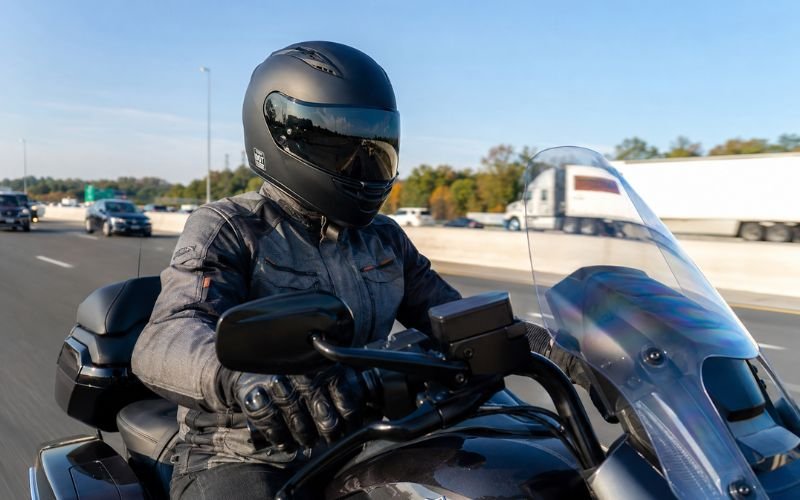
Are Motorcycle Helmets Required by Law?
Estimates show that motorcycles make up only 3% of all vehicles in the US, yet they contribute to 15% of traffic fatalities, according to Auto Insurance. This finding implies that motorcycles pose a greater risk of accidents compared to regular passenger vehicles. It also shows the need for more stringent control of their use.
One regulatory measure imposed by the law is motorcycle helmet laws. As of 2025, three distinct groups border the U.S.: The first group is made up of 19 states and Washington, D.C. This group follows the mandatory wearing of helmets among motorcycle riders. The other group is composed of 28 states that have conditions on who should wear a helmet and who should not wear a helmet. Illinois, Iowa and New Hampshire constitute the last group and these jurisdictions do not require a helmet for all types of riders.
According to motorcycle accident lawyer John W. Stevenson Jr., motorcycle accidents differ from car and truck crashes. You need to understand that this type of case operates on separate rules and is governed by distinct laws if you ever get involved in one.
Let’s discuss what the law says with regard to the wearing of motorcycle helmets.
Universal Helmet Law States
Similar to North Carolina motorcycle helmet laws, the states of California, Florida, New York, and Texas also follow the universal helmet law. According to the statutory requirements, whoever operates or rides a motorcycle must have a helmet that is certified by the Department of Transportation (DOT).
The DOT compliant motorcycle helmets are made in such a manner that they meet the standards of the Federal Motor Vehicle Safety Standard 218. This standard concerns the impact and penetration resistance of the helmet. This guideline also specifies the minimum field of vision that a helmet must have. Helmets that meet the standard should have a DOT label on the back outside shell.
A helmet’s DOT certification is checked and verified by the manufacturer using independent testing. The certification is a basic baseline that state law requires wherever helmet use is mandated.
Partial Helmet Law States: Age-Based and Condition-Based Requirements
The 28 states with partial helmet law requirements usually impose these requirements only on certain rider categories. It can get kind of easy to mix up who counts as “specific.” In general, the standard pattern is as follows: helmets are needed for riders under 18 or under 21. Below are some examples that only make sense once you point out the restrictions or limitations:
- Pennsylvania: • According to state law, if you are under the age of 21 or within 2 years since a motorcycle endorsement was issued, helmets are a must for all motorcyclists. All other riders above the age of 21 and with more than 2 years of riding experience can ride a bike without a helmet.
- Florida: A helmet is mandatory for anyone under the age of 21. Those who are aged twenty-one and above can decide not to wear one if they have at least ten thousand dollars’ insurance covering all medical expenses.
- Michigan: People below 21 years old must have ridden motorcycles for two years and be insured if they want to ride without a helmet. Motorcycle riders aged below 21 must mandatorily wear helmets.
- Nebraska: A person above the age of 21 is allowed to ride without a helmet, provided they have taken a certified motorcycle safety program and possess a corresponding completion card. As of 2024, everyone under the age of 21 will still be required to wear a helmet.
- Virginia: Helmets are mandatory for all riders. Virginia does not really have a partial HELMET law carve-out. It’s a universal approach but some sources wrongly call it a partial state.
Knowledge of these various motorcycle helmet laws between states is important, especially if you are a motorcycle rider. For instance, a 22 year old rider who goes from Pennsylvania into New York suddenly has to wear a helmet that was optional not long before. Failure to do so could risk the rider being involved in legal consequences.
No-Helmet States: Illinois, Iowa, and New Hampshire
Illinois has never had a universal helmet law on the books. Iowa did pass one in 1975 but then repealed it in the following year. Roughly 74 percent of motorcycle deaths in Iowa recently involved riders who were not wearing helmets. The absence of a motorcycle helmet law in New Hampshire applies to a majority of the adult riders.
The lack of helmet law doesn’t make motorcycle riding any less dangerous for these states. Helmet use still changes injury outcomes. Riders who aren’t required to wear helmets end up with head injuries at much higher rates compared with riders who do wear them. In a personal injury case, failure to wear a helmet at the time of the collision may affect the determination of compensatory damages.
How Helmet Use Affects Personal Injury Claims
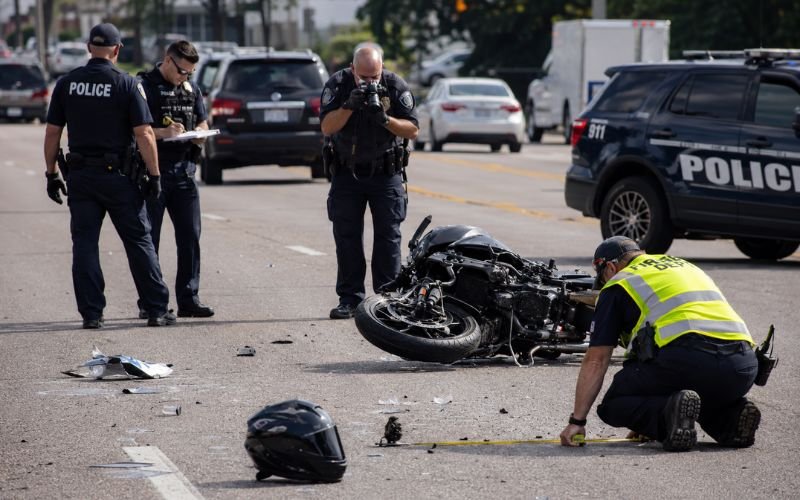
In many motorcycle accident cases, whether a rider was wearing a helmet at the moment of the crash comes up a lot. Insurance companies and defense attorneys bring it up in litigation, even when the state did not require a helmet by law. The idea gets framed around discussions of contributory negligence or comparative fault. If the rider decided not to wear a helmet in a place where it was optional and then suffered head injuries, the defense tries to argue that the rider’s own action played a part in how serious those injuries became.
Judges haven’t all agreed on how to treat that kind of evidence. Some courts say that when helmet use is not required by statute, the rider’s decision not to wear one can’t really be called negligent “as a matter of law.” Their reasoning is that the law already decided the choice is permissible.
In other courts, they let the jury hear that the rider didn’t use a helmet. In this case, the jurors will determine whether the rider took reasonable precautions for their safety. The jury handles the comparative fault piece from there.
In universal helmet law states, riding without a helmet is itself a statutory violation. The violation is relevant to any fine or citation. The established breach of universal helmet law is also important for contributory negligence analysis during an injury claim. A rider who violated the helmet law and sustained head injuries that a helmet would have mitigated faces a more difficult argument against comparative fault reduction of their damages than one in a state where helmet use was optional.
The NHTSA Motorcycle Safety resources publish helmet-effectiveness data and state law information. Several studies suggest helmets do help in preventing head injuries during motorcycle crashes by about 69%. Helmets are also found to be able to cause a reduction in fatalities by over 37%. These statistics are relevant both to safety decisions and to the damages analysis in any crash involving a helmetless rider.
The DOT Certification Requirement and Novelty Helmets
In every state that requires helmet use, the requirement specifies DOT-certified helmets. Novelty helmets, which are widely sold but do not meet FMVSS 218’s structural and impact requirements, do not satisfy helmet laws and do not provide meaningful crash protection. If the motorcyclist lives in a state with helmet laws but opts to wear a novelty helmet that is not safe, then he or she is committing a violation of the State’s stipulations.
The DOT sticker should have information such as the brand, the helmet identification, the size and the confirmation.
Novelty helmets sometimes carry non-genuine DOT stickers. It is a red flag in terms of safety when a helmet is very thin, does not have the optimal structure inside or is lined with foam instead of recommended FMVSS 218 compliant foam. The Consumer Product Safety Commission and NHTSA also help consumers understand how to validate helmets meeting the relevant standards.