
Evidence Needed for Aviation Case Legal Options: A Complete Guide to Building a Strong Claim
Aviation accidents are rare, but when they happen, the legal process can be incredibly complex. Whether the incident involves a commercial airline, private aircraft, helicopter, or airport operation, the outcome of any legal claim depends largely on the quality of the evidence collected.
If you’re wondering about the evidence needed for aviation case legal options, the short answer is this: you need reliable proof that establishes what happened, who was responsible, and how the accident caused injuries or financial losses. Strong documentation, expert analysis, maintenance records, witness statements, and official investigation reports often play a central role in determining liability.
Quick Answer
| Question | Answer |
| What evidence is most important in an aviation case? | Flight records, maintenance logs, investigation reports, witness statements, medical records, and expert testimony. |
| Why is evidence important? | It helps prove liability, damages, and the cause of the accident. |
| Who collects the evidence? | Investigators, attorneys, aviation experts, government agencies, insurers, and sometimes victims. |
| Can missing evidence hurt a case? | Yes. Missing or altered evidence may weaken legal claims significantly. |
| Should evidence be collected immediately? | Yes. Early preservation often prevents loss or destruction of important information. |
Understanding Aviation Cases
Aviation litigation involves legal disputes arising from aircraft accidents, injuries, mechanical failures, airport incidents, pilot negligence, or defective aircraft components.
Potential defendants may include:
- Airlines
- Aircraft manufacturers
- Maintenance companies
- Aircraft owners
- Pilots
- Airport operators
- Air traffic control organizations
- Parts manufacturers
Unlike ordinary vehicle accidents, aviation cases often involve multiple parties, technical regulations, international treaties, and specialized investigators.
Why Evidence Matters
The success of any aviation claim depends on proving four essential elements:
- Duty of care
- Breach of duty
- Causation
- Damages
Without sufficient evidence, even a legitimate claim may fail.
Evidence helps answer questions such as:
- What caused the accident?
- Was equipment defective?
- Did someone act negligently?
- Were safety regulations followed?
- How severe were the injuries?
- What financial losses occurred?
Types of Evidence Needed for Aviation Case Legal Options
Below are the most valuable forms of evidence in aviation litigation.
1. Accident Investigation Reports
Government investigations often provide critical information.
Reports may include:
- Probable cause
- Timeline of events
- Weather conditions
- Pilot communications
- Aircraft damage
- Mechanical findings
- Safety recommendations
Legal Note: In the United States, federal law generally prohibits the National Transportation Safety Board’s (NTSB) final “probable cause” conclusions from being admitted as evidence in a civil lawsuit to establish liability. However, your legal team can fully utilize the extensive factual information gathered during the investigation—including witness interviews, wreckage examinations, technical analyses, and flight data—to build a strong case.
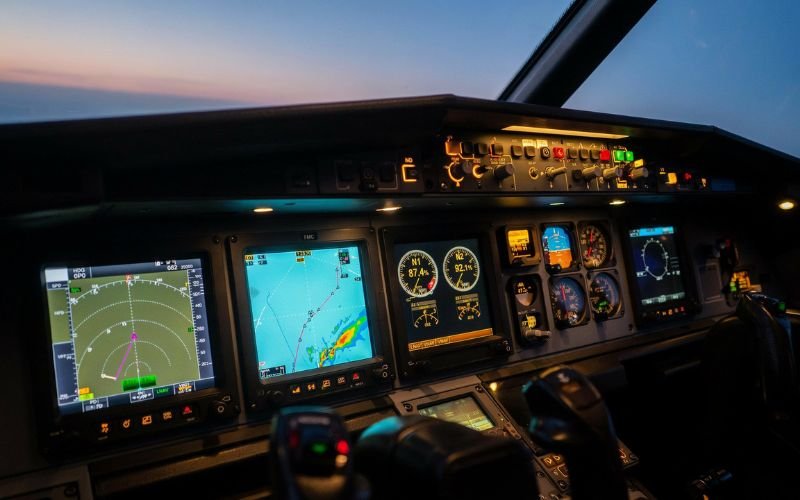
2. Flight Data Recorder Information
Modern aircraft record thousands of flight parameters.
Important data includes:
- Airspeed
- Altitude
- Engine performance
- Flight controls
- System warnings
- Flight path
These records help experts reconstruct exactly what happened.
3. Cockpit Voice Recorder
Voice recordings may reveal:
- Pilot decision-making
- Emergency procedures
- Crew coordination
- Mechanical warnings
- Air traffic communications
This evidence can clarify whether human error contributed to the accident.
4. Aircraft Maintenance Records
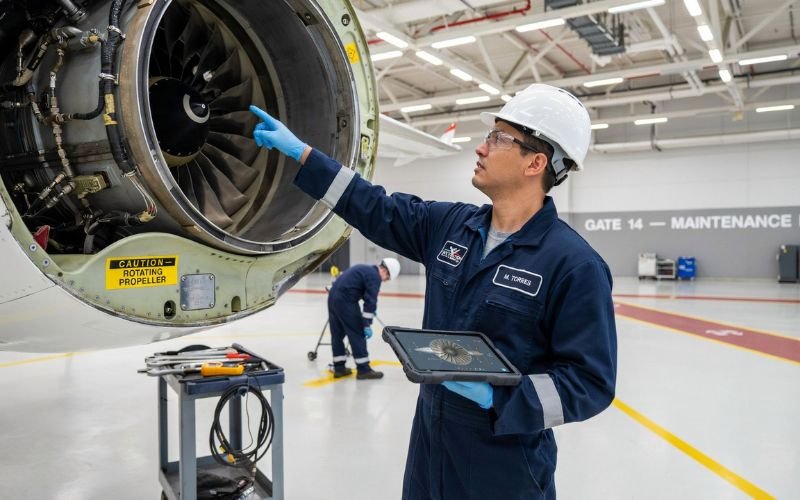
Maintenance documentation often becomes one of the most important pieces of evidence.
Records may show:
- Inspection history
- Repair work
- Replacement parts
- Deferred maintenance
- Safety compliance
- Manufacturer recommendations
Poor maintenance can create significant liability.
5. Pilot Records
Attorneys frequently review:
- Flight hours
- Training history
- Medical certification
- Previous incidents
- Licensing
- Duty schedules
- Rest periods
Fatigue or inadequate training may become important legal issues.
6. Air Traffic Control Communications
Recorded communications can establish:
- Instructions provided
- Pilot responses
- Weather warnings
- Flight clearances
- Emergency declarations
These recordings help determine whether communication failures contributed to the accident.
7. Weather Information
Weather evidence may include:
- Radar reports
- Forecasts
- Wind data
- Visibility
- Storm activity
- Icing conditions
- Turbulence reports
This information helps experts evaluate whether environmental conditions played a role.
8. Witness Statements
Witnesses may include:
- Passengers
- Flight crew
- Airport employees
- Ground personnel
- Emergency responders
- Nearby observers
Independent witness accounts often strengthen the timeline.
9. Photographs and Video
Visual evidence may document:
- Crash scene
- Aircraft damage
- Debris field
- Weather conditions
- Airport environment
- Injuries
Drone footage and surveillance cameras may also provide valuable evidence.
10. Medical Records
Medical documentation proves:
- Nature of injuries
- Treatment received
- Recovery timeline
- Permanent disability
- Future medical needs
Accurate medical records directly affect compensation.
11. Financial Records
Economic damages require supporting documents such as:
- Medical bills
- Pay stubs
- Tax returns
- Lost income calculations
- Future earning capacity
- Rehabilitation expenses
- Property damage estimates
12. Expert Opinions
Aviation cases frequently require specialists including:
- Aviation engineers
- Accident reconstruction experts
- Pilots
- Maintenance experts
- Medical professionals
- Economists
- Human factors specialists
Experts help explain complex technical issues to judges and juries.
Official Investigation Reports
Several organizations may investigate aviation accidents depending on where they occur and the type of flight involved.
Investigators typically examine:
- Aircraft wreckage
- Mechanical systems
- Maintenance history
- Flight operations
- Human performance
- Environmental factors
Legal teams often use these findings alongside their own independent investigations.
Medical Evidence
Medical evidence extends beyond emergency room records.
Important documents include:
- Hospital reports
- Diagnostic imaging
- Surgical records
- Physical therapy notes
- Prescription history
- Psychological evaluations
- Disability assessments
Long-term injuries often require ongoing documentation.
Financial Documentation
Compensation usually depends on proving actual losses.
Useful documents include:
| Document | Purpose |
| Medical bills | Healthcare expenses |
| Employment records | Lost wages |
| Tax returns | Income verification |
| Repair estimates | Property damage |
| Travel expenses | Additional costs |
| Caregiver invoices | Long-term assistance |
Digital and Electronic Evidence
Technology has expanded the types of evidence available.
Examples include:
- GPS tracking
- Mobile phone data
- Aircraft software logs
- Maintenance databases
- Electronic inspection reports
- Security camera footage
- Airport surveillance
- Flight tracking services
Digital records can fill important gaps in accident reconstruction.
Expert Witness Testimony
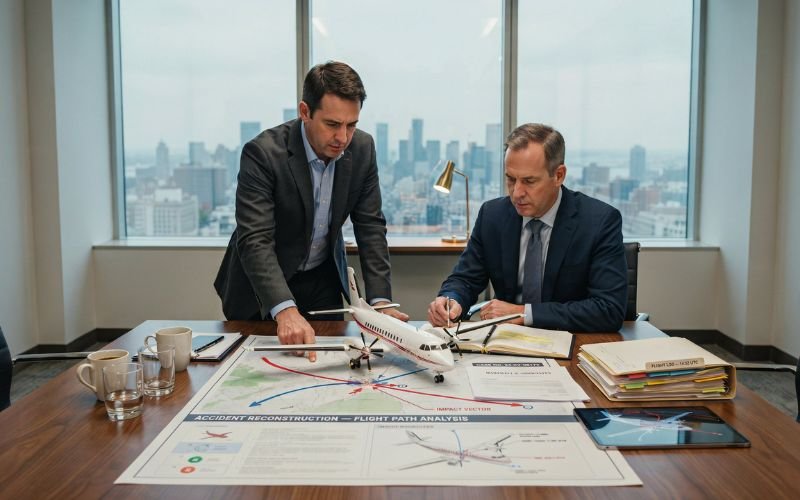
Experts often explain highly technical issues in simple terms.
Common areas include:
Aviation Engineering
Reviews aircraft design, structural failures, and mechanical defects.
Human Factors
Evaluates pilot workload, fatigue, decision-making, and crew communication.
Accident Reconstruction
Recreates the sequence of events leading to the accident.
Medical Experts
Explain injuries, prognosis, disability, and future treatment needs.
Economic Experts
Calculate lost earnings and future financial losses.
How Liability Is Proven
Different parties may share responsibility for an aviation accident.
Possible causes include:
- Pilot negligence
- Maintenance failures
- Manufacturing defects
- Airport hazards
- Air traffic control errors
- Improper inspections
- Defective aircraft parts
- Fuel contamination
Evidence helps determine each party’s level of responsibility.
Common Legal Options After an Aviation Accident
Depending on the circumstances, legal options may include:
- Personal injury claims
- Wrongful death lawsuits
- Product liability claims
- Negligence actions
- Insurance claims
- Contract disputes
- International Aviation Claims (The Montreal Convention): If the accident occurred during international air travel, your claim may be governed by the Montreal Convention, an international treaty that establishes airline liability for passenger injuries. Under this framework, commercial airlines are subject to strict liability for proven passenger injuries up to specified compensation limits, meaning passengers generally do not need to prove negligence to recover damages within those limits. Claims exceeding those limits may require additional proof depending on the circumstances.
The legal options available will depend on where the accident occurred, who may be responsible, the type of flight involved, and the laws or international agreements that apply.
Real-Life Example
Imagine a private aircraft crashes shortly after takeoff.
The investigation discovers:
- Maintenance logs show repeated engine problems.
- Mechanics postponed a recommended repair.
- Flight data confirms sudden engine failure.
- Expert engineers identify a defective replacement component.
- Medical records document severe injuries to passengers.
Together, these pieces of evidence create a much stronger legal claim than witness testimony alone.
Benefits of Strong Evidence
Strong evidence can:
- Increase the likelihood of a successful claim.
- Support fair compensation.
- Clarify responsibility among multiple parties.
- Strengthen settlement negotiations.
- Reduce disputes over liability.
- Improve credibility in court.
Common Mistakes to Avoid
Avoid these errors after an aviation incident:
- Waiting too long to preserve evidence.
- Discarding damaged property.
- Posting accident details on social media.
- Failing to seek immediate medical care.
- Relying only on memory instead of documentation.
- Ignoring expert evaluations.
- Accepting early settlements without understanding the evidence.
Evidence Comparison Table
| Evidence Type | Purpose | Strength |
| Flight recorder | Reconstructs flight | Very High |
| Maintenance records | Shows aircraft condition | Very High |
| Medical records | Proves injuries | Very High |
| Witness statements | Confirms events | Moderate |
| Photos and videos | Documents damage | High |
| Expert testimony | Explains technical issues | Very High |
| Weather reports | Shows environmental factors | High |
| Financial records | Proves economic losses | High |
Frequently Asked Questions
1. What is the most important evidence in an aviation accident case?
Flight data, maintenance records, official investigation findings, medical documentation, and expert testimony are typically among the most influential forms of evidence.
2. Can passengers file legal claims after an aviation accident?
Yes. Injured passengers or their families may have legal options depending on the circumstances and applicable laws.
3. How long should evidence be preserved?
Evidence should be preserved as soon as possible because documents, electronic records, and physical evidence may become unavailable over time.
4. Do investigation reports automatically determine liability?
No. In the United States, official government conclusions—such as an NTSB “probable cause” determination—generally cannot be used in court to establish legal liability. However, the underlying factual evidence collected during the investigation, including wreckage examinations, flight data, maintenance records, photographs, and witness interviews, can be analyzed by independent experts and used to help prove liability in a civil case.
5. Why are maintenance records so important?
They may reveal whether inspections were completed, repairs were delayed, or known mechanical issues were ignored.
6. Can digital evidence help prove an aviation claim?
Yes. GPS data, surveillance footage, aircraft software logs, and electronic maintenance records can all strengthen a case.
7. What damages may be recoverable?
Depending on the facts and applicable law, damages may include medical expenses, lost income, property damage, rehabilitation costs, and other compensable losses.
8. Should I speak with insurance companies before gathering evidence?
It is generally advisable to preserve evidence and understand your legal rights before making detailed statements about the accident.
9. Can more than one party be responsible for an aviation accident?
Yes. Liability may be shared among airlines, pilots, maintenance providers, manufacturers, airport operators, or other responsible parties.
10. Why are expert witnesses commonly used?
Aviation accidents often involve highly technical issues that require specialized knowledge to explain aircraft systems, accident causes, and resulting damages.
Conclusion
Understanding the evidence needed for aviation case legal options is essential for anyone involved in an aviation accident or related legal dispute. Strong evidence forms the foundation of a successful claim by helping establish liability, demonstrate damages, and support fair compensation.
The strongest cases usually combine multiple forms of evidence, including flight data, maintenance records, official investigation findings, medical documentation, financial records, witness testimony, and expert analysis. Acting quickly to preserve this information can make a significant difference in protecting legal rights and presenting a well-supported case.