Judge Provinzino Holds Attorney in Contempt: What Happened and Why It Matters
A federal judge’s decision to hold a government attorney in contempt of court has drawn national attention and sparked discussion about judicial authority, government accountability, and compliance with court orders.
In February 2026, U.S. District Judge Laura M. Provinzino of Minnesota held Department of Justice attorney Matthew Isihara in civil contempt after the government failed to fully comply with a court order related to the release of an immigrant detainee. The ruling became one of the most widely discussed legal developments of the year because it highlighted growing tensions between federal courts and government agencies handling immigration cases.
But what exactly happened? Why did the judge take such a serious step? And what does the decision mean for attorneys, government agencies, and the legal system as a whole?
This article breaks down the case in simple terms and explains why it matters.
Who Is Judge Laura Provinzino?
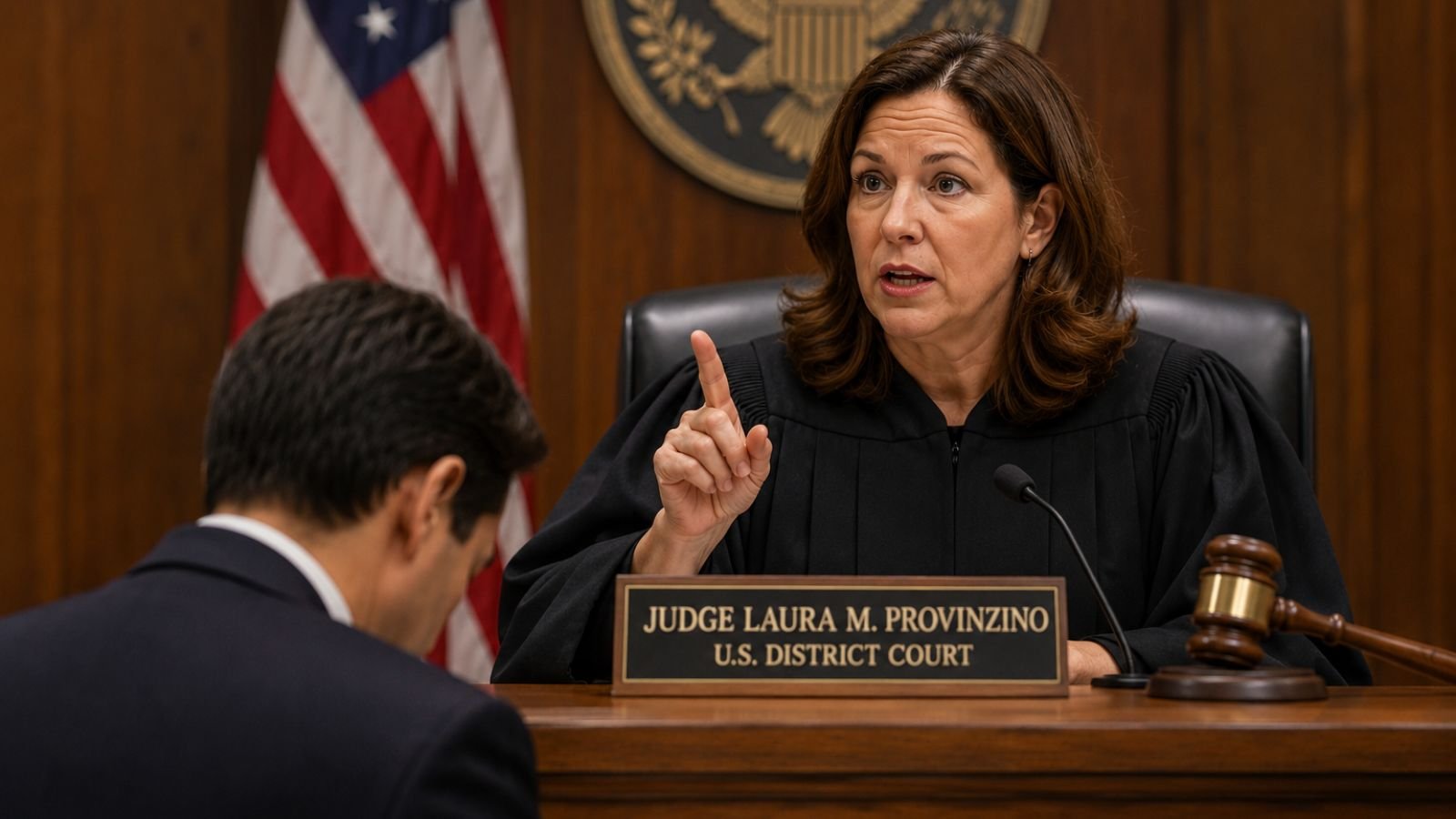
Judge Laura M. Provinzino serves on the U.S. District Court for the District of Minnesota. Before becoming a federal judge, she worked for many years as an assistant U.S. attorney in Minnesota.
In the case that attracted national attention, Judge Provinzino was responsible for reviewing a legal challenge filed by an immigrant detainee who argued that his continued detention was unlawful. When the government failed to fully comply with her order, she exercised the court’s contempt powers.
The Background of the Case
The case involved Rigoberto Soto Jimenez, a Mexican citizen who had been living in Minnesota since 2018 and was married to a lawful permanent resident.
Soto Jimenez was arrested during a large-scale immigration enforcement operation and placed in immigration detention. He later filed a habeas corpus petition challenging his continued detention in federal court. After reviewing the case, Judge Provinzino concluded that the government lacked sufficient legal grounds to continue holding him and ordered his release.
The judge’s order required more than simply releasing him from custody. The government was also directed to return his personal property and identification documents and comply fully with the terms of the release order.
What Led to the Contempt Finding?
The controversy began after the government released Soto Jimenez but allegedly failed to return important identification documents and other property as required by the court order.
According to court records and reports, Soto Jimenez was released without his identification documents and was transported to Texas instead of being released under the conditions expected by the court. Without his identification, he faced significant difficulties traveling and reestablishing himself after detention.
Judge Provinzino viewed this as a failure to comply with her order.
As a result, she scheduled a hearing requiring government attorneys to explain why they should not be held in contempt of court. During that hearing, attorney Matthew Isihara acknowledged that the matter had effectively “fallen through the cracks” and cited heavy workloads and staffing shortages as contributing factors.
Judge Provinzino’s Decision
After hearing the explanations, Judge Provinzino held Matthew Isihara in civil contempt.
The judge ordered a financial sanction of $500 per day until the government certified that Soto Jimenez had received his identification documents. She rejected the argument that understaffing and excessive caseloads excused noncompliance with a court order.
Judge Provinzino emphasized that courts cannot function properly if parties fail to follow judicial orders. She stated that government agencies are expected to meet the same standards as private litigants and attorneys.
The following day, reports indicated that the missing property was returned, and the ongoing daily fines were no longer necessary.
Why Contempt of Court Is Such a Serious Matter
Contempt of court is one of the strongest enforcement tools available to judges.
When a court issues an order, all parties involved are expected to comply. If they fail to do so, the court may impose sanctions designed to encourage compliance or punish misconduct. Contempt findings help protect the authority of the judiciary and ensure that court orders are respected.
In civil contempt cases, the primary goal is usually to compel compliance rather than punish someone for past actions.
Common Reasons for Civil Contempt
- Ignoring a court order
- Failing to produce required documents
- Violating court-imposed conditions
- Refusing to comply with judicial directives
- Delaying compliance without justification
Why This Case Received National Attention
Many contempt findings occur with little public notice. However, the Provinzino-Isihara case attracted significant attention for several reasons.
1. It Involved the Federal Government
The case was not about a private citizen or private law firm. It involved attorneys representing the federal government.
When government lawyers are accused of violating court orders, questions naturally arise about accountability and institutional compliance.
2. Immigration Cases Were Already Under Scrutiny
At the time of the ruling, federal courts in Minnesota were handling a large number of immigration detention challenges. Judges had expressed concerns about repeated issues involving delayed compliance with release orders and property-return requirements.
3. The Judge Rejected Staffing Excuses
One of the most discussed aspects of the ruling was Judge Provinzino’s refusal to accept understaffing and heavy workloads as a legal defense.
The judge made clear that administrative difficulties do not excuse failure to comply with court orders.
Lessons for Attorneys
The case offers several important lessons for legal professionals.
Court Orders Must Be Taken Seriously
Even unintentional mistakes can lead to serious consequences when court orders are involved.
Communication Is Essential
If compliance problems arise, attorneys are generally expected to notify the court immediately and seek guidance rather than remain silent.
Workload Is Not Always a Defense
Heavy caseloads may explain why a mistake occurred, but they do not automatically excuse noncompliance.
Professional Responsibility Matters
Attorneys have ethical obligations not only to their clients but also to the courts in which they practice.
Broader Impact on the Legal System
The ruling serves as a reminder that the judiciary has the authority to enforce its orders against any party, including government agencies.
Many legal observers viewed the case as an example of judicial oversight functioning as intended. Courts issue orders, parties are expected to comply, and judges have mechanisms available when compliance does not occur.
The decision also reinforced a principle that lies at the heart of the American legal system: no individual or institution is above the law.
Conclusion
The case in which Judge Laura Provinzino held DOJ attorney Matthew Isihara in civil contempt became a major legal story because it involved questions of accountability, immigration enforcement, and respect for judicial authority.
At the center of the dispute was a simple but important issue: compliance with a court order. Judge Provinzino concluded that the government’s failure to return a detainee’s identification documents violated her directives and warranted contempt sanctions. Although the issue was later resolved and the property returned, the ruling sent a strong message about the importance of following court orders.
For attorneys, government agencies, and the public alike, the case highlights a fundamental principle of the justice system: court orders are not suggestions—they are legal obligations.
FAQs
Who was held in contempt by Judge Provinzino?
Judge Laura Provinzino held DOJ attorney Matthew Isihara in civil contempt of court in February 2026.
Why was the attorney held in contempt?
The contempt finding resulted from the government’s failure to fully comply with a court order requiring the return of identification documents and property to Rigoberto Soto Jimenez.
Was the contempt criminal or civil?
The court imposed civil contempt sanctions intended to compel compliance with the order.
What penalty did the judge impose?
Judge Provinzino ordered a $500-per-day sanction until the required identification documents were returned.
Did the government eventually comply?
Yes. Reports indicated that the missing property was later returned, ending the need for continuing sanctions.
Why is this case important?
The case highlights the power of federal courts to enforce their orders and demonstrates that government attorneys are subject to the same compliance requirements as other litigants.