
Statute of Limitations for Childhood Sexual Abuse
A lot of people who made it through childhood sexual abuse don’t share what happened right away. Around 90% of these child sexual abuse cases never make it to the authorities, so they just stay in silence. It’s also estimated that at least one in four girls and about one in 20 boys in the United States go through childhood sexual abuse sometime before turning 18.
The average age at which survivors disclose childhood sexual abuse is estimated to be over 52 years, often long after traditional legal deadlines have expired. It’s a known result of trauma, a heavy mix of shame, and, in many cases, the perpetrator’s very intentional grooming patterns.
Whether someone can still bring a civil lawsuit once they’re ready depends on the specific laws of the state where the abuse occurred. These rules have shifted significantly in recent years, so in some places, people might now bring claims that used to be considered permanently closed.
Let’s take a look at what the statute of limitations for childhood sexual abuse is and how we can protect our children from it.
What a Statute of Limitations Means for Survivors

The statute of limitations is the time limit within which a victim of a crime can file a case in court. If this period passes without any action, the case can no longer be brought to justice. If this time has expired, the case will not even be heard, regardless of the validity of the complaint.
Traditionally, cases of childhood sexual abuse had the same time limit as other personal injury cases, allowing victims only a couple of years from reaching adulthood to file a suit. But nowadays it has become clear that many victims may have needed more time to recover.
Most states apply the “discovery rule,” under which the clock begins ticking when the survivor has discovered, or reasonably should have discovered, that the sexual abuse caused mental injury. As a result, more survivors can bring civil suits years after the abuse occurred.
A key point to note here is that there are often different statutes of limitations for civil actions and for criminal offenses.
How State Laws Differ
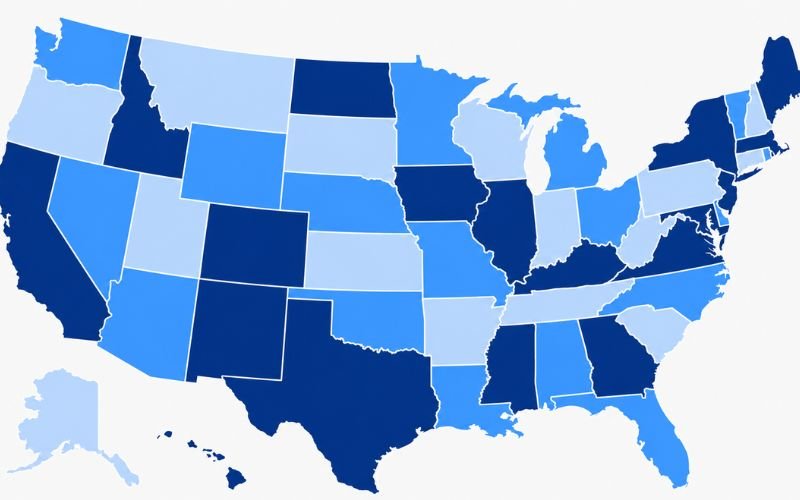
A child abuse conviction can be considered a felony or misdemeanor, depending on the crime and the severity of the actions, according to Hickory child abuse defense lawyer Blair E. Cody III. However, there is no national standard that exists. By 2025, states fall into the following groups.
- No statute of limitations: Delaware and Nevada have practically abolished the statutes of limitations applicable to civil sexual abuse cases in childhood, allowing lawsuits to be brought at any point in time, while Washington state has canceled its civil statute of limitations in cases involving dates on or after June 6, 2024.
- Extended time frames: New York permits bringing legal proceedings by the age of 55 according to the Child Victims Act. California allows individuals to bring a suit by age 40 or five years after the injury was discovered. Hawaii has similar provisions, allowing survivors to bring actions within eight years of turning 18, or, if the survivor is already older than 18, within three years of discovering the injury.
- Reduced time frames: Some states limit the timeframe for filing lawsuits to only a limited period after the individual has turned 18 without discovery-based extensions, which implies less room for survival in terms of civil lawsuits.
Lookback Windows and Their Constitutional Limits
A lookback window is basically a short-lived period when survivors whose civil claims had already run out can try to file new lawsuits, even if it feels like it should be too late.
These windows have appeared in multiple states, allowing people who suffered institutional abuse tied to churches, schools, and youth organizations to seek justice.
California kicked off a two-year lookback window in January 2026 for some adult survivors, while Mississippi, in the meantime, paused its civil statute of limitations for childhood sexual abuse claims from July 2024 to June 2027. Louisiana also played it out longer, extending its own lookback window through June 2027, after the state Supreme Court basically affirmed it was constitutional.
Still, not every revival law has made it through the courts cleanly. From 2020 to 2025, the supreme courts of Utah, Kentucky, Colorado, Maine, and North Carolina decided that once statutes of limitations expire, it creates a vested legal right, and that right can’t be revived after the fact by later legislation.
Other courts, however, went the other way. So, a lookback window in a particular state may already be knocked out legally.
What Civil Litigation Can Accomplish

Civil suits and criminal suits have different functions in terms of the prosecution of the offenders. Criminal suits are instituted by the state, while the survivors bring the civil suits, hoping to get compensation for their losses from people or institutions involved.
Institutional liability is often a significant issue in many of these matters. Schools, religious organizations, sports programs, and other organizations can be found liable when they knew about abuse yet chose to shelter the perpetrator instead of the child.
Even if someone gets acquitted in criminal court, that doesn’t automatically stop a civil case from moving forward. The standard of proof is also lower in civil court than in criminal proceedings, so the final result can be totally different.
If survivors are thinking about filing a civil claim, they should speak with an attorney who handles childhood sexual abuse cases, specifically. Several attorneys work on contingency, so no fee is charged unless compensation is actually recovered.
The American Bar Association also has resources to help people find qualified legal counsel.
The Window May Be Wider Than Survivors Expect
It is often mistakenly assumed that a civil claim is still open or expired. Times have changed drastically, and there could be new possibilities you never considered before.
To find out what you can do, talk to a lawyer knowledgeable about your state’s laws. With changes in childhood sexual abuse laws, many former victims are discovering new rights and possibilities.