
Progressive Class Action Lawsuit Settlement: Complete Guide (2026 Update)
What Is a Progressive Class Action Lawsuit Settlement?
A progressive class action lawsuit settlement in the United States is a legal agreement where a group of individuals—known as a “class”—resolves a case against a company or organization for widespread harm such as consumer fraud, insurance disputes, or labor law violations.
Under U.S. law, these cases are typically governed by Federal Rule of Civil Procedure 23, which allows one or more plaintiffs to represent a larger group with similar claims. Instead of filing individual lawsuits, affected individuals can recover compensation through a single, consolidated legal action.
A progressive settlement approach goes beyond monetary payouts. It often includes corporate reforms, stricter compliance measures, and improved protections for consumers, employees, or policyholders.
You may already qualify for compensation from a progressive class action lawsuit settlement—even if you never filed a lawsuit or hired a lawyer.
Quick Definition
A progressive class action lawsuit settlement is a U.S. legal resolution where a group of people collectively settles claims against a company, receiving compensation and often benefiting from policy changes or improved corporate practices.
Understanding the Core Concepts
To clearly understand how these settlements work in the U.S., here are the key elements:
What Is a Class Action Lawsuit?
A class action lawsuit is a type of legal case where one or more plaintiffs file on behalf of a larger group with similar claims. These cases are commonly filed in U.S. federal or state courts when:
- Consumers are overcharged or misled
- Employees face wage and hour violations under laws like the Fair Labor Standards Act (FLSA)
- Companies violate data privacy or consumer protection laws
Once the court certifies the class, all eligible individuals are automatically included unless they choose to opt out.
What Is a Settlement?
A settlement is a legally binding agreement between plaintiffs and defendants that resolves a lawsuit without going to trial. In the U.S., most class action lawsuits end in settlements because:
- Trials are time-consuming and expensive
- Companies want to limit financial and legal risk
- Both parties prefer a predictable outcome
Settlements typically include financial compensation and are subject to court approval to ensure fairness to all class members.
What Makes a Settlement “Progressive”?
A progressive class action settlement in the U.S. includes broader reforms beyond compensation. These may involve:
- Changes to company policies or business practices
- Improved compliance with federal and state laws
- Enhanced transparency in pricing, contracts, or services
- Ongoing monitoring or reporting requirements
This approach ensures long-term impact and helps prevent similar issues in the future.
Real-World Examples in the United States
Progressive class action lawsuit settlements are common across major U.S. industries:
Insurance Settlements (e.g., auto, health, life)
Policyholders may file class actions against insurers like Progressive Corporation for:
- Denied or underpaid claims
- Improper policy interpretations
- Unfair premium practices
Employment & Labor Law Settlements
U.S. employees often participate in class actions involving:
- Unpaid overtime or minimum wage violations
- Worker misclassification (independent contractor vs employee)
- Workplace discrimination under EEOC laws
Consumer Protection & Data Privacy Settlements
Consumers in the U.S. frequently file lawsuits related to:
- False advertising or deceptive business practices
- Defective products
- Data breaches involving personal information
Why This Matters for U.S. Consumers
Understanding progressive class action lawsuit settlements helps you:
- Check eligibility for compensation in active U.S. cases
- Protect your rights under federal and state laws
- Participate in settlements without hiring a private attorney
- Hold corporations accountable for widespread misconduct
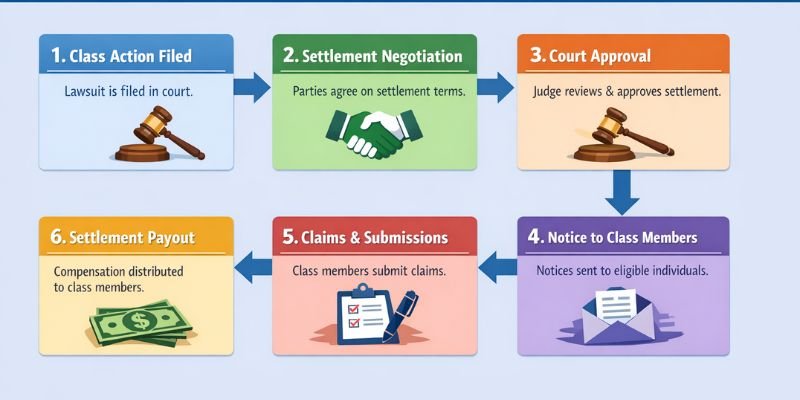
How Progressive Class Action Settlements Work
In the United States, a progressive class action lawsuit settlement follows a structured legal process designed to ensure fairness, transparency, and court oversight. Most cases are handled under federal or state class action rules, with courts playing a critical role in approving the final outcome.
Understanding each stage helps you track where a case stands and when you may become eligible to file a claim.
Step-by-Step Process
1. Filing the Lawsuit
The process begins when one or more individuals (lead plaintiffs) file a lawsuit against a company for widespread harm. These claims often involve:
- Consumer fraud or deceptive practices
- Insurance disputes
- Wage and hour violations
The complaint outlines the allegations and seeks to represent others with similar claims.
2. Class Certification
Before the case can proceed as a class action, the court must certify it. This means:
- The group of affected individuals is clearly defined
- Claims are similar across all members
- A class action is the most efficient way to resolve the dispute
If certification is approved, all eligible individuals automatically become class members, unless they opt out.
3. Negotiation Phase
After certification, both sides enter settlement negotiations. This stage may involve:
- Reviewing evidence and damages
- Mediation with a neutral third party
- Discussions on compensation and policy changes
In progressive settlements, negotiations often include non-monetary reforms, such as changes in company policies or compliance practices.
4. Settlement Agreement
Once both parties agree, a formal settlement agreement is drafted. This document includes:
- Total settlement amount
- Eligibility criteria for claimants
- Payment structure (cash, vouchers, or benefits)
- Any required changes in company practices
This agreement is then submitted to the court for preliminary review.
5. Court Approval
U.S. courts must approve all class action settlements to ensure fairness. This involves:
- Preliminary approval (initial review)
- Notifying class members (email, mail, or ads)
- Allowing members to object or opt out
- Final approval hearing
The judge evaluates whether the settlement is fair, reasonable, and adequate for all class members.
6. Compensation Distribution
After final approval, eligible class members can receive compensation by:
- Submitting a claim form (online or offline)
- Providing proof (if required)
- Meeting the deadline
Payments are then distributed via:
- Direct deposit
- Checks
- Digital payment platforms
Key Parties Involved
Understanding who’s involved in a progressive class action lawsuit settlement helps clarify how decisions are made.
Plaintiffs (Class Members)
These are individuals affected by the issue. They may include:
- Consumers
- Employees
- Policyholders
A few plaintiffs act as lead representatives, while others are automatically included once the class is certified.
Defendant (Company or Organization)
This is the entity being sued, often a corporation accused of:
- Unfair business practices
- Legal violations
- Financial harm to a large group
For example, companies like Progressive Corporation may face class action claims related to insurance practices.
Attorneys (Class Counsel)
Class action lawyers represent the entire group of plaintiffs. Their role includes:
- Filing the lawsuit
- Negotiating the settlement
- Ensuring fair compensation
They are typically paid from the settlement fund, meaning class members usually pay no upfront legal fees.
Judge
The judge oversees the entire process and ensures:
- The class is properly certified
- The settlement is fair to all members
- Legal procedures are followed
Final approval from the court is required before any compensation is distributed.
Types of Progressive Class Action Settlements
Progressive class action lawsuit settlements in the United States span multiple industries, depending on the nature of the harm caused. These settlements not only provide compensation but often lead to regulatory compliance improvements and corporate policy changes.
Below are the most common types of class action settlements affecting U.S. consumers, employees, and policyholders:
Consumer Protection Settlements
Consumer protection class action settlements arise when businesses engage in deceptive, unfair, or misleading practices that impact a large group of customers.
These cases are typically filed under federal and state consumer protection laws, including statutes enforced by the Federal Trade Commission.
Common Issues:
- False or misleading advertising
- Hidden fees or overbilling
- Defective or unsafe products
- Subscription traps or auto-renewal scams
Example Scenario:
A company markets a product with claims that are later proven false. A class action lawsuit may result in refunds, discounts, or changes in marketing practices.
Employment & Labor Law Settlements
Employment-related class action settlements involve violations of U.S. labor laws that affect groups of employees. These cases are often governed by federal laws like the Fair Labor Standards Act (FLSA) and enforced by agencies such as the U.S. Department of Labor.
Common Issues:
- Unpaid overtime or minimum wage violations
- Employee misclassification (independent contractor vs employee)
- Meal and rest break violations
- Workplace discrimination or harassment
Example Scenario:
A company fails to pay overtime wages to hourly workers. Employees file a class action and receive back pay along with policy changes in payroll practices.
Insurance Settlements (e.g., Progressive Insurance Cases)
Insurance class action settlements occur when policyholders allege unfair practices by insurance companies, including claim denials or underpayments.
Large insurers like Progressive Corporation have faced class action claims related to policy interpretation and claims handling practices.
Common Issues:
- Denied or delayed insurance claims
- Underpayment of valid claims
- Misrepresentation of policy coverage
- Unfair premium increases
Example Scenario:
Policyholders discover that an insurer systematically undervalued claims. A settlement may provide compensation and require updated claims handling procedures.
Data Breach & Privacy Settlements
With the rise of digital services, data breach and privacy class actions have become one of the fastest-growing categories in the U.S.
These cases often involve violations of data protection laws and may be investigated by agencies like the Federal Trade Commission.
Common Issues:
- Unauthorized access to personal data
- Exposure of sensitive information (SSN, credit card data)
- Failure to implement adequate cybersecurity measures
- Sharing user data without consent
Example Scenario:
A company experiences a data breach exposing millions of users’ personal information. A class action settlement may offer cash compensation, credit monitoring services, and improved data security practices.
Key Takeaway
Each type of progressive class action lawsuit settlement serves a dual purpose:
- Financial recovery for affected individuals
- Long-term corporate accountability and reform
Understanding these categories helps you quickly identify where you may qualify for compensation and which settlements are most relevant to your situation.
Latest Progressive Class Action Settlement Payouts (2024–2026)
Staying updated with the latest progressive class action settlement payouts is essential, especially in the United States where new settlements are announced regularly. These cases provide insight into average payout amounts, eligibility requirements, and claim opportunities for affected individuals.
Below are some of the most recent and relevant progressive settlement cases (2024–2026), highlighting key details such as compensation, who qualifies, and overall legal outcomes.
1. Progressive Auto Insurance Undervalued Claims Settlement (2024)
- Settlement Amount: $48 million
- Who Qualified: New York policyholders with total-loss vehicle claims since 2015
- Key Issue: Alleged underpayment of vehicle value using third-party pricing software
- Estimated Payout: Around $300+ per claimant
Key Outcome:
- Settlement resolved claims that payouts were systematically reduced
- No admission of wrongdoing by the insurer
- Payments began distribution in 2025
This case is one of the largest Progressive-related settlements, reinforcing consumer protection in auto insurance claims
2. Progressive UM/UIM Coverage Settlement (2025–2026)
- Settlement Amount: $1.76 million
- Who Qualified: New Mexico policyholders with single-vehicle policies but charged for stacked coverage
- Coverage Period: 2009–2025
- Payment Type: Automatic + claim-based payouts
Key Outcome:
- Refunds issued for allegedly unfair premium charges
- Final approval hearing scheduled in 2026
- Many users receive automatic payments without filing claims
Strong example of insurance billing transparency enforcement
3. Progressive Data Breach / Security Incident Settlement (2025)
- Settlement Amount: $3.25 million
- Who Qualified: Individuals affected by third-party vendor data exposure
- Compensation Options:
- Cash payout (pro-rata share)
- 3 years of credit monitoring
Key Outcome:
- Focus on data privacy and cybersecurity compliance
- Introduced long-term consumer protection benefits
Shows shift toward privacy-focused class actions in the U.S.
4. Progressive Debt Collection Email Lawsuit Settlement (2025)
- Settlement Amount: $500,000
- Who Qualified: Florida residents who received debt collection emails outside legal hours
- Maximum Payout: Up to $1,000 per claimant
Key Outcome:
- Violations of consumer communication laws
- Reinforces compliance with state-level regulations
Example of consumer rights enforcement in communication practices
5. Progressive Refund Program (Florida Policyholders – 2025–2026)
- Total Refund Value: Nearly $1 billion
- Who Qualified: Florida auto insurance customers
- Reason: Excess profits due to reduced litigation costs
Key Outcome:
- Refunds issued as checks or premium credits
- One of the largest consumer refund programs in insurance
Massive financial impact and high relevance for search intent
6. Progressive Vehicle Valuation Lawsuit (Multi-State – 2025)
- Settlement Amount: ~$13.8 million
- Who Qualified: Policyholders with disputed vehicle valuation claims
- Key Issue: Calculation of actual cash value
Key Outcome:
- Highlighted legal scrutiny over insurance valuation methods
- Triggered further litigation in similar cases
Important for understanding how payouts are calculated
Key Trends in Recent Settlements Higher focus on data privacy & cybersecurity
- Increased regulatory scrutiny on insurance pricing
- Automatic payouts becoming more common
- Large-scale refunds (hundreds of millions to billions)
- More consumer-friendly claim processes
Quick Comparison Table
| Case Type | Settlement Amount | Eligibility | Payout Type |
| Auto Insurance (NY) | $48M | Policyholders | Direct payments |
| UM/UIM Coverage | $1.76M | NM drivers | Auto + claims |
| Data Breach | $3.25M | Affected users | Cash + monitoring |
| Debt Collection | $500K | FL residents | Up to $1,000 |
| Refund Program | ~$1B | FL policyholders | Refunds/credits |
Who Qualifies for a Progressive Class Action Settlement?
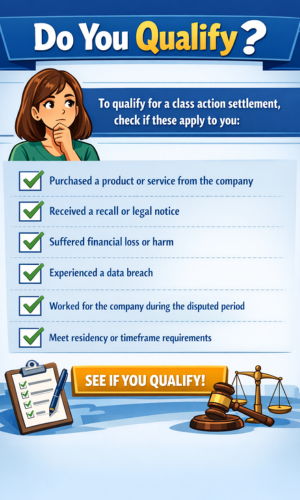
To qualify for a progressive class action lawsuit settlement in the United States, you must meet specific eligibility criteria defined by the court and outlined in the official settlement agreement. These criteria determine whether you are considered a valid class member and eligible to receive compensation.
In most U.S. class actions, eligible individuals are automatically included unless they choose to opt out before the deadline.
Eligibility Criteria for Class Members
Each settlement has unique requirements, but most follow a similar structure. You may qualify if:
- You were affected by the company’s actions during a specific time period
- Your situation matches the legal claims outlined in the lawsuit
- You fall within the defined “class” approved by the court
- You did not opt out of the settlement
Courts review these criteria under fairness and adequacy standards to ensure all eligible individuals are properly represented.
How to Check If You’re Included in a Settlement
If you’re unsure whether you qualify, follow these steps to verify your eligibility:
Step-by-Step Eligibility Check
- Look for an Official Notice
- Check your email, mail, or text messages
- Notices are often sent directly to potential class members
- Visit the Official Settlement Website
- Search using the case name + “settlement”
- Look for sections like “Am I Eligible?” or “Who Is Included?”
- Review the Class Definition
- This section clearly describes who qualifies
- Match your situation with the listed criteria
- Check Key Dates
- Ensure your claim falls within the eligible timeframe
- Contact the Settlement Administrator
- Most U.S. settlements provide a helpline or email support
Pro Tip (SEO + UX Boost)
If you received a Class Action Notice, you are most likely eligible—but you still need to submit a claim form before the deadline to receive payment.
Common Requirements to Qualify
While every case is different, most progressive class action settlements in the U.S. are based on one or more of the following conditions:
1. Purchase or Use of a Product/Service
You may qualify if you:
- Purchased a defective or falsely advertised product
- Used a service that violated consumer protection laws
- Were affected by hidden fees or misleading terms
Example: Buying a product that was later recalled or involved in a false advertising lawsuit.
2. Employment Period
For labor and employment class actions, eligibility often depends on:
- Working for a company during a specific time frame
- Job classification (full-time, part-time, contractor)
- Experiencing wage violations (e.g., unpaid overtime)
Example: Employees who worked between 2020–2023 and were denied overtime pay.
3. Policyholder Status (Insurance Cases)
In insurance-related settlements involving companies like Progressive Corporation, you may qualify if you:
- Held an active policy during the affected period
- Filed a claim that was denied, delayed, or underpaid
- Were subject to disputed policy terms or rate increases
Example: Auto insurance customers impacted by claim underpayment practices.
Important: Automatic Inclusion vs Claim Required
- Automatic Inclusion: You are part of the class unless you opt out
- Claim Required: You must submit a form to receive compensation
Failing to file a claim on time can result in losing your payout, even if you qualify.
Why Eligibility Matters
Understanding whether you qualify helps you:
- Avoid missing out on settlement money
- Take action before claim deadlines expire
- Ensure your rights are protected under U.S. law
- Maximize your compensation in active settlements
Progressive Class Action Settlement Payout: How Much Can You Get?
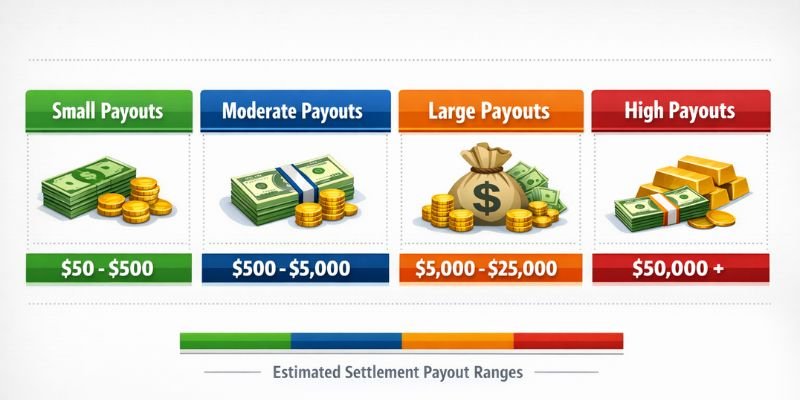
The amount you can receive from a progressive class action settlement payout in the United States varies widely depending on the case type, number of participants, and total settlement value.
The average payout in U.S. class action settlements typically ranges from $10 to $10,000+, depending on the nature of the claim and the number of approved claimants.
While some individuals receive smaller payments, others—especially those with documented financial losses—may qualify for significantly higher compensation.
Understanding how settlement payouts are calculated can help you estimate your potential compensation and decide whether filing a claim is worthwhile.
Key Factors That Affect Settlement Payout
Several critical factors determine how much each class member receives:
1. Number of Claimants
The more people who file valid claims, the smaller the individual payout tends to be.
- Large class (millions of users) → Lower individual payments
- Smaller class → Higher per-person compensation
2. Total Settlement Amount
The overall settlement fund plays a major role in determining payouts.
- $1M–$10M settlements → Typically smaller individual payouts
- $50M–$500M+ settlements → Potentially higher compensation
However, the final amount is divided after deducting:
- Attorney fees (often 25%–40%)
- Administrative costs
- Court-approved expenses
3. Level of Damage or Loss
Not all class members receive equal compensation. Payments are often tiered based on:
- Proof of financial loss
- Severity of harm
- Duration of impact
Example:
- Basic claim (no proof) → Lower payout
- Verified loss (receipts/documents) → Higher payout
Average Payout Ranges in U.S. Class Action Settlements
The average progressive class action settlement payout in the U.S. typically ranges from $10 to $10,000+, depending on the type of case, number of claimants, and level of documented loss.
Here’s a realistic breakdown based on common settlement types:
| Case Type | Average Individual Payout |
| Data breach settlements | $10 – $200 |
| Consumer protection cases | $5 – $100 |
| Employment (wage claims) | $500 – $5,000+ |
| Insurance settlements | $100 – $10,000+ |
Note: These are estimated payout ranges based on typical U.S. class action settlements. Actual compensation may vary depending on factors such as claim volume, settlement size, and proof of loss submitted by each claimant.
Example Settlement Payout Breakdown
Let’s look at a simplified U.S. scenario:
- Total Settlement Fund: $20,000,000
- Attorney Fees (30%): $6,000,000
- Remaining Fund: $14,000,000
- Total Claimants: 200,000
Estimated Individual Payout:
- $14,000,000 ÷ 200,000 = $70 per claimant
Tiered Example (Higher Compensation Case)
In some progressive settlements:
- Basic claim (no proof) → $25–$50
- Verified claim (with documentation) → $200–$1,000+
- High-impact cases → Even higher payouts
Important Insight for Claimants
- Filing early does not increase your payout, but missing the deadline means you get nothing
- Providing valid proof can significantly increase your compensation
- Some settlements include non-cash benefits like credits, refunds, or policy changes
Pro Tip: Maximize Your Settlement Amount
To increase your payout:
- Submit complete and accurate claim forms
- Attach proof of purchase, employment, or policy details
- Monitor official settlement updates
- Avoid duplicate or incorrect submissions
How to File a Claim in a Class Action Settlement
Filing a claim in a progressive class action lawsuit settlement in the United States is typically a straightforward process. Most settlements provide an official website where eligible class members can submit claims online without needing to hire a lawyer.
To successfully receive compensation, it’s important to follow each step carefully and meet all deadlines set by the court-approved settlement.
Step-by-Step Guide to Filing a Claim
1. Find the Official Settlement Website
Start by locating the official settlement page. You can find it through:
- Direct notice emails or postcards sent to you
- Trusted class action databases (e.g., settlement directories)
- Court-authorized legal notices
Make sure the website is legitimate and includes details about eligibility, deadlines, and claim instructions.
2. Submit the Claim Form
Once on the official site:
- Fill out the online claim form
- Provide basic details such as name, address, and contact information
- Enter your unique Claim ID (if provided in the notice)
Some settlements also allow no-proof claims, while others require documentation.
3. Provide Proof (If Required)
Depending on the case, you may need to submit supporting documents, such as:
- Receipts or purchase records
- Employment details or pay stubs
- Insurance policy information
- Account statements
Upload clear and accurate files to avoid claim rejection or delays.
4. Track Your Claim Status
After submission:
- You may receive a confirmation email
- Some settlement websites allow you to track claim progress
- Payments are typically issued after final court approval
Compensation may be sent via:
- Direct deposit
- Check by mail
- Digital payment platforms (e.g., PayPal, Venmo in U.S.)
Common Mistakes to Avoid
Even small errors can lead to delays or disqualification. Avoid these common issues:
Missing Deadlines
Each settlement has strict deadlines for:
- Filing claims
- Opting out
- Objecting to the settlement
Late submissions are usually automatically rejected, regardless of eligibility.
Providing Incorrect or Incomplete Information
Errors such as:
- Misspelled names
- Wrong contact details
- Invalid Claim ID
can prevent verification and delay your payment. Always double-check before submitting.
Ignoring Email or Mail Notices
Many eligible participants miss out simply because they:
- Ignore settlement emails (often marked as promotional)
- Discard mailed notices
These notices often contain critical details like:
- Claim ID
- Filing instructions
- Deadline reminders
Pro Tip (U.S. Claim Success Strategy)
To maximize your chances of getting paid:
- File your claim as early as possible
- Keep copies/screenshots of submissions
- Regularly check your email for updates
- Whitelist settlement emails to avoid missing notifications
Deadlines & Important Dates to Know
Understanding key deadlines in a progressive class action lawsuit settlement is critical for U.S. claimants. Missing even one date can result in losing your right to compensation or legal participation.
Claim Deadline (File Your Settlement Claim)
The claim deadline is the final date by which you must submit your claim form to receive compensation from the settlement.
Key Points:
- Typically ranges from 30 to 120 days after settlement notice is issued
- Claims are submitted through the official settlement website or via mail
- Some cases require proof of purchase, employment, or policy details
What Happens If You Miss It?
- You forfeit your payment, even if you are eligible
- No exceptions in most U.S. class action settlements
Pro Tip:
Submit your claim at least 7–10 days before the deadline to avoid technical or documentation issues.
Opt-Out Deadline (Exclude Yourself from the Settlement)
The opt-out deadline allows you to formally exclude yourself from the class action settlement.
Why Opt Out?
- You want to file an individual lawsuit
- You believe your damages are higher than the settlement payout
- You disagree with settlement terms
Key Points:
- Must submit a written request (mail or online, depending on the case)
- Missing this deadline means you are automatically included in the settlement
Important:
If you opt out:
- You won’t receive any settlement money
- But you retain the right to sue separately
Final Approval Hearing (Court Confirmation)
The final approval hearing is when a U.S. court reviews the settlement to ensure it is fair, reasonable, and adequate for all class members.
Key Points:
- Conducted by a federal or state judge
- Usually scheduled after claim and opt-out deadlines
- Class members can sometimes object or appear in court
What the Court Evaluates:
- Fairness of compensation
- Attorney fees
- Impact on class members
- Overall settlement terms
Timeline Overview (Typical U.S. Settlement Flow)
| Stage | When It Happens |
| Settlement Announcement | Day 0 |
| Claim Deadline | 30–120 days after notice |
| Opt-Out Deadline | ~30–60 days after notice |
| Final Approval Hearing | 2–5 months after announcement |
| Payout (Payment) | 1–6 months after approval |
Why These Dates Matter
Tracking deadlines ensures you:
- Secure your settlement payout
- Maintain your legal rights
- Avoid disqualification due to late action
Pros and Cons of Class Action Settlements
Class action settlements are a powerful legal tool in the United States, but they are not always the right choice for every individual. Understanding the advantages and disadvantages can help you decide whether to participate, opt out, or pursue an individual claim.
Advantages of Class Action Settlements
No Upfront Legal Fees
One of the biggest benefits of class action settlements is that you typically pay nothing upfront. Most cases are handled on a contingency fee basis, meaning attorneys only get paid if the case is successful.
- No hourly legal costs
- No financial risk for joining
- Legal fees are deducted from the total settlement fund
This makes it accessible for individuals who may not otherwise afford legal representation.
Collective Strength
Class actions allow individuals to combine their claims into one powerful case, increasing leverage against large corporations like Progressive Corporation.
- Stronger negotiation power
- Increased chances of settlement
- Ability to challenge large-scale misconduct
In many cases, a single claim would not be strong enough, but a group claim can lead to meaningful legal outcomes.
Faster Resolution
Compared to individual lawsuits, class action settlements often result in quicker resolutions.
- Streamlined legal process
- Reduced court time
- Settlements often reached before trial
While some cases still take time, they are generally more efficient than multiple individual lawsuits.
Disadvantages of Class Action Settlements
Lower Individual Compensation
One of the main drawbacks is that individual payouts are usually smaller.
- Settlement funds are divided among all class members
- Large classes = smaller per-person compensation
- Payments may not fully cover individual losses
For example, even in multi-million dollar settlements, individual payouts can sometimes be modest depending on the number of claimants.
Less Control Over the Case
When you join a class action settlement, you give up direct control over legal decisions.
- Lead plaintiffs and attorneys make key decisions
- You cannot negotiate your own settlement amount
- Limited influence on legal strategy
If you want full control or believe your damages are significantly higher than others, opting out and filing an individual lawsuit may be a better option.
Key Takeaway
Class action settlements offer low-risk access to justice and collective power, but they may come with trade-offs like smaller payouts and limited control. Evaluating your specific situation is essential before deciding to participate.
Is a Progressive Class Action Settlement Worth It?
Deciding whether to accept a progressive class action lawsuit settlement depends on your financial situation, the strength of your claim, and the potential value of pursuing individual legal action. In the United States, most class members automatically receive settlement benefits unless they choose to opt out before the deadline.
While settlements offer convenience and guaranteed compensation, they may not always provide the maximum recovery for every individual. Understanding when to accept or opt out is critical to making the right decision.
When to Accept a Settlement
In most U.S. class action cases, accepting the settlement is the best option—especially if your damages are relatively small or difficult to prove individually.
You should consider accepting a settlement if:
- The payout fairly compensates your losses
- You want a faster resolution without lengthy litigation
- You do not want to hire a private attorney
- The case involves minor financial harm (common in consumer claims)
- The settlement includes additional benefits (policy changes, credits, reimbursements)
For example, in insurance-related cases involving companies like Progressive Corporation, many policyholders accept settlements because individual lawsuits would be time-consuming and costly compared to the expected payout.
When to Opt Out of a Settlement
Opting out means you will not receive any compensation from the class action settlement—but you retain the right to file your own individual lawsuit.
You may want to opt out if:
- Your financial losses are significantly higher than the average class member
- You have strong evidence to support a larger individual claim
- You want to pursue punitive damages or additional compensation
- The settlement amount seems too low or unfair
- You prefer full control over your legal case
Keep in mind that opting out involves higher risk, legal costs, and longer timelines, especially in U.S. courts.
Role of Legal Advice
Before making a decision, it’s often beneficial to consult a qualified U.S. attorney who specializes in class action or consumer protection law.
Legal advice can help you:
- Evaluate the fairness of the settlement offer
- Compare potential settlement payout vs individual lawsuit value
- Understand your rights under federal and state laws
- Avoid missing critical deadlines (opt-out or claim filing)
Many law firms offer free consultations, making it easier to assess your options without upfront costs.
Key Takeaway
A progressive class action settlement is usually worth accepting if your losses are small and the payout is fair. However, opting out may be better if you have significant damages and want to pursue a higher individual claim.
How to Find Open Class Action Settlements in the USA (2026)
Finding ongoing or open class action settlements in the United States is essential if you want to claim compensation before deadlines expire. Many settlements remain open for only a limited time, so knowing where to look can directly impact your eligibility and payout.
Below are the most reliable sources to find legitimate and active class action settlements.
Official Settlement Websites
The most accurate and trustworthy source is the official settlement website created for each case. These websites are typically approved by the court and provide complete details, including:
- Eligibility criteria
- Claim forms
- Important deadlines
- Settlement amounts
- Contact information
You can usually find these sites by searching the case name or checking notices received via email or mail.
Legal News Portals
Legal news platforms regularly publish updates about new and ongoing class action settlements in the U.S. These portals are useful for discovering cases you may not be aware of.
Some reliable sources include:
- Top Class Actions
- ClassAction.org
- Law360
These platforms typically provide:
- Case summaries
- Eligibility details
- Direct links to official claim pages
Class Action Databases
Dedicated class action databases allow you to search and filter settlements based on category, location, or eligibility criteria.
Popular U.S. databases include:
- ClassAction.org
- Top Class Actions
Using these platforms, you can:
- Search by industry (insurance, employment, consumer)
- Filter active vs closed settlements
- Identify high-value payout opportunities
Pro Tips to Find More Settlements (SEO + Practical Edge)
To discover more opportunities, use targeted search queries and tracking methods:
Search queries like:
- open class action settlements USA
- progressive settlement claim form
- active class action payouts 2026
- “no proof claim settlements US”
- “current class action lawsuits to join”
Additional strategies:
- Check your email regularly for settlement notices
- Review past purchases, subscriptions, or insurance policies
- Set Google Alerts for keywords like “class action settlement payout”
Red Flags to Avoid Scams
Not all settlement offers are legitimate. Be cautious if you see:
- Requests for upfront fees
- No official court or case reference
- Suspicious or poorly designed websites
- Unverified payment requests
Always verify information through official settlement pages or trusted legal platforms.
Frequently Asked Questions (FAQ)
What Is a Progressive Settlement Payout?
A progressive settlement payout is the compensation given to eligible class members after a class action case is resolved against insurers like Progressive Corporation. Payouts typically range from $50 to several thousand dollars, depending on the settlement size, number of claims, and level of individual loss.
How Long Does It Take to Receive Settlement Money?
In the U.S., class action settlement payments usually take 6 months to 2 years. This includes court approval, claim processing, and final distribution. Delays may occur due to appeals, high claim volume, or incomplete submissions.
Do I Need a Lawyer to File a Claim?
No, you do not need a lawyer to file a claim in most U.S. class action settlements. You can submit a claim form online yourself. However, legal help may be useful if your damages are high or you plan to file an individual lawsuit.
Is Class Action Settlement Money Taxable?
Yes, some class action settlement payments are taxable in the U.S., especially for lost wages, interest, or punitive damages. However, compensation for physical injuries or medical expenses is generally not taxable. For official guidance, refer to the Internal Revenue Service.
Check Active Class Action Settlements Now
If you may qualify for a progressive class action lawsuit settlement, taking action early can help you secure compensation before deadlines expire.
- Search for open class action settlements in the U.S.
- File your claim form before the official deadline
- Track your settlement payout status online
Conclusion
A progressive class action lawsuit settlement offers a practical and accessible way for individuals across the United States to seek justice when large-scale harm occurs. Instead of navigating complex legal battles alone, class members can benefit from collective action that delivers both financial compensation and meaningful changes in corporate behavior.
Throughout this guide, you’ve learned:
- What a progressive class action lawsuit settlement is and how it works under U.S. law
- The key differences between class actions, settlements, and progressive legal outcomes
- The types of cases commonly involved, including insurance, employment, and consumer protection
- How eligibility, payouts, and claim processes are determined
- Why these settlements play a critical role in enforcing corporate accountability
Whether the issue involves denied insurance claims, unfair labor practices, or deceptive business conduct, these settlements empower individuals to take action without the burden of filing separate lawsuits.