Justice Jackson Warns About Democracy as Supreme Court Power Expands
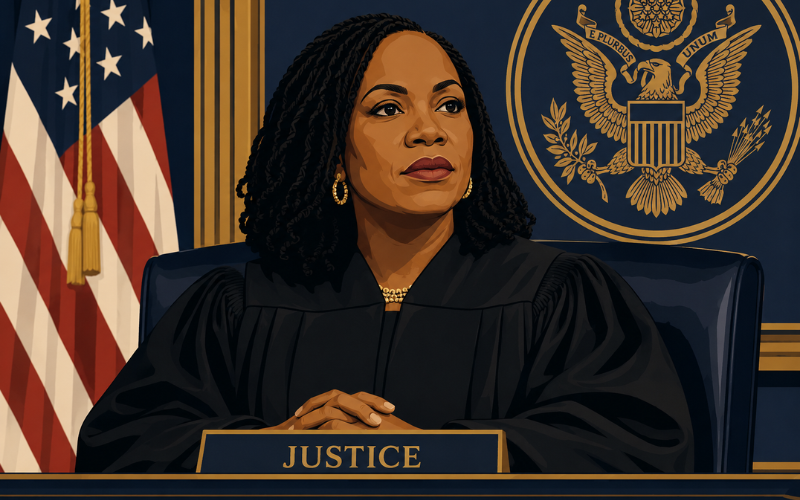
Supreme Court Justice Ketanji Brown Jackson is increasingly warning that recent rulings involving presidential authority, judicial oversight, and executive branch power could reshape the future of American democracy.
Through a series of forceful dissents, Jackson has argued that the Court risks weakening constitutional safeguards at a time of growing political polarization and expanding presidential influence. Her opinions have raised concerns about judicial legitimacy, democratic institutions, and the long-term balance of powers established by the U.S. Constitution.
The warnings emerged prominently in disputes involving nationwide injunctions, federal workforce authority, immigration enforcement, and executive power tied to the Supreme Court of the United States conservative majority.
Jackson’s dissents are now receiving national attention not only from constitutional scholars and legal organizations, but also from Americans increasingly concerned about the rule of law and the future of judicial independence.
As debates intensify over presidential immunity, executive branch authority, and constitutional accountability, Justice Jackson’s opinions may become some of the defining constitutional arguments of this Supreme Court era.
“I’m not afraid to use my voice.”
That statement has become symbolic of Jackson’s increasingly visible role in the national debate surrounding constitutional safeguards and democratic stability.
Latest Developments in Justice Jackson’s Warnings
Recent Supreme Court rulings have intensified debate surrounding Justice Jackson’s concerns about executive authority and judicial oversight.
In several high-profile dissents tied to presidential power and federal authority, Jackson criticized what she described as the Court’s growing willingness to limit judicial remedies and weaken constitutional checks on executive action.
Her remarks gained widespread attention following disputes involving:
- Trump v. CASA
- Federal workforce authority rulings
- Immigration enforcement disputes
- Environmental regulatory challenges
- Nationwide injunction debates
Jackson has warned that restricting federal courts’ authority to block potentially unconstitutional actions could reduce access to justice for ordinary citizens.
Legal analysts say her dissents reflect broader constitutional concerns involving:
- Judicial legitimacy
- Court authority
- Executive branch expansion
- Democratic accountability
- Constitutional crisis risks
These developments have positioned Jackson as one of the Supreme Court’s most closely watched voices on constitutional law and democratic governance.
Who Is Justice Ketanji Brown Jackson?
Background
Ketanji Brown Jackson became the first Black woman ever appointed to the U.S. Supreme Court in 2022.
Born in Washington, D.C., and raised in Miami, Florida, Jackson attended Harvard University and later graduated from Harvard Law Review at Harvard Law School.
Her legal career includes service as:
- A federal public defender
- A member of the U.S. Sentencing Commission
- A federal district judge
- A judge on the U.S. Court of Appeals for the D.C. Circuit
Her experience as a public defender gives her a judicial background that differs from many previous Supreme Court justices.
Supreme Court Appointment
Jackson was nominated by Joe Biden following the retirement of Stephen Breyer.
Her confirmation hearings became a nationally watched political event reflecting broader ideological battles surrounding the federal judiciary.
Judicial Philosophy
Jackson is widely viewed as part of the Court’s liberal wing alongside:
- Sonia Sotomayor
- Elena Kagan
Her judicial philosophy often emphasizes:
- Constitutional safeguards
- Equal access to justice
- Judicial independence
- Accountability within government
- Practical effects of Supreme Court rulings
Unlike strict originalists, Jackson frequently examines how court decisions affect democratic institutions and individual rights in practice.
Why Justice Jackson Warns About the State of Democracy
Concerns Over Presidential Authority
One of Jackson’s biggest concerns involves expanding presidential power.
Recent Supreme Court rulings involving executive authority, federal agencies, and presidential immunity have raised fears among some legal scholars that the balance between branches of government may be shifting.
Jackson has repeatedly argued that courts must remain strong constitutional checks on executive branch authority.
According to her dissents, weakening judicial oversight may allow presidents to operate with fewer legal restraints.
Growing Concerns About Judicial Legitimacy
Jackson’s warnings also focus on public trust in the judiciary.
The Supreme Court depends heavily on institutional legitimacy. Courts do not control armies or enforce laws directly. Their authority largely comes from public confidence in judicial independence and constitutional fairness.
Jackson has warned that perceptions of political favoritism or inconsistent constitutional standards could weaken trust in democratic institutions.
Rule of Law Concerns
The rule of law means government officials remain subject to legal limits and constitutional oversight.
Jackson’s dissents frequently emphasize that constitutional protections become meaningless if courts cannot effectively enforce them.
“Ordinary citizens deserve equal access to justice.”
Her opinions often argue that limiting judicial remedies could weaken constitutional safeguards designed to protect Americans from government overreach.
Timeline of Justice Jackson’s Major Dissents
| Date | Case | Main Constitutional Concern |
| July 2025 | Trump v. CASA | Executive power and nationwide injunctions |
| June 2025 | Diamond Alternative Energy v. EPA | Judicial review and federal oversight |
| July 2025 | South Sudan deportation dispute | Due process protections |
| 2025 | Federal workforce rulings | Executive branch authority |
| 2025 | Immigration enforcement disputes | Constitutional safeguards |
Major Supreme Court Cases Behind Jackson’s Warnings
Trump v. CASA
Trump v. CASA became one of the most important cases connected to the phrase “justice jackson warns.”
The case centered on nationwide injunctions and whether federal judges should have authority to block executive actions across the entire country.
Why the Case Matters
The dispute raised major constitutional questions involving:
- Separation of powers
- Judicial authority
- Executive accountability
- Federal court oversight
Jackson argued that limiting nationwide injunctions could weaken courts’ ability to stop unconstitutional government actions before widespread harm occurs.
She warned that reducing judicial remedies may undermine constitutional safeguards during periods of aggressive executive action.
Diamond Alternative Energy v. EPA
Diamond Alternative Energy v. EPA involved environmental regulation and standing doctrine.
Although the case focused on environmental policy, Jackson’s concerns extended far beyond the EPA.
Why the EPA Ruling Could Limit Judicial Oversight
Jackson warned that narrowing standing rules may make it harder for citizens, organizations, and states to challenge potentially unlawful federal actions.
This issue affects many areas of constitutional law, including:
- Consumer protections
- Environmental regulations
- Civil rights litigation
- Administrative oversight
Her dissent suggested the Court may be reducing access to judicial review at a time when executive agencies exercise enormous national influence.
Federal Workforce Firing Rulings
Several recent cases involving federal agencies and employee protections have also triggered Jackson’s concerns.
The central legal question involves how much authority presidents should have over independent federal agencies and career government officials.
Jackson warned that weakening agency independence could increase political control over institutions designed to remain neutral.
Potential Constitutional Consequences
- Expanded presidential influence
- Reduced bureaucratic independence
- Weaker institutional safeguards
- Greater executive branch authority
South Sudan Deportation Case
Immigration disputes have become another major area of constitutional conflict.
In a case involving deportation enforcement tied to South Sudan, Jackson focused heavily on due process concerns.
Her dissent emphasized that constitutional protections apply even during politically sensitive immigration disputes.
She argued that courts must ensure executive branch actions remain consistent with constitutional principles and humanitarian protections.
Justice Jackson’s Main Constitutional Arguments Explained
What Is Judicial Independence?
Judicial independence refers to the ability of courts to make legal decisions free from political pressure or executive influence.
Jackson repeatedly argues that democratic stability depends on maintaining an independent federal judiciary.
What Is a Supreme Court Dissent?
A Supreme Court dissent is a written opinion explaining why a justice disagrees with the majority ruling.
Although dissents do not immediately change the law, they often shape future constitutional debates and legal precedent.
Courts Must Check Executive Power
Jackson argues that courts play a central role in limiting unconstitutional government actions.
Her opinions suggest that weakening judicial oversight could create long-term constitutional risks.
Constitutional Rights Require Enforcement
Jackson frequently emphasizes that rights mean little without effective legal remedies.
If courts lose authority to block unconstitutional actions quickly, constitutional protections may become harder to enforce in practice.
Separation of Powers
The Constitution divides authority among:
- Congress
- The presidency
- The judiciary
Jackson’s dissents argue that courts must actively preserve this balance of powers rather than defer excessively to executive authority.
Constitutional Safeguards and Democratic Institutions
Many of Jackson’s warnings focus on preserving democratic institutions during periods of political tension.
Her opinions frequently reference:
- Judicial legitimacy
- Constitutional accountability
- Democratic stability
- Federal judiciary independence
- Rule of law protections
“This was the wrong decision at the wrong moment.”
That line became one of the most discussed remarks associated with Jackson’s dissents on executive authority and court oversight.
Clash Between Justice Jackson and Conservative Justices
Amy Coney Barrett’s Response
Amy Coney Barrett has emerged as one of Jackson’s most significant ideological counterparts.
The two justices differ sharply on questions involving:
- Nationwide injunctions
- Judicial restraint
- Executive branch authority
- Constitutional interpretation
Barrett generally favors narrower judicial intervention, while Jackson supports broader judicial remedies in cases involving constitutional concerns.
The Supreme Court’s Conservative Majority
The Court’s conservative majority includes:
- John Roberts
- Clarence Thomas
- Samuel Alito
- Neil Gorsuch
- Brett Kavanaugh
- Amy Coney Barrett
This ideological divide has intensified national debate over:
- Court authority
- Executive branch power
- Constitutional interpretation
- Judicial legitimacy
Historic Supreme Court Dissents That Later Changed America
Justice Jackson’s dissents may eventually join a long tradition of influential minority opinions that shaped future constitutional law.
Plessy v. Ferguson
Plessy v. Ferguson is one of the most famous examples.
Justice John Marshall Harlan’s dissent opposed racial segregation decades before the Supreme Court ultimately rejected “separate but equal” doctrine.
Oliver Wendell Holmes Jr. and Free Speech
Oliver Wendell Holmes Jr. wrote influential dissents defending free speech protections.
Those arguments later shaped modern First Amendment jurisprudence.
Louis Brandeis and Privacy Rights
Louis Brandeis helped develop constitutional privacy doctrines through dissents and concurring opinions that later influenced major legal precedent.
Like these historical examples, Jackson’s opinions focus heavily on constitutional safeguards and democratic accountability.
What Legal Experts and the Public Are Saying
Constitutional scholars remain divided over Jackson’s warnings.
Some legal experts argue her dissents are essential defenses of democratic institutions and judicial oversight.
Others contend her approach risks expanding judicial power too aggressively.
Organizations such as the American Bar Association and legal researchers connected to the Congressional Research Service continue monitoring how Supreme Court rulings affect executive authority and constitutional governance.
Public debate surrounding the Court has also intensified in recent years due to disputes involving:
- Presidential immunity
- Election law
- Immigration enforcement
- Administrative agencies
- Federal judiciary authority
Jackson’s dissents increasingly resonate with Americans concerned about constitutional crisis risks and the long-term stability of democratic institutions.
Why Justice Jackson’s Warnings Matter for American Democracy
Checks and Balances
The American constitutional system depends on checks and balances to prevent concentrated government power.
Jackson argues that courts must remain capable of restraining unconstitutional executive actions.
Executive Branch Power
Modern presidents already exercise enormous authority over:
- Federal agencies
- Immigration enforcement
- National security
- Administrative regulation
Jackson’s dissents warn against further expanding presidential authority without meaningful judicial oversight.
Public Confidence in Courts
Judicial legitimacy depends heavily on public trust.
If Americans begin viewing the judiciary as politically inconsistent or unwilling to enforce constitutional safeguards equally, confidence in democratic institutions may weaken.
Long-Term Constitutional Implications
Although dissents do not control current law, they often influence future legal precedent.
Jackson’s opinions may shape constitutional debates involving:
- Executive power
- Judicial review
- Federal oversight
- Constitutional accountability
- Democratic governance
As debates over presidential authority and judicial oversight continue, Justice Jackson’s warnings may become some of the most consequential constitutional arguments of this Supreme Court era.
Frequently Asked Questions
Why is Justice Jackson criticizing the Supreme Court?
Justice Jackson has criticized several Supreme Court rulings because she believes they may expand presidential authority, weaken judicial oversight, and reduce constitutional safeguards.
What did Justice Jackson say about democracy?
Jackson warned that some recent Supreme Court decisions could weaken democratic institutions, undermine judicial legitimacy, and reduce constitutional accountability.
What cases has Justice Jackson dissented on?
She has dissented in cases involving executive authority, immigration enforcement, environmental regulation, and nationwide injunctions, including Trump v. CASA.
What is Trump v. CASA?
Trump v. CASA is a Supreme Court case involving nationwide injunctions and federal judicial authority over executive actions.
Why are Supreme Court dissents important?
Dissents preserve alternative constitutional interpretations and often influence future courts, lawmakers, and legal scholarship.
What concerns does Jackson have about presidential power?
Jackson believes excessive executive branch authority without strong judicial oversight could weaken democratic accountability and constitutional protections.
What is judicial independence?
Judicial independence is the principle that courts should make decisions free from political pressure or executive influence.
Why do nationwide injunctions matter?
Nationwide injunctions allow federal courts to temporarily block government policies across the country while constitutional challenges proceed.
Conclusion
The phrase “justice jackson warns” has become increasingly important in modern constitutional debate because it reflects growing concerns about presidential authority, judicial oversight, and the future of democratic governance in the United States.
Ketanji Brown Jackson has emerged as one of the Supreme Court’s strongest voices on constitutional safeguards, judicial independence, and executive accountability. Her dissents consistently argue that courts must remain active protectors of the rule of law during periods of political polarization and expanding executive branch power.
Whether future courts ultimately embrace or reject her reasoning, Jackson’s opinions are already shaping national conversations about constitutional limits, democratic institutions, and the long-term role of the federal judiciary.
As conflicts over executive authority and court oversight continue, Justice Jackson’s warnings may become some of the most historically significant constitutional arguments of this generation.