
ICE Detains Legal Immigrant Victor Avila: Full Case Update & Legal Analysis
The case of ice detains legal immigrant victor avila has drawn national attention because it highlights a reality many lawful permanent residents do not fully understand: a valid green card does not always protect someone from immigration detention or removal proceedings.
Victor Avila, a longtime California resident and lawful permanent resident, was detained by federal immigration authorities after returning to the United States through San Francisco International Airport (SFO) in May 2025. According to public reports, Avila had lived in the United States for decades, worked steadily, raised a family, and maintained deep ties to his community. Nevertheless, prior criminal convictions reportedly triggered immigration enforcement actions upon his return from an international trip.
The case has sparked debate about green card holder deportation, the immigration consequences of old criminal convictions, and the extent of federal authority to detain lawful permanent residents during reentry inspections.
This article examines the publicly known facts, the legal framework behind the detention, the deportation process, potential relief options, and the lessons all green card holders should understand before traveling abroad.
Who Is Victor Avila? (Background & Family)
Victor Avila is a longtime resident of Southern California who has reportedly lived in the United States since immigrating from Mexico as a child. Public reporting indicates he became a lawful permanent resident in the 1960s and spent decades building a life in the country.
Key Facts About Victor Avila
- Resident of Chula Vista, California
- Lawful permanent resident (green card holder)
- Lived in the United States for nearly six decades
- Husband, father, and grandfather
- Longtime employee in the legal services field
- Deep family and community ties
One aspect of the case that has attracted significant public attention is that Avila’s son serves in the U.S. Air Force. According to media reports, Victor Avila had been returning from a trip to Japan where he visited his son before being detained at San Francisco International Airport.
These family connections may become relevant during immigration proceedings because immigration courts often evaluate family ties, community involvement, and rehabilitation efforts when considering discretionary forms of relief.
What Happened? The SFO Detention — Full Timeline
Timeline of Events
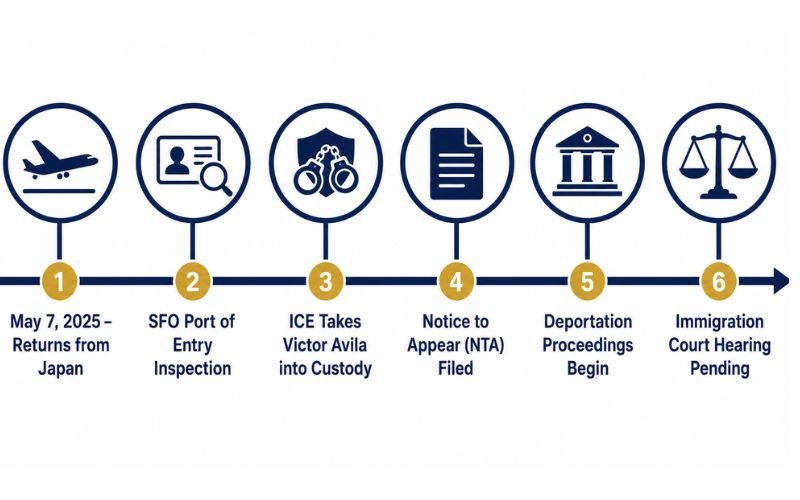
May 7, 2025
- Victor Avila arrives at San Francisco International Airport after returning from Japan.
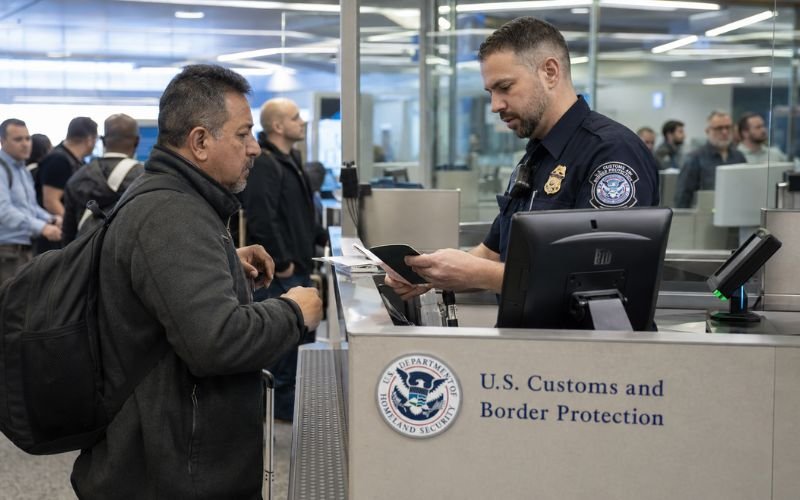
- U.S. Customs and Border Protection conducts an inspection at the port of entry.
- Avila is reportedly referred to secondary inspection for additional review.
- Officers identify prior criminal convictions in his record.
May 7, 2025
5. Immigration authorities determine that the prior convictions may create grounds for removal proceedings.
6. Avila is taken into federal custody despite possessing a valid green card.
7. His wife, who was traveling with him, is not detained.
May–June 2025
8. Federal authorities initiate immigration proceedings.
9. A Notice to Appear (NTA) is reportedly issued.
10. Avila is transferred to an ICE detention facility.
July 2025
11. Public reports indicate a scheduled immigration court hearing.
12. Family members continue advocacy efforts and fundraising for legal defense.
Criminal History Reportedly Identified
According to public statements from family members, authorities reviewed:
- A DUI-related offense
- Drug possession misdemeanor allegations from 2009
- Additional past arrests referenced by CBP
Federal authorities indicated that these prior incidents contributed to the decision to place Avila into immigration proceedings.
The Legal Basis: Why Can ICE Detain a Legal Permanent Resident?
Many people mistakenly believe that a green card guarantees permanent protection from deportation.
In reality, lawful permanent residents remain subject to immigration laws and can be placed into removal proceedings under certain circumstances.
INA Section 237(a)(2)
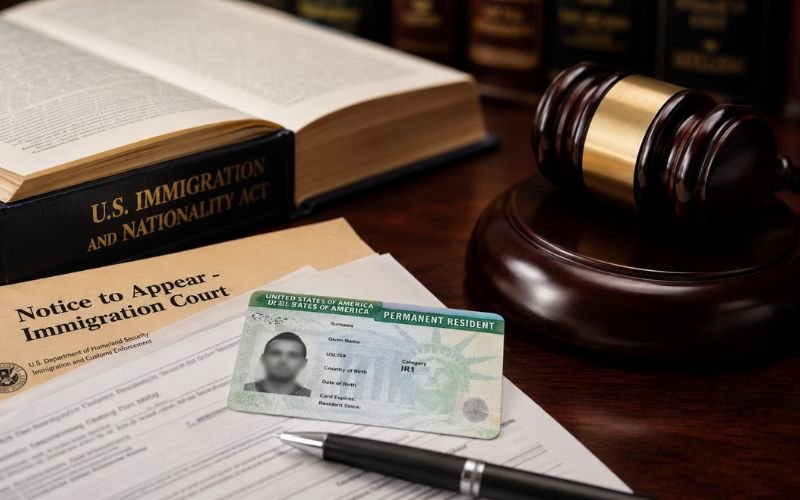
INA Section 237 identifies criminal grounds that can make a noncitizen deportable. These provisions apply to lawful permanent residents as well as other noncitizens.
Controlled Substance Violations
One of the most significant grounds involves controlled substance offenses.
Under immigration law, certain drug-related convictions can trigger deportability even when the offense was classified as a misdemeanor in criminal court.
Crimes Involving Moral Turpitude
Another category involves Crimes Involving Moral Turpitude (CIMTs).
These offenses can create immigration consequences depending on:
- The nature of the offense
- The sentence imposed
- The number of convictions
- The timing of the conduct relative to admission into the United States
Misdemeanor vs. Immigration Consequences
A critical misunderstanding is that criminal court classifications do not automatically control immigration outcomes.
An offense labeled a misdemeanor under state law may still produce serious immigration consequences.
This distinction is often at the center of cases involving:
- Drug possession
- Theft offenses
- Fraud-related crimes
- Domestic violence offenses
Expunged Convictions
Many green card holders believe an expungement permanently erases immigration concerns.
Immigration law often treats expunged convictions differently than criminal courts do. In some circumstances, an expunged offense may still be considered for immigration purposes.
Aggravated Felony vs. Misdemeanor
An aggravated felony is a specialized immigration-law category.
Some aggravated felonies are not classified as felonies under state law.
The distinction matters because aggravated felony findings can eliminate many forms of immigration relief and dramatically increase deportation risks.
The Deportation Process: Step by Step
1. Notice to Appear (NTA9)
The process generally begins with a Notice to Appear.
This document identifies:
- Allegations against the noncitizen
- Applicable immigration charges
- The immigration court handling the case
2. Immigration Court Proceedings
The case moves before an immigration judge.
The government must establish the legal basis for removal.
3. Right to an Attorney
Immigrants have the right to legal representation.
However, unlike criminal court, the government does not provide a free attorney if the person cannot afford one.
4. Bond Considerations
Some detained immigrants may request a bond hearing.
Others may be subject to mandatory detention depending on the allegations involved.
5. Individual Merits Hearing
Evidence is presented regarding:
- Deportability
- Eligibility for relief
- Family circumstances
- Rehabilitation
- Community ties
6. Immigration Judge Decision
The judge may:
- Order removal
- Grant relief
- Terminate proceedings
7. Appeals
Cases may be appealed to the Board of Immigration Appeals and, in some situations, federal courts.
The entire process can take months or even years.
Legal Relief Options Victor Avila May Have
Cancellation of Removal Under INA 240A(a)
One of the most important forms of relief for lawful permanent residents is Cancellation of Removal.
Eligibility generally requires:
- Five years as a lawful permanent resident
- Seven years of continuous residence
- No aggravated felony conviction
If eligible, an immigration judge may consider:
- Family ties
- Community contributions
- Rehabilitation
- Length of residence in the United States
Withholding of Removal
Depending on individual circumstances, withholding of removal may also be explored.
Positive Equities
Factors that may be considered favorably include:
- Decades of lawful residence
- Stable employment history
- U.S.-citizen family members
- Military family connections
- Evidence of rehabilitation
Whether any specific relief applies depends on the exact facts of the case and legal analysis by qualified immigration counsel.
Frequently Asked Questions (FAQ)
Q: Can ICE detain a green card holder?
A: Yes. Lawful permanent residents can be detained if immigration authorities believe they are removable under federal immigration laws.
Q: Why was Victor Avila detained?
A: Public reports indicate immigration authorities reviewed prior criminal convictions during a reentry inspection and initiated removal proceedings.
Q: Can a misdemeanor cause deportation?
A: Yes. Certain misdemeanors may trigger immigration consequences depending on the specific offense and immigration statute involved.
Q: What is a Notice to Appear (NTA)?
A: An NTA is the charging document that begins immigration court proceedings and explains why the government believes a person may be removable.
Q: What is secondary inspection?
A: Secondary inspection is an additional screening process used by CBP when officers need more time to review a traveler’s admissibility or records.
Q: Can old convictions lead to deportation?
A: Yes. Some convictions can create immigration consequences years after the criminal case is resolved.
Q: What is INA Section 237?
A: INA Section 237 outlines various grounds under which lawful permanent residents and other noncitizens may be deportable.
Q: Can a green card be revoked?
A: Yes. A lawful permanent resident can lose green card status through removal proceedings if an immigration judge orders deportation.
Q: Does expungement eliminate immigration consequences?
A: Not always. Immigration law may still consider certain expunged convictions.
Q: What happens after ICE detention?
A: The individual may be placed in removal proceedings and appear before an immigration judge.
Q: Can a green card holder receive bond?
A: Some detained immigrants may qualify for bond, while others may be subject to mandatory detention.
Q: How long can immigration detention last?
A: Detention periods vary widely and can last from weeks to many months depending on the case.
Q: What is Cancellation of Removal?
A: It is a form of relief that allows certain lawful permanent residents to keep their status despite removal proceedings.
Q: Does Victor Avila qualify for Cancellation of Removal?
A: Only an immigration judge can determine eligibility after reviewing the complete facts and legal requirements.
Q: Can military family ties help an immigration case?
A: Family military service may be considered as a favorable factor in certain discretionary immigration decisions.
Q: Can ICE detain someone at an airport?
A: Yes. Airports are ports of entry where immigration inspections occur and enforcement actions may begin.
Q: What is a lawful permanent resident?
A: A lawful permanent resident is a noncitizen authorized to live and work permanently in the United States.
Q: Is a green card holder protected from deportation?
A: No. Green card holders can still face removal under certain immigration laws.
Q: What is an immigration judge’s role?
A: Immigration judges determine whether removal charges are legally supported and whether relief is available.
Q: Can a green card holder appeal a removal order?
A: Yes. Appeals may be filed with the Board of Immigration Appeals and, in some cases, federal courts.
Q: Can travel abroad increase immigration risk?
A: For individuals with criminal records, international travel may trigger additional immigration scrutiny upon return.
Q: What should a green card holder do before traveling?
A: Review criminal history, obtain court records, and consult an immigration attorney regarding potential risks.
Q: Can a DUI affect immigration status?
A: Some DUI-related cases may have immigration consequences depending on the specific facts involved.
Q: What is removal proceedings lawful permanent resident status?
A: It refers to immigration court proceedings seeking to determine whether a lawful permanent resident should remain in the United States.
Q: Is Victor Avila still detained?
A: Readers should consult the latest publicly available reports and court updates, as detention status can change during ongoing proceedings.