
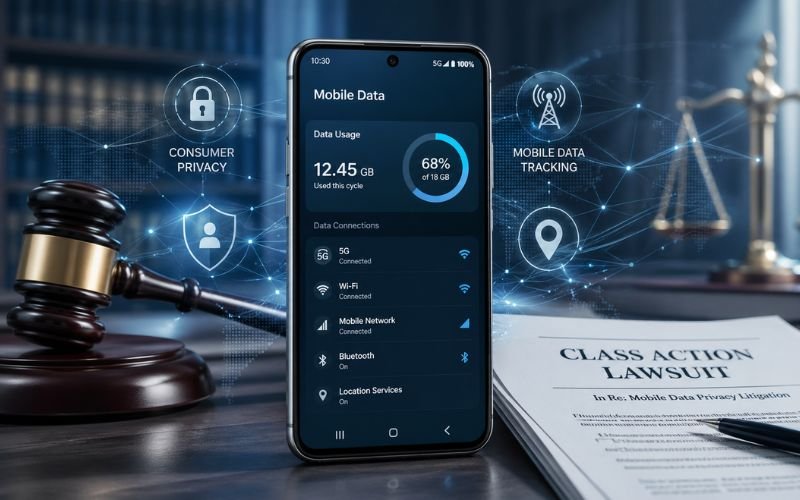
The $135 Million Google Android Data Settlement: What You Need to Know
Smartphones are a daily necessity for millions of people, handling everything from communication and banking to navigation and entertainment. But a major legal case involving Google and Android devices has brought renewed attention to how mobile data is used behind the scenes.
What began as a lawsuit over background cellular data usage has now become a significant settlement, with reports indicating a $135 million resolution tied to claims that Android devices transmitted data without clear user awareness. This means the issue is no longer just a legal debate—it is a concluded case with real financial consequences and potential compensation for affected users.
As part of the outcome, Google has also agreed to improve transparency practices, giving users clearer information about how background data activity works on Android devices moving forward into 2026 and beyond.
For consumers, this case is about more than one company or one lawsuit. It highlights important questions about privacy, informed consent, and whether users truly understand how their devices use paid cellular data.
This article breaks down the settlement in simple terms, explains why it matters, and outlines what consumers should know about their rights in an increasingly connected world.
Understanding the Google Android Cellular Data Lawsuit
One of the most discussed cases tied to this issue is Taylor v. Google LLC, a legal dispute that brought attention to how Android devices communicate with Google’s servers. The case gained public interest because it focused on whether certain data transfers happened without users fully understanding the process.
Unlike ordinary app-related background activity, the lawsuit specifically examined “passive” data transfers. These were alleged transmissions of information from Android devices to Google’s servers that occurred even when all Google apps were closed and the device was otherwise idle.
According to the legal claims, some Android phones continued sending and receiving data through cellular connections without clear notice to users. Because these transfers could occur over paid mobile data networks, the issue was not only about privacy, but also about potential financial impact for consumers.
The lawsuit argued that these passive communications may have created hidden costs while raising concerns about transparency in how device systems operate behind the scenes.
At the center of the case were two major legal questions:
- Did Android devices consume cellular data through passive transfers without meaningful user consent?
- Were consumers properly informed about how their devices communicated with Google’s servers?
These questions reflect larger concerns in technology law, especially as smartphones play a central role in everyday life. The case also helped push discussions about whether companies should provide clearer disclosures regarding automatic data exchanges built into mobile operating systems.
Why This Lawsuit Matters to Consumers
For many users, cellular data is not unlimited. Mobile carriers often charge based on usage, especially for those with capped or prepaid plans. If a device uses data in the background without the user’s knowledge, the financial impact can be more serious than many people realize.
Hidden background activity may lead to:
- Higher monthly bills
- Faster exhaustion of data limits
- Reduced internet speed after reaching plan thresholds
- Unexpected charges during travel or roaming
Even small amounts of background data can add up over time, particularly when repeated daily.
The Financial Impact of Background Data
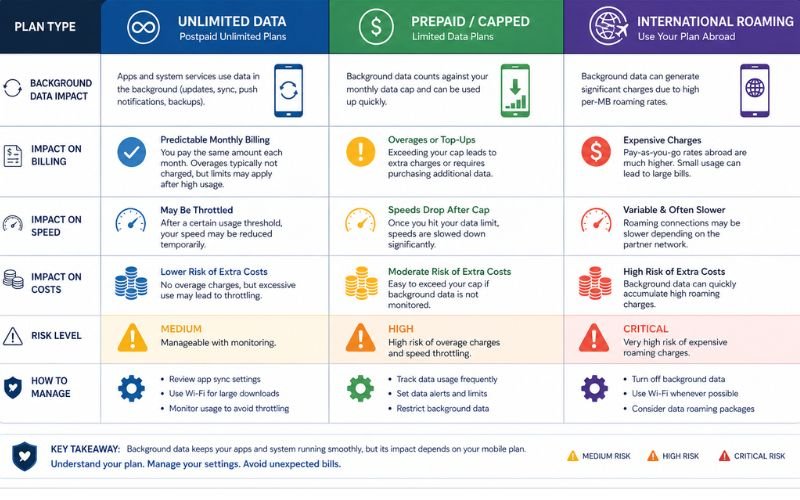
The effect of background data often depends on the type of mobile plan a person uses. The table below shows how different users may be affected.
| Plan Type | Impact of Background Data | Risk Level |
| Unlimited Data | Throttling or reduced speeds after reaching a usage cap | Medium |
| Prepaid/Capped | Overage charges or immediate loss of service once limits are reached | High |
| International Roaming | Extremely high per-megabyte costs while traveling abroad | Critical |
This comparison shows that the same background activity can have very different consequences depending on the consumer’s plan.
For example, a user with an unlimited plan may simply notice slower speeds, while someone on a prepaid plan could lose service unexpectedly. For travelers using roaming data, even minor background transfers could create significant charges.
More Than Just a Financial Issue
Beyond costs, the lawsuit also raises larger concerns about trust and transparency in technology.
Consumers expect their devices to clearly explain:
- What data is being collected
- Why it is being collected
- How it is being transmitted
- Whether it may affect personal costs
When these details are unclear, users may feel they have lost control over their digital environment. This is why the lawsuit has attracted attention—not only for its financial implications, but also for the broader conversation around consumer rights and digital transparency.
What Is Background Data Usage?
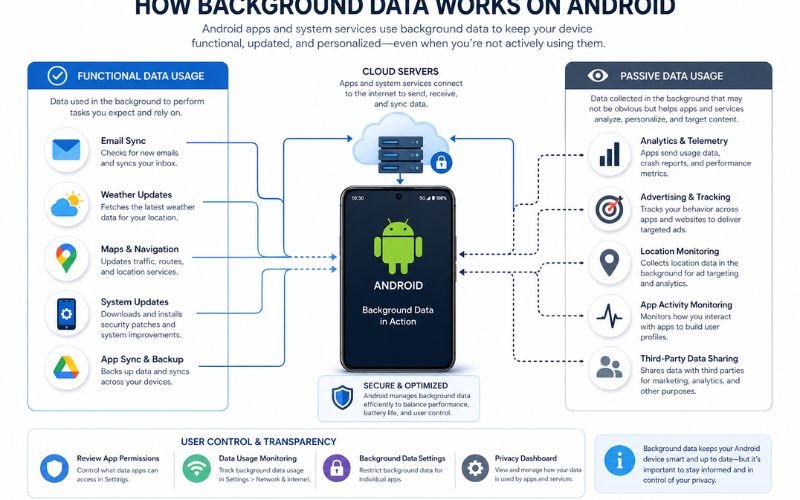
To understand the lawsuit, it helps to first define background data usage.
Background data refers to internet activity that takes place even when apps are not actively open on a device. Many apps and system services continue to send or receive information in the background so they can function properly.
Common examples include:
- Email apps checking for new messages
- Weather apps updating forecasts
- System services syncing settings
- Location tools refreshing information
These types of activities are often expected by users because they provide a clear and direct benefit. This can be described as functional data usage—background activity that supports features consumers rely on.
However, the lawsuit drew attention to a different category: passive data usage.
Passive data refers to information sent in the background that may not provide any immediate or visible benefit to the user. Examples can include diagnostic reports, system logs, or performance data automatically transmitted to company servers.
Unlike functional data, passive data often operates quietly in the background without direct user interaction.
The legal concern in this case was not simply that background data existed, but that certain forms of passive data transfer may have used consumers’ paid cellular data while offering little practical value to them.
This distinction matters because consumers generally accept background activity when it improves their experience. But when data is transmitted for purposes users do not clearly understand—and when it may increase costs—the issue becomes more serious.
In the Google Android cellular data lawsuit, questions were raised about whether these passive transfers were sufficiently disclosed and whether users were given meaningful awareness of how their data plans were being affected.
The 2026 Settlement Details
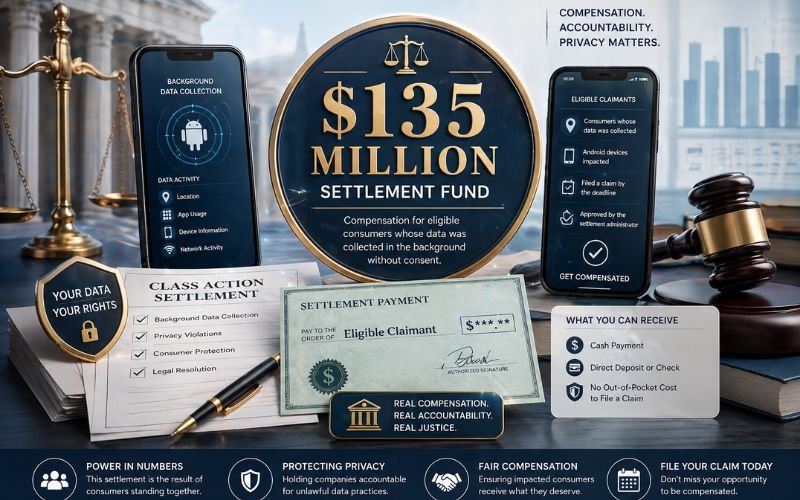
One of the most important developments in the Google Android cellular data lawsuit is the proposed 2026 settlement, which provides financial compensation for eligible users.
This settlement is significant because it gives consumers a direct way to recover money tied to the claims in the case.
The Settlement Fund
The agreement includes a $135 million settlement fund.
This fund is intended to compensate individuals who may have been affected by the alleged background data usage on Android devices.
Settlement funds in class action cases are typically divided among approved claimants after legal fees and administrative costs are addressed.
The exact amount each person receives may depend on:
- The number of valid claims submitted
- The final court approval process
- Distribution terms set by the settlement agreement
While individual payouts may vary, the total fund reflects the scale of the case and its importance to consumers.
Who Is Eligible?
Eligibility generally applies to:
- Any U.S. resident
- Who used an Android phone
- On a cellular data plan
- Between November 2017 and 2025
This means a wide range of users may qualify, especially those who regularly used Android devices during the covered period.
Consumers should review official settlement details carefully to confirm their eligibility.
The Filing Deadline
A key date for consumers is the May 29, 2026 deadline.
Eligible users must file a claim before this deadline in order to be considered for compensation.
Missing the deadline could mean losing the opportunity to receive payment from the settlement fund.
For class action settlements, deadlines are strictly enforced, so timely action is essential.
Why This Matters
Settlement details are often the most practical part of a lawsuit for everyday consumers.
While legal arguments can be complex, the settlement provides a clear takeaway:
- Financial recovery may be available
- Consumers have a limited time to act
- Understanding eligibility is critical
For affected Android users, this section of the case turns a legal dispute into a real-world opportunity to seek compensation.
How Cellular Data Differs From Wi-Fi
Many people do not realize the difference between Wi-Fi data and cellular data in legal and financial terms.
Wi-Fi
Wi-Fi typically uses home, office, or public internet networks.
For most users, it does not directly increase costs unless they exceed provider limits.
Cellular Data
Cellular data comes through a mobile carrier.
It often has monthly limits and can create charges if overused.
This distinction matters because background activity over cellular networks may affect a user’s phone bill.
If a device performs hidden data transfers while connected to cellular service, the consumer may bear the financial burden.
That concern became a central issue in the lawsuit.
Privacy Concerns Raised by the Case
The case is not only about financial costs. It also raises important concerns about digital privacy and how personal device information is handled.
According to findings discussed in the lawsuit, Android devices reportedly transmitted specific identifiers such as the Android ID and IMSI numbers.
These details are significant because they can be used to recognize and track a particular device across different mobile networks, even when the user is not actively logged into a Google account.
To understand why this matters:
- Android ID is a unique identifier assigned to a device.
- IMSI (International Mobile Subscriber Identity) is tied to the mobile subscriber through the SIM card.
When such identifiers are transmitted in the background, they may allow systems to connect usage patterns to a specific device over time.
This creates privacy concerns because many users may not realize that these identifiers can be shared automatically as part of background communications.
The issue is not simply whether data was collected, but whether consumers clearly understood what information was being sent and how it could be used.
In technology law, transparency and informed consent are critical.
If users are unaware that identifiers like Android ID and IMSI are being transmitted, it becomes difficult for them to make informed decisions about their privacy.
The lawsuit highlights a broader legal question: how much disclosure is necessary when companies collect technical data that can indirectly identify and track users across networks.
Why Technology Lawsuits Are Increasing
Cases like this are becoming more common as technology grows more complex.
Companies collect large amounts of data to improve services, deliver updates, and support advertising systems.
At the same time, consumers are becoming more aware of privacy rights.
As a result, courts are increasingly asked to examine whether business practices align with consumer expectations.
Technology lawsuits often focus on:
- Data collection methods
- disclosure policies
- hidden costs
- user consent
- privacy protections
These cases help shape future standards for digital transparency.
What Consumers Can Learn From This Lawsuit
Whether or not someone owns an Android device, this lawsuit offers practical lessons about managing privacy and mobile data more effectively—especially on newer Android versions such as Android 14, 15, and 16.
1. Use Built-In Data Controls
Modern Android devices include tools designed to reduce unnecessary data usage.
One of the most useful features is Data Saver mode, available in Android settings. This setting helps limit background data activity for many apps, especially when using cellular networks.
For users with limited mobile plans, turning on Data Saver can help prevent hidden data consumption.
It is also helpful to review:
- background app activity
- data permissions
- automatic syncing features
- location access settings
These controls can reduce unnecessary network use and improve overall device awareness.
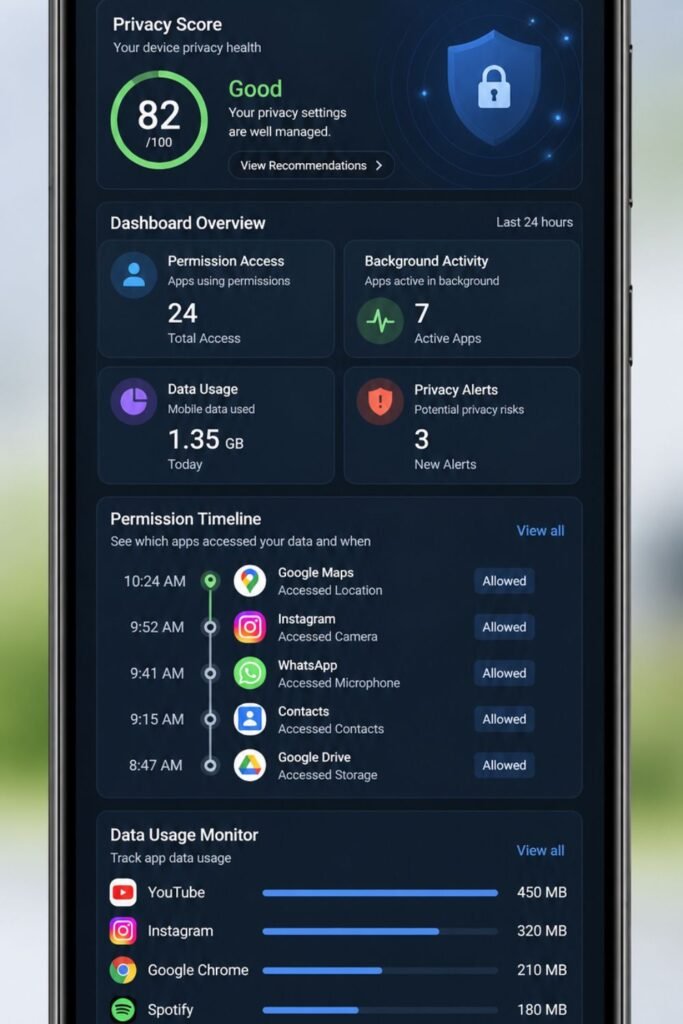
2. Check the Privacy Dashboard
Newer Android versions now include a Privacy Dashboard, which gives users a clearer picture of how apps behave.
This feature provides a 24-hour view of:
- which apps accessed permissions
- when they used location, camera, or microphone
- how frequently permissions were used
While it focuses mainly on privacy access, it can also help users identify apps that may be active more often than expected.
For consumers concerned about hidden background activity, the Privacy Dashboard offers valuable transparency.
3. Monitor Monthly Data Consumption
Mobile carriers usually provide detailed usage reports through their apps or websites.
Reviewing these reports can help identify:
- unusual spikes in mobile data
- apps consuming excessive background data
- patterns that may increase monthly costs
Consumers should compare carrier reports with their phone’s internal data usage settings for a more complete view.
4. Read Privacy Policies Carefully
Although privacy policies can be lengthy, they often explain important details about data collection.
Key areas to look for include:
- what information is collected
- how it is used
- when it may be shared
- whether data transfers occur automatically
Understanding these details helps users make informed decisions about the services they use.
5. Ask Questions About Digital Services
Consumers should feel comfortable questioning unclear or complex digital practices.
If a service does not clearly explain how it handles personal data or background activity, that lack of transparency should be taken seriously.
Modern technology should not require users to guess how their information is being managed.
The Broader Legal Impact
The Google Android cellular data lawsuit may influence future legal standards in the technology industry.
If courts determine that companies must provide clearer disclosures, businesses may need to rethink how they communicate data practices to users.
Possible long-term effects include:
- stronger consumer protections
- clearer privacy notices
- better control over background data settings
- improved accountability for digital services
Legal cases like this often shape future rules around transparency and consent.
For consumers, these developments can lead to greater fairness and more control in an increasingly connected digital environment.
Conclusion
The Google Android cellular data lawsuit highlights important questions about consumer rights in the digital age. At its core, the case is about transparency, consent, and accountability. Consumers deserve to understand how their devices use data, especially when it may affect costs or privacy. As technology becomes more integrated into daily life, awareness of digital practices becomes essential. This lawsuit serves as a reminder that even routine background activity can carry legal and financial significance. For everyday users, staying informed is one of the best ways to protect personal interests in an increasingly connected world.
FAQs
What is the Google Android cellular data lawsuit about?
The lawsuit concerns allegations that Android devices transmitted data to Google in the background, potentially using consumers’ paid cellular data without sufficient disclosure.
How do I claim my share of the settlement?
If the lawsuit results in a settlement and you are eligible for compensation, the usual process involves submitting a claim through the official court-authorized settlement website. This website typically provides important deadlines, eligibility requirements, and instructions for filing a claim.
Consumers should always rely on official notices, court documents, or trusted legal sources rather than third-party websites. If you believe you may qualify, check for updates directly from the settlement administrator or court-approved channels.
Does background data always mean something is wrong?
No. Many apps and system services use background data for updates and syncing. Concerns arise when the activity is excessive, unclear, or not properly explained.
Can background data affect my phone bill?
Yes. If you have a limited mobile data plan, background activity can contribute to higher usage and possible extra charges.
Is this lawsuit mainly about privacy?
It involves both privacy and financial concerns. The case examines data collection practices as well as possible hidden costs to consumers.
How can I reduce background data usage?
You can limit app permissions, disable unnecessary syncing, monitor data settings, and review monthly usage reports from your carrier.
Why are lawsuits like this important?
They help define legal standards for transparency, consumer rights, and responsible technology practices.