

Hostile Work Environment Lawyer: When to Seek Legal Help for Workplace Harassment
A hostile work environment can make every workday feel stressful, isolating, and overwhelming. Employees should never have to tolerate ongoing harassment, discrimination, or retaliation just to keep their job. Yet many workers stay silent because they are unsure what qualifies as a hostile work environment, what legal rights they have, or when it is time to contact a hostile work environment lawyer.
If you are dealing with repeated inappropriate conduct at work, understanding your options is the first step toward protecting yourself. In this guide, we explain what a hostile work environment means, the signs to watch for, how it differs from general workplace conflict, and when speaking with a workplace harassment attorney may be the right move.
What Is a Hostile Work Environment?
A hostile work environment is more than occasional tension, a rude manager, or personality clashes between coworkers. In legal terms, it usually refers to severe or ongoing behavior that creates an intimidating, abusive, or offensive workplace. This conduct often relates to protected characteristics such as sex, race, religion, age, disability, national origin, or other legally protected categories.
If you want a broader background explanation of the concept, this general overview of a hostile work environment may be helpful.
Many people assume only obvious misconduct counts, but workplace harassment can take many forms. Inappropriate jokes, repeated sexual comments, unwanted touching, threats, offensive messages, discriminatory remarks, or retaliation after reporting concerns may all contribute to a hostile environment.
A hostile work environment lawyer helps employees understand whether what they are experiencing may meet the legal standard for harassment and what evidence can support a claim.
Common Signs of a Hostile Work Environment
Not every difficult workplace situation is illegal, but some patterns should never be ignored. If any of the following are happening regularly, it may be time to speak with an employee harassment lawyer:
- Repeated sexual jokes, comments, or suggestive behavior
- Unwanted touching or invasion of personal space
- Offensive comments about gender, race, religion, age, or disability
- Threats, humiliation, or public embarrassment
- Bullying tied to a protected characteristic
- Explicit messages, emails, or images sent at work
- Punishment after rejecting advances or reporting misconduct
- Being excluded, demoted, or treated unfairly after a complaint
These issues can overlap with what many employees describe as workplace sexual harassment, retaliation, or discriminatory treatment. A workplace harassment attorney can help determine whether the conduct is legally actionable or whether additional documentation is needed.
Hostile Work Environment vs. Normal Workplace Conflict
One of the most common questions employees ask is whether a toxic boss or rude coworker automatically means they have a legal claim. Unfortunately, not always.
A difficult manager, strict performance standards, or occasional arguments are not usually enough on their own. For a hostile work environment claim, the behavior generally must be:
- Severe or pervasive
- Ongoing or repeated
- Connected to a protected class or unlawful retaliation
- Serious enough to affect your ability to work
For example, a single unpleasant meeting may not qualify. But repeated sexual comments, discriminatory insults, or ongoing retaliation after reporting harassment could be very different.
This is why many workers benefit from an early consultation with a hostile work environment lawyer. Legal professionals can separate frustrating workplace issues from conduct that may support a formal claim.
How Sexual Harassment Can Create a Hostile Work Environment
Sexual harassment is one of the most common reasons employees seek legal help for a hostile workplace. It may involve:
- Unwanted sexual advances
- Requests for sexual favors
- Sexual jokes or comments
- Sharing explicit images or messages
- Repeated remarks about appearance or body
- Inappropriate touching
- Threats tied to rejecting advances
Sometimes the behavior comes from a manager. In other cases, it may come from a coworker, client, vendor, or customer. Even if the harasser is not your supervisor, employers may still have responsibilities to address the issue once they know or should know it is happening.
A sexual harassment lawyer at work can help evaluate whether the behavior rises to the level of unlawful harassment and whether your employer failed to take appropriate action.
Retaliation After Reporting Harassment
Many employees fear that speaking up will make things worse. Sadly, that concern is often justified. Retaliation can happen when an employer punishes someone for reporting harassment, participating in an investigation, or asserting legal rights.
Common examples include:
- Sudden write-ups after a complaint
- Reduced hours or shifts
- Demotion or reassignment
- Being excluded from meetings or opportunities
- Negative performance reviews without clear basis
- Termination after reporting misconduct
In these situations, you may need more than just advice about harassment itself. You may also need a retaliation lawyer after reporting harassment to review whether your employer is taking illegal action against you.
Retaliation claims are often closely connected to hostile work environment cases, especially when a workplace becomes more abusive after someone speaks up.
What to Do If You Think You Are in a Hostile Work Environment
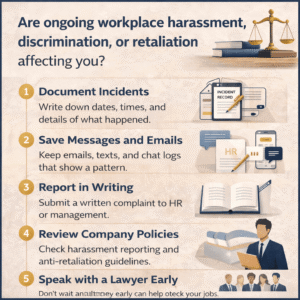
If you believe you are being harassed or subjected to an abusive workplace, taking the right steps early can make a major difference. Before emotions escalate or important evidence disappears, consider the following actions.
1. Document Everything
Keep detailed notes about what happened, including:
- Dates and times
- Names of people involved
- What was said or done
- Witnesses who saw or heard the conduct
- Emails, texts, screenshots, or messages
- Changes in your schedule, pay, or job duties
Good documentation can be extremely helpful when you speak with a hostile work environment lawyer or employment lawyer for harassment.
2. Review Company Policies
Check your employee handbook or HR policy regarding harassment, discrimination, and reporting procedures. Many employers require internal reporting before they can fully address the issue.
3. Report the Conduct Internally
If it is safe to do so, report the behavior to HR, a supervisor, or the appropriate reporting contact listed in company policy. Make the complaint in writing if possible so there is a record.
4. Preserve Evidence
Do not delete emails, texts, chat logs, photos, voicemails, or documents related to the conduct. If your employer later disputes what happened, those records can matter.
5. Speak With a Lawyer Early
Even if you are not ready to file a complaint or lawsuit, an early consultation with a workplace harassment attorney can help you avoid mistakes and understand your rights before the situation gets worse.
When Should You Contact a Hostile Work Environment Lawyer?
You do not need to wait until you are fired or pushed out of your job to seek legal advice. In fact, waiting too long can make your case harder.
Consider contacting a hostile work environment lawyer if:
- The harassment is repeated and ongoing
- You already reported it and nothing changed
- HR ignored your complaint
- You are being retaliated against
- Your health or work performance is suffering
- You are afraid you may be fired
- You were demoted, transferred, or forced out
- You are unsure whether to file with the EEOC or a state agency
A lawyer can explain possible deadlines, help you organize evidence, and determine whether the facts support claims related to harassment, discrimination, retaliation, or even wrongful termination.
Can You Sue for a Hostile Work Environment?
In some cases, yes. Employees may have the right to file a legal claim if the workplace conduct meets the legal standard and the employer failed to stop it.
However, many claims begin before a lawsuit. Depending on the facts, the process may involve:
- Internal HR complaints
- Administrative complaints with the EEOC or state agency
- Mediation or settlement discussions
- Negotiation with the employer
- Formal litigation if necessary
Because deadlines can apply quickly, many people benefit from speaking with a workplace harassment attorney sooner rather than later.
What Evidence Helps in a Hostile Work Environment Case?
A strong case often depends on proof. Helpful evidence may include:
- Written complaints to HR
- Emails or text messages
- Slack or internal chat records
- Witness statements
- Performance reviews before and after the harassment
- Schedule changes or disciplinary notices
- Medical or therapy records showing stress-related effects
- Notes documenting incidents over time
Even if you are not sure you have enough evidence, do not assume you have no case. A hostile work environment lawyer can identify what documentation is most useful and what steps to take next.
Why Early Legal Advice Matters
Many employees wait too long because they hope the problem will go away or fear making the wrong move. But hostile work environment issues often become more difficult when employers start building a paper trail against the employee after a complaint.
An early legal consultation can help you:
- Protect your job while documenting misconduct
- Understand reporting options
- Avoid harmful mistakes in communication
- Recognize retaliation quickly
- Preserve evidence before it disappears
- Evaluate whether a settlement or formal claim makes sense
This is especially important if the issue overlaps with sexual harassment, discrimination, or retaliation after reporting misconduct.
Final Thoughts
No one should have to endure harassment, intimidation, or abuse just to keep a paycheck. If your workplace feels unsafe, degrading, or retaliatory, it may be time to learn whether your situation goes beyond ordinary conflict and into legal territory.
A hostile work environment lawyer can help you understand your rights, review the facts, and decide the best path forward. Whether the issue involves repeated offensive behavior, workplace sexual harassment, or retaliation after speaking up, getting informed early can make all the difference.
If you believe you are dealing with unlawful conduct, do not ignore the warning signs. Document what is happening, preserve your evidence, and consider speaking with a workplace harassment attorney who can explain your options and help you protect your career and well-being.
FAQs
1. What is a hostile work environment?
A hostile work environment happens when repeated harassment, discrimination, or offensive behavior makes it difficult for an employee to work. The conduct usually must be severe or ongoing to become a legal issue.
2. When should I contact a hostile work environment lawyer?
You should contact a hostile work environment lawyer if harassment continues, HR ignores your complaint, or you face retaliation after reporting the issue.
3. Is sexual harassment a hostile work environment?
Yes, sexual harassment can create a hostile work environment if the behavior is repeated, severe, or affects your ability to do your job.
4. Can I sue for a hostile work environment?
In some cases, yes. If your employer failed to stop ongoing harassment or discrimination, you may have legal options after filing the proper complaint.
5. What evidence helps prove a hostile work environment?
Helpful evidence includes emails, texts, witness statements, written complaints, and notes showing repeated harassment or retaliation at work.
6. Can a coworker create a hostile work environment?
Yes. A coworker, manager, client, or customer can create a hostile work environment if the employer knows about the conduct and fails to address it.
7. What is retaliation after reporting harassment?
Retaliation happens when an employer punishes you for reporting harassment, such as cutting hours, demoting you, or firing you.
8. How long do I have to file a harassment claim?
Deadlines vary by state and claim type, so it is best to speak with a workplace harassment attorney as soon as possible.
9. Is a toxic boss the same as a hostile work environment?
Not always. A rude or difficult boss is not automatically illegal unless the behavior involves harassment, discrimination, or retaliation.
10. Can workplace bullying be illegal?
Workplace bullying may become illegal if it involves discrimination, sexual harassment, or retaliation based on a protected characteristic.