
Is Dumpster Diving Illegal in Texas? Laws, Risks & Legal Guide (2026)
Quick Answer
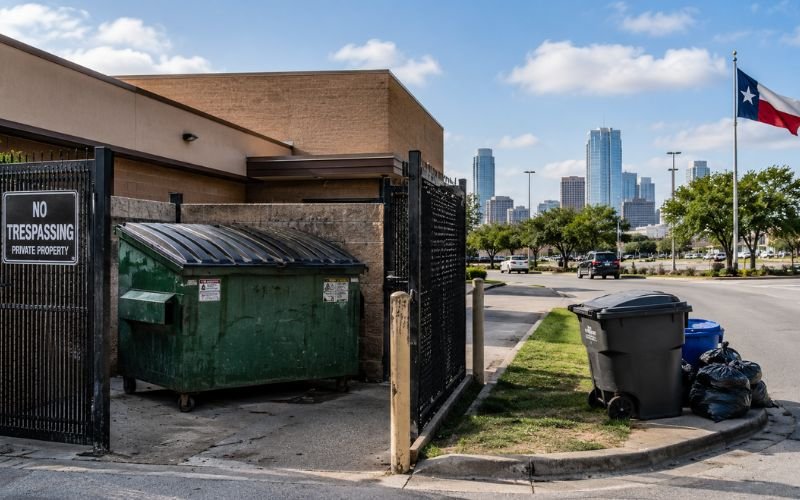
Dumpster diving is generally not illegal in Texas, but whether it is legal depends on where the dumpster is located and how you access it. If a dumpster is placed on public property or in a publicly accessible area, taking discarded items is often lawful. However, entering private property, climbing over fences, ignoring “No Trespassing” signs, or accessing locked dumpster enclosures can result in criminal trespass charges under Texas law. Local city ordinances may also impose additional restrictions.
Because every situation is different, it’s important to understand the difference between abandoned property, private property, and local municipal regulations before retrieving items from a dumpster.
Is Dumpster Diving Illegal in Texas?
Dumpster diving has become increasingly popular among people looking to reduce waste, find reusable items, save money, or even discover valuable collectibles. Despite its popularity, many Texans are unsure whether the practice is legal.
The short answer is no—Texas does not have a statewide law that specifically bans dumpster diving. However, that does not mean you can legally search through every dumpster you encounter.
Instead, the legality depends on several factors, including:
- Whether the dumpster is located on public or private property
- Whether the property owner has restricted access
- Whether you enter a fenced or locked area
- Whether local city ordinances prohibit certain activities
- Whether your actions cause property damage or create a public nuisance
Understanding these legal distinctions can help you avoid unnecessary legal problems while respecting private property rights.
Understanding Texas Law on Dumpster Diving
Unlike some activities that are directly regulated by state law, dumpster diving falls under several existing legal principles rather than one specific statute.
These include:
- Property rights
- Criminal trespass laws
- Theft-related laws (in certain situations)
- Local sanitation and waste ordinances
- Privacy and identity theft laws
Because there is no single “Dumpster Diving Act” in Texas, courts and law enforcement typically evaluate each situation based on the surrounding circumstances.
For example:
- A trash bag placed on the curb for municipal collection is generally treated differently from a dumpster located behind a fenced commercial building.
- A public recycling container may have different rules than a locked dumpster belonging to a private business.
- A shopping center’s dumpster may remain private property even if customers regularly enter the parking lot.
This is why two dumpster diving situations can have completely different legal outcomes.
Public Property vs. Private Property
One of the most important legal distinctions involves where the dumpster is located.
Dumpster on Public Property
Items placed in areas intended for public trash collection are often considered abandoned once the owner has discarded them. Although Texas law does not expressly declare all discarded property to be free for public collection, courts generally recognize that people have a significantly reduced expectation of privacy in trash left for collection.
Examples include:
- Trash placed on the curb for city pickup
- Publicly accessible trash containers where access is unrestricted
- Bulky furniture left at the curb during scheduled collection
Even then, you should avoid creating a mess or violating any local sanitation rules.
Examples That Are Often Lower Risk
- A couch placed on the curb during bulk pickup
- Cardboard boxes left beside a public recycling bin
- Household items placed out for scheduled garbage collection
These situations generally present fewer legal concerns because the property has been discarded in a location intended for public collection.
Dumpster on Private Property
The legal situation changes considerably when a dumpster is located on private property.
Examples include:
- Behind restaurants
- Retail stores
- Apartment complexes
- Office buildings
- Warehouses
- Schools
- Hotels
- Manufacturing facilities
Even if the dumpster itself contains discarded items, the land surrounding it remains private property.
If you enter without permission, you could face allegations of criminal trespass regardless of whether you remove anything from the dumpster.
High-Risk Situations
These situations present a significantly greater legal risk:
- Climbing over a fence
- Entering a locked dumpster enclosure
- Opening locked dumpsters
- Ignoring “No Trespassing” signs
- Entering employee-only service areas
- Remaining on the property after being asked to leave
The issue is often how you accessed the dumpster, not simply what was inside it.
Does Texas Have a Dumpster Diving Law?
Many people search for a specific Texas law that either permits or prohibits dumpster diving.
In reality, Texas has no statute that expressly makes dumpster diving illegal statewide.
Instead, law enforcement officers rely on other laws when someone’s conduct crosses legal boundaries.
For example, someone may face legal consequences for:
- Entering private property without permission
- Damaging locks or fences
- Ignoring posted warning signs
- Creating a public nuisance
- Stealing property that has not actually been abandoned
This distinction is important because simply searching through discarded items is different from violating someone’s property rights.
Texas Criminal Trespass Law
The law that most commonly applies to dumpster diving cases is Texas Penal Code § 30.05, which addresses criminal trespass.
Under this law, a person may commit criminal trespass if they knowingly enter or remain on another person’s property without effective consent after receiving notice that entry is forbidden or after being told to leave.
Notice may include:
- “No Trespassing” signs
- Locked gates
- Fences or other obvious barriers
- Purple paint markings used under Texas law to indicate restricted property
- Verbal instructions from the owner, manager, or security personnel
For example:
Example 1
A dumpster sits behind a grocery store inside a locked fenced enclosure.
A person climbs over the fence to search the dumpster.
Although the discarded items may have little value, climbing the fence to enter private property could expose that person to criminal trespass allegations.
Example 2
A business owner asks someone searching through a dumpster to leave.
If the individual refuses to leave, law enforcement may become involved because the issue is no longer the dumpster—it is the refusal to leave private property after notice has been given.
Example 3
A dumpster is located near the edge of a shopping center parking lot with no fencing or signs.
While access may appear easier, the property may still be privately owned. Whether criminal trespass applies depends on the specific facts, including whether access was restricted and whether notice was provided.
How the U.S. Supreme Court Decision Affects Texas
A key legal principle frequently discussed in dumpster diving cases comes from the U.S. Supreme Court’s decision in California v. Greenwood.
In that case, police searched garbage bags that had been left on the curb for collection without first obtaining a warrant.
The Supreme Court ruled that people generally do not have a reasonable expectation of privacy in trash left outside for collection in an area accessible to the public. Because the trash had been exposed to the public, the search did not violate the Fourth Amendment.
Why This Matters in Texas
The decision is often misunderstood.
It does not mean that anyone has an unrestricted right to enter private property and search dumpsters.
Instead, the case focuses on privacy expectations, not property access rights.
In practical terms:
- Trash placed out for collection generally receives less privacy protection.
- Property owners still have the right to control access to their land.
- Criminal trespass laws continue to apply even if the contents of the dumpster have been discarded.
In other words, while discarded items may no longer enjoy the same privacy protections, the location of the dumpster still matters.
Key Takeaways
Before considering dumpster diving in Texas, remember these important points:
- Texas does not have a statewide law that automatically makes dumpster diving illegal.
- The location of the dumpster is usually the most important legal factor.
- Publicly accessible trash is generally treated differently from dumpsters located on private property.
- Entering fenced, locked, or clearly restricted areas can result in criminal trespass charges.
- “No Trespassing” signs and other notices should always be respected.
- Local city ordinances may impose additional rules beyond state law.
- The Supreme Court’s decision in California v. Greenwood concerns privacy expectations—not permission to enter private property.
Understanding these principles will help you distinguish between situations that may be relatively low risk and those that could lead to legal consequences.
Can You Legally Dumpster Dive Behind Businesses in Texas?
One of the most common questions people ask is whether it’s legal to search dumpsters behind retail stores, grocery chains, restaurants, or shopping centers.
The answer depends less on who owns the dumpster and more on where it’s located and whether you’re authorized to access it.
Many businesses place dumpsters in service areas intended only for employees or waste collection companies. These areas are often protected by fences, locked gates, security cameras, or clearly posted warning signs. Entering such areas without permission may lead to criminal trespass issues, even if the items inside the dumpster have been discarded.
Businesses Where Dumpster Diving Commonly Occurs
People often ask about dumpsters behind:
- Walmart
- Target
- Costco
- Home Depot
- Lowe’s
- Best Buy
- Dollar General
- CVS
- Walgreens
- Grocery stores
- Restaurants
- Shopping malls
The same legal principles generally apply to all of these locations.
Example
Suppose a retail store places its dumpster inside a fenced enclosure marked “Employees Only” and “No Trespassing.”
If someone climbs the fence to access the dumpster, law enforcement is far more likely to focus on the unauthorized entry than on the discarded property itself.
By contrast, if a dumpster is located in an area that is openly accessible to the public and there are no barriers or notices restricting entry, the legal analysis becomes more fact-specific. Even then, the property may still be privately owned, so caution is essential.
Is Dumpster Diving at Apartment Complexes Legal?
Apartment complex dumpsters create another area of confusion.
Most apartment dumpsters are intended exclusively for residents and are located on private property. Although some complexes leave dumpsters in open parking areas, others place them inside gated communities or enclosed waste stations.
If you are not a resident or do not have permission, accessing these dumpsters could expose you to trespassing allegations.
Factors That Matter
- Is the complex private property?
- Is access controlled by gates?
- Are there “Residents Only” signs?
- Has management asked you to leave?
- Is the dumpster located inside a restricted area?
If the answer to any of these questions is yes, the legal risk increases significantly.
Can Businesses Lock Their Dumpsters?
Yes.
Businesses generally have the right to secure dumpsters located on their property.
Common security measures include:
- Locked dumpster lids
- Fenced enclosures
- Security cameras
- Motion-activated lighting
- Warning signs
- Employee-only access
These measures demonstrate that the property owner intends to restrict access.
Attempting to bypass these security measures may create legal issues that extend beyond simply searching through discarded materials.
Is Dumpster Diving Considered Theft in Texas?
This question often causes confusion.
Generally, discarded property that has truly been abandoned is not considered stolen property simply because someone picks it up.
However, not every item inside a dumpster is necessarily abandoned in the legal sense.
Situations That May Raise Legal Concerns
For example:
- Items waiting to be returned to a manufacturer
- Merchandise placed in a dumpster temporarily
- Property accidentally discarded
- Materials owned by a recycling contractor
- Locked disposal containers used under contractual agreements
In these situations, ownership may not have been completely relinquished.
As a result, disputes can arise regarding whether the property was actually abandoned.
Can Police Stop or Question Dumpster Divers?
Yes.
Police officers may stop and question someone if they receive a complaint from:
- A business owner
- Property manager
- Security guard
- Concerned resident
- Witness reporting suspicious activity
Whether an arrest occurs depends on the facts.
For example, officers may investigate:
- Whether you entered private property without permission
- Whether you ignored warning signs
- Whether property was damaged
- Whether any other criminal offense occurred
Simply speaking with law enforcement does not automatically mean you have committed a crime.
What Happens If a Business Asks You to Leave?
If the property owner, manager, or authorized employee tells you to leave, you should do so immediately.
Remaining on private property after receiving notice can strengthen the basis for a criminal trespass allegation.
Even if you believe the dumpster contains abandoned items, refusing to leave may create unnecessary legal problems.
Does It Matter If You Dumpster Dive at Night?
Many people assume dumpster diving is illegal after dark.
Texas law does not prohibit dumpster diving simply because it occurs at night.
However, nighttime activity may attract greater attention from:
- Police officers
- Security personnel
- Property owners
- Neighbors
If the location is private property, the same trespassing rules apply regardless of the time of day.
What About “No Trespassing” Signs?
Warning signs are extremely important.
Examples include:
- No Trespassing
- Employees Only
- Authorized Personnel Only
- Private Property
- Keep Out
Ignoring these notices can significantly increase your legal risk.
If you encounter any of these signs, it is generally best to leave the area.
Can You Take Furniture Left on the Curb?
This situation is usually very different from searching through commercial dumpsters.
Many Texas cities allow residents to place furniture, appliances, or other bulky items at the curb for scheduled municipal collection.
Examples include:
- Sofas
- Chairs
- Tables
- Mattresses
- Cabinets
- Bookshelves
In many situations, these items have been intentionally discarded.
However, local collection rules differ from one city to another, so checking municipal guidance is always advisable.
Texas Cities: Does the Law Change?
There is no statewide ban on dumpster diving.
However, cities may adopt local ordinances concerning:
- Waste collection
- Public sanitation
- Recycling programs
- Illegal dumping
- Access to municipal facilities
Below is a general overview.
| Texas City | General Legal Considerations |
| Houston | State trespassing laws apply; review local waste and sanitation rules before accessing disposal areas. |
| Dallas | Public versus private property remains the key issue, and local ordinances may regulate waste collection. |
| Austin | Respect private property and posted restrictions; municipal sanitation rules may also apply. |
| San Antonio | Dumpster location and property ownership are critical when determining legality. |
| Fort Worth | Local waste management regulations may affect access to certain disposal sites. |
Always verify current municipal ordinances before relying on general statewide guidance.
Real-Life Dumpster Diving Scenarios
The examples below illustrate how different facts can change the legal analysis.
| Situation | Legal Risk |
| Trash bags placed on the curb for scheduled pickup | Generally lower risk |
| Dumpster inside a locked fenced enclosure | High risk |
| Dumpster behind a restaurant marked “Employees Only” | High risk |
| Apartment dumpster inside a gated complex | High risk |
| Furniture placed outside for bulk pickup | Generally lower risk |
| Entering private property after being told to leave | High risk |
| Climbing a fence to reach a dumpster | High risk |
| Open dumpster in an unrestricted public area | Depends on the specific circumstances |
These examples are for educational purposes and should not be viewed as legal advice.
Health and Safety Risks
Even if a particular dumpster diving situation does not violate the law, there are significant safety concerns.
Potential hazards include:
- Broken glass
- Rusted metal
- Sharp objects
- Medical waste
- Chemicals
- Mold
- Rotten food
- Animal waste
- Used needles
- Biohazard materials
Protective equipment such as heavy-duty gloves and closed-toe footwear can reduce, but not eliminate, these risks.
Privacy and Identity Theft Concerns
Dumpster divers occasionally encounter documents containing sensitive personal information.
Examples include:
- Bank statements
- Tax documents
- Medical records
- Credit card offers
- Driver’s license information
- Social Security information
Although these materials may have been discarded, using another person’s personal information for fraudulent purposes remains illegal.
If you encounter sensitive documents, the safest approach is to avoid using or distributing them.
Best Practices for Staying Within the Law
If you choose to dumpster dive, consider these practical guidelines:
- Stay out of fenced or locked areas.
- Never ignore “No Trespassing” signs.
- Leave immediately if asked by the property owner or manager.
- Avoid damaging locks, gates, or fences.
- Do not leave trash scattered around the area.
- Respect local sanitation rules.
- Be aware of your surroundings.
- Wear protective clothing.
- Avoid hazardous materials.
- When in doubt, obtain permission before accessing a dumpster.
Following these practices cannot guarantee that every situation will be lawful, but they can help reduce both legal and safety risks.
Frequently Asked Questions (FAQs)
1. Is dumpster diving illegal in Texas?
No. Texas does not have a statewide law that specifically prohibits dumpster diving. However, entering private property without permission, ignoring “No Trespassing” signs, or accessing locked dumpster enclosures may lead to criminal trespass or other legal issues.
2. Can I dumpster dive behind Walmart in Texas?
It depends on where the dumpster is located. If it is inside a fenced or restricted area, entering without permission may constitute trespassing. Even if the dumpster is accessible, it is typically located on private property, so caution is advised.
3. Can police stop me for dumpster diving?
Yes. Police may investigate if a property owner, business, or witness reports suspicious activity. Whether any enforcement action is taken depends on the specific circumstances, including where the dumpster is located and whether any laws were violated.
4. Is dumpster diving considered theft?
Not necessarily. Discarded items are often considered abandoned, but ownership can vary depending on the circumstances. Some materials may still belong to a business, recycling contractor, or another party.
5. Is it legal to dumpster dive at night in Texas?
Texas law does not prohibit dumpster diving solely because it occurs at night. However, nighttime activity may attract more attention from law enforcement or property owners, and trespassing laws still apply.
6. Is dumpster diving legal behind restaurants?
Restaurant dumpsters are usually located on private property. Entering restricted service areas or ignoring posted warnings could result in trespassing allegations.
7. Can businesses lock their dumpsters?
Yes. Property owners generally have the right to secure dumpsters using locks, fences, gates, or other security measures to restrict unauthorized access.
8. Is it legal to take furniture left on the curb?
In many situations, furniture placed at the curb for municipal collection is considered discarded. However, local rules may vary, so checking city regulations is recommended.
9. Can I dumpster dive at apartment complexes?
Apartment dumpsters are generally intended for residents and are often located on private property. Accessing them without permission may create legal issues.
10. What happens if a business asks me to leave?
You should leave immediately. Remaining on the property after being instructed to leave may increase the likelihood of a criminal trespass allegation.
11. Are “No Trespassing” signs legally important?
Yes. These signs serve as notice that entry is prohibited. Ignoring them can significantly increase your legal risk under Texas trespass laws.
12. Does the law differ between Houston, Dallas, Austin, and other Texas cities?
The basic state legal principles remain the same, but cities may have different sanitation, waste collection, or municipal ordinances that affect dumpster access.
13. Can I sell items I legally find in a dumpster?
If the property was lawfully abandoned and you obtained it legally, selling it may be permissible. However, you should ensure the items are safe, lawfully acquired, and not subject to ownership disputes.
14. Can I be arrested for trespassing while dumpster diving?
If you enter private property without permission or refuse to leave after being told to do so, you could face criminal trespass charges depending on the circumstances.
15. Does opening a locked dumpster make a difference?
Yes. Opening or bypassing locks may create additional legal issues and demonstrates that access was intentionally restricted by the property owner.
Key Takeaways
Before dumpster diving in Texas, remember these important points:
- Texas does not have a statewide law that specifically bans dumpster diving.
- The location of the dumpster is often the most important legal factor.
- Publicly accessible discarded items are generally treated differently from dumpsters located on private property.
- Entering fenced areas, climbing gates, or ignoring warning signs can lead to criminal trespass allegations.
- Businesses have the right to control access to their property and dumpsters.
- Local ordinances may impose additional restrictions depending on the city.
- Respecting property boundaries and safety precautions can help reduce legal and personal risks.
Final Verdict
So, is dumpster diving illegal in Texas?
Generally, no—but it isn’t legal everywhere or under every circumstance.
Texas law does not expressly prohibit dumpster diving, but it also does not give people unrestricted access to private dumpsters. The legality often depends on where the dumpster is located, whether the property is open to the public, and whether the property owner has limited access through fences, gates, locks, or warning signs.
If a dumpster is located in a publicly accessible area and no laws or local ordinances prohibit access, searching through discarded items may present fewer legal concerns. On the other hand, entering private property without permission, bypassing security measures, or refusing to leave after being asked can expose you to criminal trespass or other legal consequences.
Because local ordinances vary across Texas, it’s always wise to verify municipal rules before dumpster diving. When in doubt, seek permission from the property owner and avoid locations where access is clearly restricted.
Disclaimer: This article is for informational and educational purposes only and does not constitute legal advice. If you need advice about a specific situation, consult a qualified Texas attorney.