
Blingle Lawsuit (2026): Case Details, Franchise Risks & What Buyers Should Know
Interest in the term “blinglelawsuit” has increased significantly as franchise buyers conduct deeper legal and financial due diligence before investing in home service brands. Modern investors no longer rely solely on franchise sales presentations. Instead, they review litigation history, franchise disclosure documents, online complaints, startup costs, and operational risks before committing capital.
The growing discussion surrounding the Blingle lawsuit appears connected to a publicly referenced federal franchise dispute involving entities associated with HorsePower Brands. While lawsuits can raise concerns among potential investors, it is important to understand that allegations in civil litigation are not automatically proof of wrongdoing.
This article provides a detailed, fact-based review of the reported lawsuit, franchise risk considerations, litigation disclosures, and investor-focused legal analysis. It also explains what prospective franchisees should evaluate before investing in any home service franchise opportunity.
Quick Summary
| Topic | Details |
| Main Search Topic | Blingle lawsuit |
| Reported Lawsuit | Waldron et al v. SVHB Marketing LLC d/b/a Horse Power Brands et al |
| Filing Year | 2023 |
| Court | U.S. District Court, Eastern District of Pennsylvania |
| Reported Docket Number | 2:23-cv-03485 |
| Main Concern | Franchise-related business dispute |
| Parent Organization | HorsePower Brands |
| Is Blingle Still Operating? | Yes |
| Key Buyer Concern | Litigation history and franchise risk |
| Important Document | Franchise Disclosure Document (FDD) |
Key Takeaways
- The Blingle lawsuit relates to a reported federal franchise dispute involving entities associated with HorsePower Brands.
- A lawsuit does not automatically prove misconduct or liability.
- Franchise buyers should carefully review FDD Item 3 litigation disclosures.
- Litigation history can affect investor confidence and financing decisions.
- Due diligence is critical before investing in any franchise system.
What Is Blingle?
Blingle Official Website is a home service franchise specializing in outdoor lighting solutions for residential and commercial properties.
The company primarily focuses on:
- Landscape lighting
- Holiday lighting
- Permanent lighting systems
- Event lighting
- Patio and architectural lighting
- Commercial exterior lighting
Blingle markets itself as a scalable service-based franchise operating within the growing outdoor home improvement industry.
The company is associated with HorsePower Brands, a multi-brand franchise platform involved in several home service concepts.
Why Home Service Franchises Attract Investors
Over the last several years, home service franchises have gained significant investor attention because they often offer:
- Lower overhead than retail franchises
- Recurring customer demand
- Strong local marketing potential
- Service-based revenue models
- Growing home improvement demand
- Expansion opportunities in suburban markets
Lighting franchises, in particular, appeal to entrepreneurs looking for visually marketable services with residential and commercial applications.
However, like all franchise investments, potential rewards come with legal, operational, and financial risks.
Why Are People Searching for the Blingle Lawsuit?
Searches related to the Blingle franchise lawsuit are likely driven by modern franchise due diligence behavior.
Today’s investors frequently research:
- Franchise complaints
- Litigation history
- Franchisee experiences
- Franchise disclosure documents
- Brand reputation
- Online reviews
- Financial expectations
When a franchise system becomes associated with reported litigation, online searches typically increase quickly.
Why Lawsuit Searches Matter in Franchising
Buying a franchise often requires substantial financial commitment.
Prospective owners may invest:
- personal savings,
- SBA-backed loans,
- retirement funds,
- or outside financing.
As a result, investors commonly investigate whether legal disputes exist before signing franchise agreements.
Common Buyer Concerns
Potential franchisees researching the Blingle legal issues may want to know:
- Whether franchisees are satisfied
- Whether support systems meet expectations
- Whether earnings claims were realistic
- Whether operational disputes exist
- Whether lawsuits suggest broader system risks
Importantly, franchise litigation is not uncommon across the industry.
Many disputes arise from disagreements involving:
- contracts,
- territory rights,
- training,
- marketing support,
- royalties,
- or financial performance expectations.
Is There a Real Blingle Lawsuit?
Yes. Publicly accessible federal court records indicate that a franchise-related lawsuit connected to entities associated with HorsePower Brands was filed in federal court.
Publicly referenced details include:
| Case Information | Details |
| Reported Case Name | Waldron et al v. SVHB Marketing LLC d/b/a Horse Power Brands et al |
| Filing Date | September 7, 2023 |
| Court | U.S. District Court for the Eastern District of Pennsylvania |
| Reported Docket Number | 2:23-cv-03485 |
| Nature of Suit | Contract / Franchise-related dispute |
The case has been referenced through publicly available docket systems and legal reporting databases.
Important Legal Context
A filed lawsuit means plaintiffs formally submitted allegations to a court.
It does not automatically establish:
- liability,
- fraud,
- misconduct,
- or legal violations.
Civil allegations remain claims unless proven through:
- settlement,
- judicial findings,
- arbitration,
- dismissal rulings,
- or trial outcomes.
This distinction is critical when evaluating any franchise lawsuit.
Blingle Lawsuit Timeline
| Date | Reported Event |
| September 2023 | Complaint reportedly filed in federal court |
| Late 2023 | Defendants reportedly appeared through counsel |
| 2024 | Public reporting discussed procedural developments |
| 2024 | Reports indicated dispute resolution and mediation issues may have influenced proceedings |
| 2025–2026 | Online search interest surrounding the lawsuit continued growing |
Because litigation status can change over time, investors should independently verify current case information through official court systems.
Useful resources include:
- PACER Federal Court Records
- FTC Franchise Resources
What Are the Main Allegations?
Public discussions surrounding the Blingle lawsuit largely focus on franchise-related business disputes rather than consumer injury claims.
While allegations should never be treated as proven facts, franchise litigation commonly involves several recurring themes.
1. Earnings Representation Concerns
Some franchise disputes involve disagreements over:
- revenue expectations,
- profitability projections,
- lead generation assumptions,
- or break-even timelines.
Franchisees may allege that financial expectations differed from actual operational outcomes.
2. Territory Disputes
Territory disagreements are common within franchise systems.
Potential issues can include:
- overlapping territories,
- market saturation,
- customer allocation disputes,
- or competitive overlap.
3. Franchise Support Complaints
Operational support is one of the most important factors in franchising.
Disputes may involve:
- onboarding quality,
- training programs,
- marketing assistance,
- operational guidance,
- or vendor systems.
4. Disclosure-Related Concerns
Some franchise disputes involve allegations tied to disclosures made during the franchise sales process.
This is why reviewing the franchise disclosure document is essential.
5. Contractual Disputes
Franchise systems operate through detailed contracts.
Litigation often centers around disagreements involving:
- royalty obligations,
- termination rights,
- non-compete provisions,
- operational standards,
- or dispute resolution procedures.
Again, allegations are not proof of wrongdoing.
How Franchise Lawsuits Usually Work
Many prospective franchisees misunderstand how franchise litigation actually develops.
Understanding the legal process can help investors evaluate risk more realistically.
Complaint Stage
The lawsuit begins when plaintiffs file formal allegations in court.
These allegations outline claimed legal violations or disputes.
Response Stage
Defendants typically file responses denying or challenging the allegations.
Motions and Early Proceedings
Courts may review:
- dismissal requests,
- jurisdiction issues,
- arbitration clauses,
- or mediation requirements.
Some franchise disputes never reach trial because contracts may require alternative dispute resolution.
Discovery Phase
This stage involves evidence gathering.
Parties may exchange:
- emails,
- contracts,
- financial records,
- operational documents,
- and sworn testimony.
Settlement Discussions
Many franchise lawsuits resolve before trial.
Settlements may remain confidential.
Trial or Final Resolution
If unresolved, disputes may proceed to:
- trial,
- arbitration,
- or judicial rulings.
Why Buyers Should Care
A pending lawsuit does not automatically mean catastrophic risk.
However, buyers should still examine:
- how disputes emerged,
- whether similar complaints exist,
- how management responded,
- and whether litigation patterns appear repeatedly.
Blingle Franchise Complaints
Searches for Blingle franchise complaints appear connected to broader franchise due diligence concerns.
It is important to distinguish between:
- verified legal findings,
- online commentary,
- franchise dissatisfaction,
- and formal litigation claims.
Common Franchise Complaint Categories
Across the franchise industry, complaints often involve:
- support responsiveness,
- lead generation quality,
- training effectiveness,
- startup cost overruns,
- territory concerns,
- and profitability expectations.
Why Online Complaints Require Context
Online reviews and complaint forums may not always provide complete factual context.
Some complaints reflect:
- isolated operational struggles,
- market-specific challenges,
- unrealistic expectations,
- or contract misunderstandings.
That is why buyers should rely on multiple sources during due diligence rather than social media discussions alone.
What This Means for Franchise Buyers
The reported Blingle franchise lawsuit may influence how some investors evaluate the opportunity.
That does not automatically make the franchise unsafe.
However, lawsuits can affect several areas of franchise evaluation.
Financing Concerns
Lenders sometimes review litigation history during underwriting.
Pending disputes may raise additional questions during financing reviews.
Reputation Risk
Negative legal publicity can potentially affect:
- customer trust,
- local recruiting,
- online sentiment,
- and lead conversion rates.
Operational Uncertainty
New franchisees often depend heavily on franchisor systems during early growth stages.
As a result, buyers may closely examine:
- onboarding systems,
- marketing support,
- vendor networks,
- and operational coaching.
Resale Value Concerns
Franchise litigation can occasionally influence the resale attractiveness of territories.
Investor Confidence
Even unresolved allegations can influence buyer psychology and franchise recruitment momentum.
Understanding FDD Item 3 Litigation History
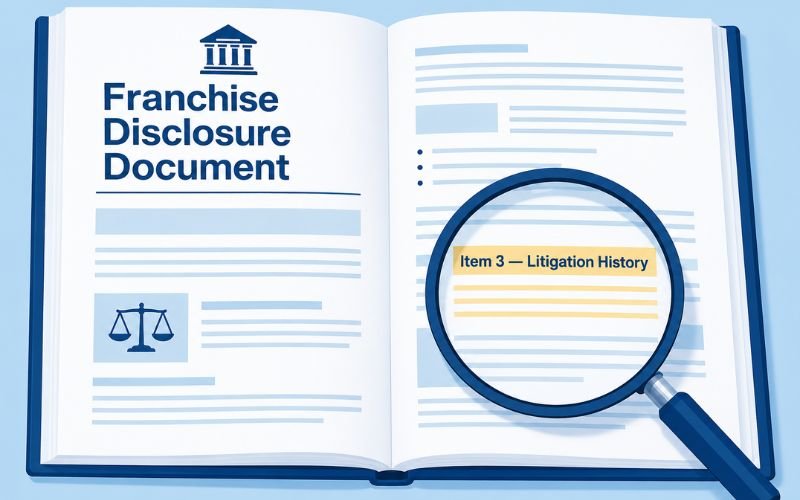
One of the most important sections in a Franchise Disclosure Document is FDD Item 3.
What Is FDD Item 3?
FDD Item 3 contains litigation disclosures related to the franchise system.
This section may include:
- pending lawsuits,
- prior legal disputes,
- settlements,
- injunctions,
- and material legal actions.
Why It Matters
Litigation history can help investors evaluate:
- management practices,
- operational stability,
- dispute patterns,
- and franchise system risk.
What Buyers Should Review
Prospective franchisees should carefully analyze:
- frequency of lawsuits,
- recurring allegations,
- involvement of executives,
- settlement history,
- and franchisee turnover indicators.
A single lawsuit may not indicate systemic problems.
However, repeated litigation patterns deserve closer attention.
Is Blingle a Good Franchise Investment?
Whether Blingle is a strong franchise investment depends on several factors.
Potential Advantages
Lighting franchises may benefit from:
- growing home improvement demand,
- strong visual marketing,
- recurring seasonal business,
- commercial opportunities,
- and scalable service models.
Potential Risks
Investors should also evaluate:
- seasonal revenue fluctuations,
- labor management,
- litigation history,
- local competition,
- and customer acquisition costs.
Key Investor Question
The better question may not be:
“Is this franchise perfect?”
Instead, investors should ask:
“Do the risks align with my financial goals, operational experience, and market conditions?”
That approach leads to better franchise decisions.
Should You Avoid Blingle?
A lawsuit alone is usually not enough reason to automatically avoid a franchise.
However, buyers should proceed cautiously whenever litigation exists.
Situations That May Require Extra Due Diligence
Prospective investors may want deeper review if they identify:
- recurring franchise disputes,
- unclear earnings discussions,
- high turnover,
- weak support systems,
- or inconsistent disclosures.
What Smart Buyers Usually Do
Experienced investors typically:
- review the FDD carefully,
- speak directly with franchisees,
- consult franchise attorneys,
- verify financial assumptions,
- and research litigation independently.
Balanced due diligence is more valuable than reacting emotionally to headlines.
Can Existing Franchisees Be Affected?
Yes. Ongoing litigation can sometimes affect current franchise operators indirectly.
Potential Operational Effects
Litigation may create distractions within corporate management systems.
Brand Reputation Impact
Negative publicity can influence local customer perception.
Franchise Growth Momentum
Legal disputes sometimes affect franchise recruitment activity.
Support System Concerns
If management resources become focused on litigation, franchisees may worry about responsiveness or operational support.
That said, many franchise systems continue operating normally during litigation proceedings.
How Much Does a Blingle Franchise Cost?
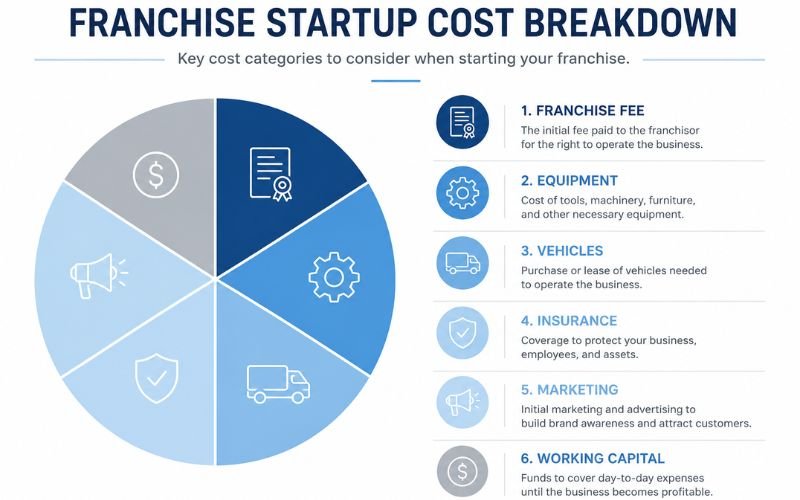
Startup costs for lighting franchises can vary significantly depending on:
- territory size,
- equipment requirements,
- staffing,
- vehicle purchases,
- and local market conditions.
Typical Cost Categories
| Expense Category | Potential Cost Area |
| Franchise Fee | Initial licensing fee |
| Equipment | Lighting inventory and tools |
| Vehicles | Work vans or trucks |
| Insurance | Commercial coverage |
| Marketing | Advertising and lead generation |
| Royalties | Ongoing franchise fees |
| Working Capital | Payroll and operating reserves |
Why Cost Analysis Matters
Many franchisees underestimate:
- working capital needs,
- seasonal fluctuations,
- customer acquisition costs,
- and operational ramp-up timelines.
That is why buyers should compare projected startup costs against realistic cash flow expectations.
Blingle vs Other Home Service Franchises
| Franchise Type | Seasonal Dependence | Startup Complexity | Recurring Revenue Potential | Technical Complexity |
| Lighting Franchise | Moderate | Moderate | Moderate | Moderate |
| Lawn Care | High | Moderate | High | Low |
| Pressure Washing | Moderate | Lower | Moderate | Low |
| HVAC | Lower | High | High | High |
| Plumbing | Lower | High | High | High |
- Strong visual branding
- Upselling opportunities
- Residential and commercial demand
- Seasonal revenue spikes
Common Challenges
- Weather dependency
- Labor coordination
- Equipment investment
- Seasonal cash flow pressure
Red Flags to Watch Before Buying Any Franchise
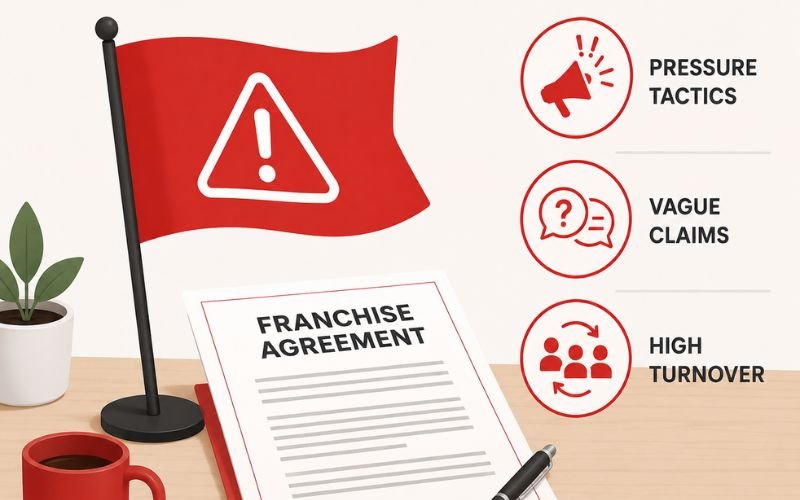
Whether evaluating Blingle or another home service brand, buyers should monitor several common warning signs.
Pressure Sales Tactics
Be cautious if representatives push for rapid signing decisions.
Vague Earnings Claims
Avoid relying solely on verbal financial projections.
Weak Disclosure Practices
Incomplete or inconsistent disclosures deserve closer scrutiny.
High Franchisee Turnover
Frequent exits may indicate operational or financial strain.
Poor Territory Clarity
Territory disputes are a recurring source of franchise litigation.
Financing Pressure
Aggressive financing encouragement without realistic forecasting can increase risk.
Franchise Due Diligence Checklist
Before investing in any franchise, buyers should:
- Review the full FDD carefully
- Analyze Item 3 litigation disclosures
- Speak with current franchisees
- Verify startup cost assumptions
- Understand royalty obligations
- Review territory rights
- Analyze local market competition
- Consult a franchise attorney
- Evaluate financing terms
- Research litigation independently
What Franchise Attorneys Recommend Before Investing
Experienced franchise attorneys usually recommend a structured due diligence process.
Review the Entire Franchise Agreement
Do not rely only on franchise sales presentations.
Speak With Existing Franchisees
Ask direct questions about:
- profitability,
- support quality,
- lead generation,
- and operational challenges.
Hire a Franchise Attorney
A legal review may help identify:
- restrictive clauses,
- arbitration requirements,
- termination rights,
- and dispute resolution provisions.
Verify Litigation History
Independently research federal and state court records.
Validate Financial Assumptions
Compare disclosure estimates with actual franchisee experiences whenever possible.
How to Verify a Franchise Lawsuit Online
Investors can independently review franchise litigation using public resources.
Federal Court Systems
PACER Federal Court Records provides access to federal case filings and docket information.
FTC Franchise Resources
FTC Franchise Resources offers educational guidance regarding franchise disclosures and compliance.
Franchise Disclosure Documents
Always request the latest FDD directly from the franchisor.
State Court Databases
Some franchise disputes appear in state courts rather than federal court systems.
Legal Research Platforms
Public docket summaries may also appear on legal reporting platforms and court indexing sites.
FAQs
Is the Blingle lawsuit real?
Yes. Publicly accessible court records reference a franchise-related lawsuit associated with entities connected to HorsePower Brands.
Is Blingle still operating?
Yes. The franchise brand continues operating publicly.
Does a lawsuit mean a franchise is unsafe?
No. A lawsuit only means legal claims were filed. Liability depends on evidence, rulings, settlements, or other outcomes.
Who owns Blingle?
Blingle operates within the HorsePower Brands franchise platform.
What is HorsePower Brands?
HorsePower Brands is a multi-brand home service franchise organization.
What is FDD Item 3?
FDD Item 3 is the litigation disclosure section within a Franchise Disclosure Document.
Can franchisees sue franchisors?
Yes. Franchisees may pursue legal claims involving contracts, disclosures, territory rights, or operational disputes depending on the circumstances.
How do franchise lawsuits affect buyers?
Litigation can influence financing, investor confidence, reputation perception, and due diligence requirements.
How can I verify franchise litigation?
You can review federal court records, state court systems, PACER filings, and official franchise disclosures.
Are franchise disputes common?
Yes. Franchise litigation occurs across many industries and does not automatically indicate fraud or business failure.
Final Verdict
The growing search interest surrounding the Blingle lawsuit reflects a larger shift in franchise investing: buyers now conduct much deeper legal and operational research before investing.
Publicly available records confirm that a franchise-related lawsuit tied to entities associated with HorsePower Brands was filed in federal court. However, allegations alone do not establish wrongdoing, liability, or systemic misconduct.
For investors, the most important takeaway is not panic — it is preparation.
Before purchasing any franchise, buyers should carefully evaluate:
- litigation history,
- franchise disclosure documents,
- startup economics,
- operational support,
- contractual obligations,
- and market demand.
A single lawsuit should never be the only factor driving an investment decision. At the same time, ignoring litigation history entirely can expose buyers to unnecessary risk.
The strongest franchise decisions are usually based on verified records, legal review, realistic financial analysis, and careful due diligence rather than marketing claims alone.