
Can I Be Fired While on Workers Comp? Laws, Rights & What to Do (2026 Guide)
Workplace injuries can create both physical and financial stress. If you are receiving workers’ compensation benefits after getting injured at work, you might be wondering: Can I be fired while on workers comp?
The short answer is yes, it is possible for an employer to terminate your employment while you are receiving workers’ compensation benefits. However, employers cannot legally fire you simply because you filed a workers compensation claim. Doing so may be considered illegal retaliation or wrongful termination.
Understanding how workers’ compensation laws interact with employment laws can help you protect your rights and ensure that you are treated fairly.
What Is Workers’ Compensation?
Workers’ compensation is a state-regulated insurance program that provides financial and medical benefits to employees who suffer injuries or illnesses related to their jobs.
These benefits typically include:
- Medical expenses for treatment and recovery
- Partial wage replacement if you cannot work during recovery
- Rehabilitation or physical therapy
- Temporary or permanent disability benefits
- Death benefits for families in fatal workplace accidents
Workers’ compensation systems were created to ensure that injured employees receive support without needing to file a lawsuit against their employer.
However, workers’ compensation benefits do not automatically guarantee job security.
Can Your Employer Fire You While on Workers’ Comp?
Yes, in many situations an employer can legally terminate an employee who is receiving workers’ compensation benefits.
This happens because workers compensation laws and employment laws operate separately.
In many parts of the United States, employment follows the “at-will employment” rule, meaning employers can terminate employees for almost any reason as long as the reason is not illegal.
However, firing someone because they filed a workers compensation claim is generally illegal and may qualify as retaliatory termination.
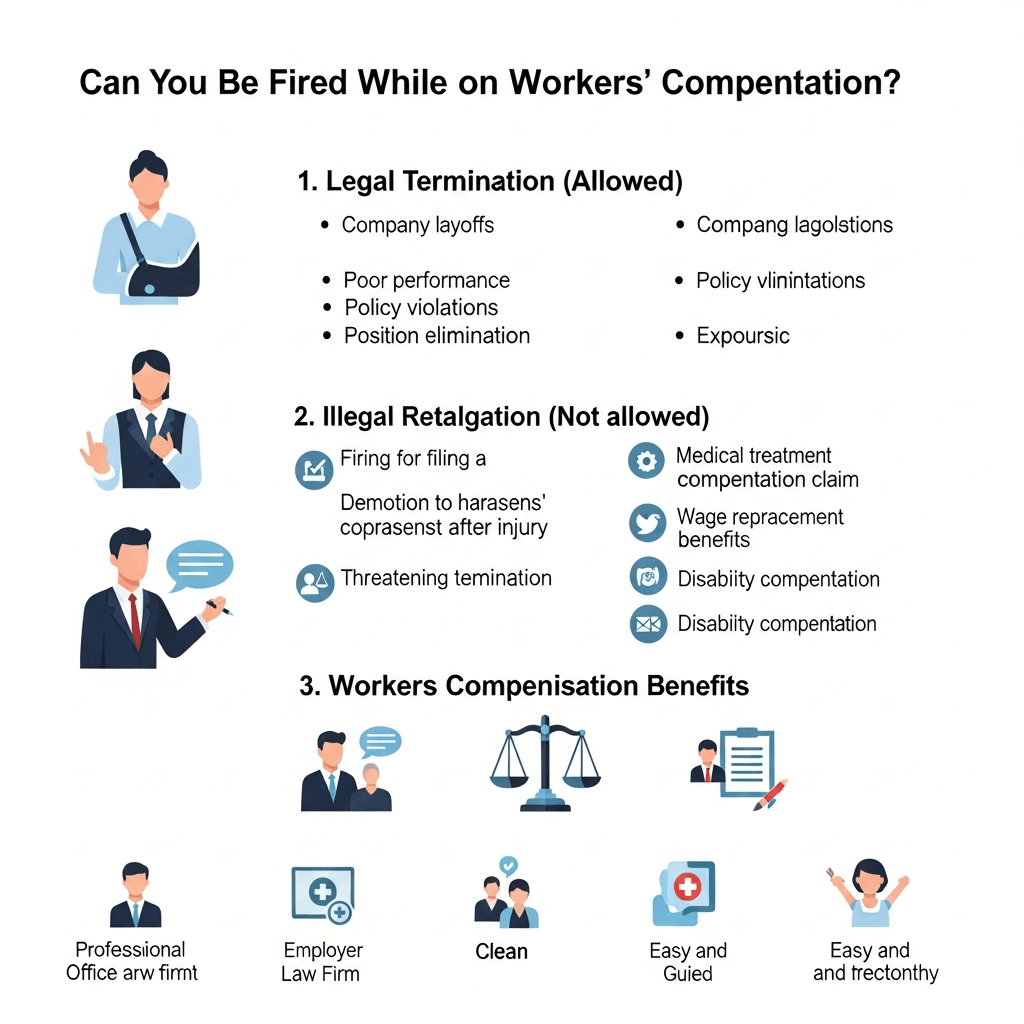
Legal Reasons an Employer Can Fire You While on Workers Comp
Employers are allowed to terminate employees on workers’ compensation if the decision is based on legitimate business reasons unrelated to the injury or claim.
Here are some common legal reasons.
Company Layoffs or Downsizing
If a company is reducing staff due to financial issues, restructuring, or closing a department, employees receiving workers’ compensation may still be affected.
Poor Job Performance
If an employee had documented performance problems before the injury occurred, the employer may still proceed with termination.
Violation of Workplace Policies
Breaking company rules, engaging in misconduct, or violating workplace policies can lead to termination even if the employee is receiving workers’ compensation benefits.
Position Elimination
Sometimes businesses eliminate roles due to automation, restructuring, or operational changes. If your job position no longer exists, your employment may legally end.
Inability to Perform Job Duties
If an employee cannot return to work or perform essential job duties even after medical recovery, an employer may eventually terminate the position.
The important factor is that the termination must not be related to the workers compensation claim itself.
Illegal Reasons for Termination
While employers have the right to make business decisions, they cannot retaliate against employees for filing workers’ compensation claims.
Examples of illegal termination include:
- Firing an employee shortly after filing a workers’ compensation claim
- Threatening job loss to discourage filing a claim
- Harassing or discriminating against an injured worker
- Reducing hours, pay, or responsibilities as punishment for filing a claim
- Creating a hostile work environment after an injury
These actions may qualify as wrongful termination or retaliation, which could give the employee the right to pursue legal action.
Example of Workers Comp Retaliation
Consider the following scenario:
An employee injures their back while lifting equipment at work and files a workers’ compensation claim. A week later, the employer terminates the employee without providing any documented performance issues or business reasons.
In this case, the employee may have grounds to claim retaliatory termination, because the timing suggests the firing may have been linked to the workers’ compensation claim.
Courts often examine timing, documentation, and employer behavior when determining whether retaliation occurred.
Will You Lose Workers Compensation Benefits If You Are Fired?
One of the biggest concerns employees have is whether their workers’ compensation benefits will stop if they lose their job.
In most cases, termination does not automatically end your workers compensation benefits.
Benefits are typically based on:
- The severity of your injury
- Medical treatment requirements
- Your ability to return to work
- Doctor recommendations
For example:
- If you are still recovering and unable to work, benefits may continue.
- If a doctor clears you to return to work, wage replacement benefits may stop.
However, medical benefits related to your injury may still continue depending on state laws and insurance coverage.
Your Legal Rights as an Injured Worker
Employees who are injured at work are protected by several legal rights.
These rights may include:
- The right to file a workers compensation claim
- Protection from retaliation for filing a claim
- Access to medical treatment for workplace injuries
- The ability to receive temporary or permanent disability benefits
- Legal protection from discrimination related to workplace injuries
If an employer violates these rights, the employee may be entitled to compensation through legal action.
What to Do If You Are Fired While on Workers Comp
If you believe your termination was unfair or related to your workers compensation claim, there are several steps you should take immediately.
1. Review the Termination Notice
Check the official explanation your employer provided for the termination.
2. Document Everything
Keep copies of:
- emails
- medical reports
- performance reviews
- workers’ compensation paperwork
- communication with your employer
These records can help prove whether retaliation occurred.
3. Contact a Workers Compensation Attorney
An experienced attorney can review your situation and determine whether your termination violated employment laws.
4. File a Retaliation Claim
If retaliation is suspected, you may need to file a complaint with your state labor department or pursue a legal claim against your employer.
Taking action early can improve your chances of protecting your rights.
When Should You Speak With a Workers Compensation Lawyer?
You should consider contacting a lawyer if:
- You were fired soon after filing a workers compensation claim
- Your employer denies or delays benefits
- You face harassment or retaliation at work
- Your workers’ compensation claim was denied
- Your injury prevents you from returning to your job
Legal professionals can help you understand the options available and guide you through the claims process.
Frequently Asked Questions
Can you collect workers comp after being fired?
Yes. In many cases, employees can continue receiving workers compensation benefits even after termination if they are still unable to work due to their injury.
Can an employer replace you while you are on workers comp?
Yes. Employers may hire another worker to fill your role temporarily or permanently if business operations require it.
Can you sue your employer for firing you while on workers comp?
You may be able to sue your employer if the termination occurred as retaliation for filing a workers’ compensation claim.
What happens if you are fired while injured at work?
If you are fired while injured, your workers’ compensation benefits may still continue depending on medical eligibility and state laws.
Can you receive unemployment while on workers comp?
In many cases, employees cannot receive unemployment benefits at the same time as workers’ compensation wage benefits, but rules vary by state.
Can your employer force you to return to work after an injury?
Employers cannot force you to return to work if a doctor determines that you are not medically able to perform your job duties.
Final Thoughts
Being fired while receiving workers’ compensation benefits can feel overwhelming, but it is important to understand that termination does not automatically mean you lose your legal protections or benefits.
While employers may terminate employees for legitimate business reasons, they cannot retaliate against workers for filing a valid workers’ compensation claim.
Knowing your rights, documenting your situation, and seeking professional legal advice can help ensure that you are treated fairly and receive the benefits you deserve during your recovery.
